
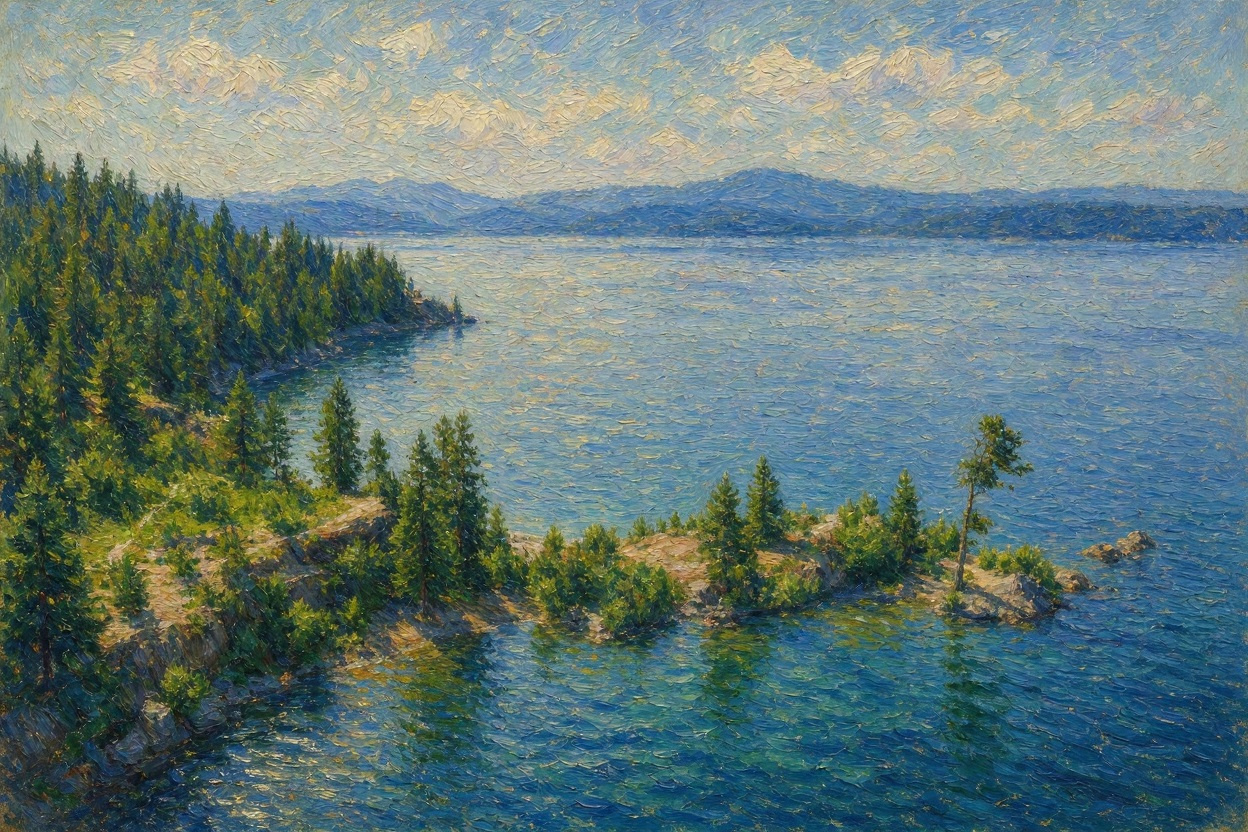
Coeur d’Alene sits on the edge of a lake that is both a postcard and a Superfund site. That tension gives local students something most applicants never get: a genuinely complicated place to write about. Coeur d’Alene’s small size is not a disadvantage for a student aiming at selective colleges. Instead, it is a reason for admissions officers to read a little more closely. Few of them see an Idaho postmark. The programs below, together with the region’s distinctive history, give Kootenai County students concrete ways to turn that curiosity into a rigorous, well-documented application.
The National Admissions Picture
Idaho sends few applicants to highly selective colleges each year, and that scarcity works in a well-prepared student’s favor. Admissions offices building a class with broad geographic reach have to actively seek out Idaho students. As a result, a Coeur d’Alene applicant can stand out simply by not looking like every other file in the pile. Strong grades help. So does real depth in one or two areas, plus a specific local story. That advantage, however, only helps students who have already done the work. A thin activity list dressed up in Idaho scenery will not move a committee. Depth over time, not breadth for its own sake, is what selective admissions consistently rewards.
The Local Flagship Anchor
North Idaho families tend to default toward the University of Idaho or Boise State. Both are excellent options and, for many students, the right ones. Still, that comfort can quietly narrow a student’s list. Few families test how far a strong profile might actually reach. Students hoping to leverage Idaho’s underrepresented status nationally should build a list that includes reach schools alongside the in-state flagships. Early Decision can be a useful tool here. Applying ED to a school that specifically values geographic diversity signals genuine interest. A broad Regular Decision list simply cannot send that same signal. That signal only pays off, though, for students whose coursework and activities already reflect sustained commitment.

What Makes Coeur d’Alene Distinctive
Lake Coeur d’Alene carries more than a century of upstream contamination from the Silver Valley’s lead, silver, and zinc mines. The lakebed remains part of one of the largest Superfund sites in the country. Even so, the lake itself draws boaters, anglers, and tourists every summer. That contrast is not a footnote; it is raw material for a specific, place-rooted essay. A hometown that is both ecologically compromised and, by most visual measures, stunning gives students something that prettier, less complicated hometowns simply cannot offer. Students researching remediation efforts, tribal water rights, or the University of Idaho’s ongoing lake-health monitoring will find a genuinely unresolved civic problem sitting in their backyard.
Beyond the lake, Coeur d’Alene sits roughly thirty minutes from Spokane, Washington. That proximity gives Kootenai County teenagers access to a larger metro area’s resources. At the same time, the city keeps the small-city identity that shapes daily life here. Together, these threads, industrial history, environmental reckoning, and a small city next to a larger one, give students plenty to write about with precision instead of generic praise for mountain views.
Programs and Opportunities for Coeur d’Alene Students
Kootenai Health’s Teen Volunteer Program
Kootenai Health, the region’s main hospital, runs a dedicated Teen Volunteer Program for students ages 14 to 17. The program offers early, hands-on exposure to the medical field. Volunteers rotate through hospital departments and take on tasks like way-finding support, gift shop assistance, and delivery services. In doing so, they build communication and professionalism skills. Notably, many later carry those skills into paid clinical roles. The program does not offer job shadowing or a stipend. It runs on a rolling basis rather than a single seasonal deadline. For a student weighing a pre-med or public health angle, this is a low-barrier way to test that interest before committing to it on paper.
Kootenai County 4-H Through University of Idaho Extension
Students who prefer hands-on, project-based learning should look closely at Kootenai County 4-H, which University of Idaho Extension runs locally. Youth ages 5 to 18 can join a club, attend a camp or project camp, or take part in an afterschool program. Participants ages 8 to 18 qualify for every 4-H program, including competitive events. Additionally, the county hosts a Kootenai/Shoshone 4-H STEM Learning Center, and members can build leadership through district and statewide events. Enrollment runs year-round rather than on a single deadline. For an older teen, the real value comes from staying in one project area for several years. That commitment turns a club membership into documented depth.

Serving as a Youth Representative on a City of Coeur d’Alene Commission
Fewer students think to apply for a seat at the table where local decisions actually get made. That is exactly what makes the City of Coeur d’Alene’s youth representative program worth a look. The city recruits students ages 14 to 18 to serve as non-voting representatives on commissions such as Parks and Recreation. Representatives meet monthly. In turn, they advise on issues that range from cemetery upkeep to shoreline docks. Applications typically open in the fall with a September deadline. Interested students apply directly through the city’s own volunteer page. For a student writing about the lake’s ongoing remediation or about local land-use tensions, a seat on a relevant commission turns an outside observation into direct, documented civic experience.
Volunteering as a Coeur d’Alene Public Library Volunteen
The Coeur d’Alene Public Library’s Volunteen program accepts a wide age range, 12 through 19. That range covers both middle and high school students. Volunteens choose from five loosely structured roles. Options range from advocating for new teen programming to reviewing books and games from the library’s collection. The Teen Librarian then builds an individualized plan around whichever roles interest each applicant most. Additionally, hours stay flexible, and some tasks can even happen from home. The library will also write references for volunteers applying to scholarships or colleges. This is not the most dramatic line on an application. Still, for a student building a record of sustained commitment, consistency here counts for more than novelty elsewhere might.

Building a Standout Application from Coeur d’Alene
None of these programs alone will make an application competitive at a selective college. Instead, what matters is choosing one or two that connect to a genuine interest. Students should stay with that interest long enough to develop real depth. That might mean several years in one 4-H project area. It might also mean a year of weekly shifts at Kootenai Health, or a full term advising the Parks and Recreation Commission. Combined with rigorous coursework, these local resources can turn Coeur d’Alene’s contradictions into a specific, well-documented story. The contaminated lake, the mining past, the small-city distance from Spokane: these are the details selective admissions committees are actually looking to read. Generic praise will not do the same work. College Transitions works with Kootenai County families throughout this process, helping students translate local experience like this into an application that holds up against the rest of the country.

