
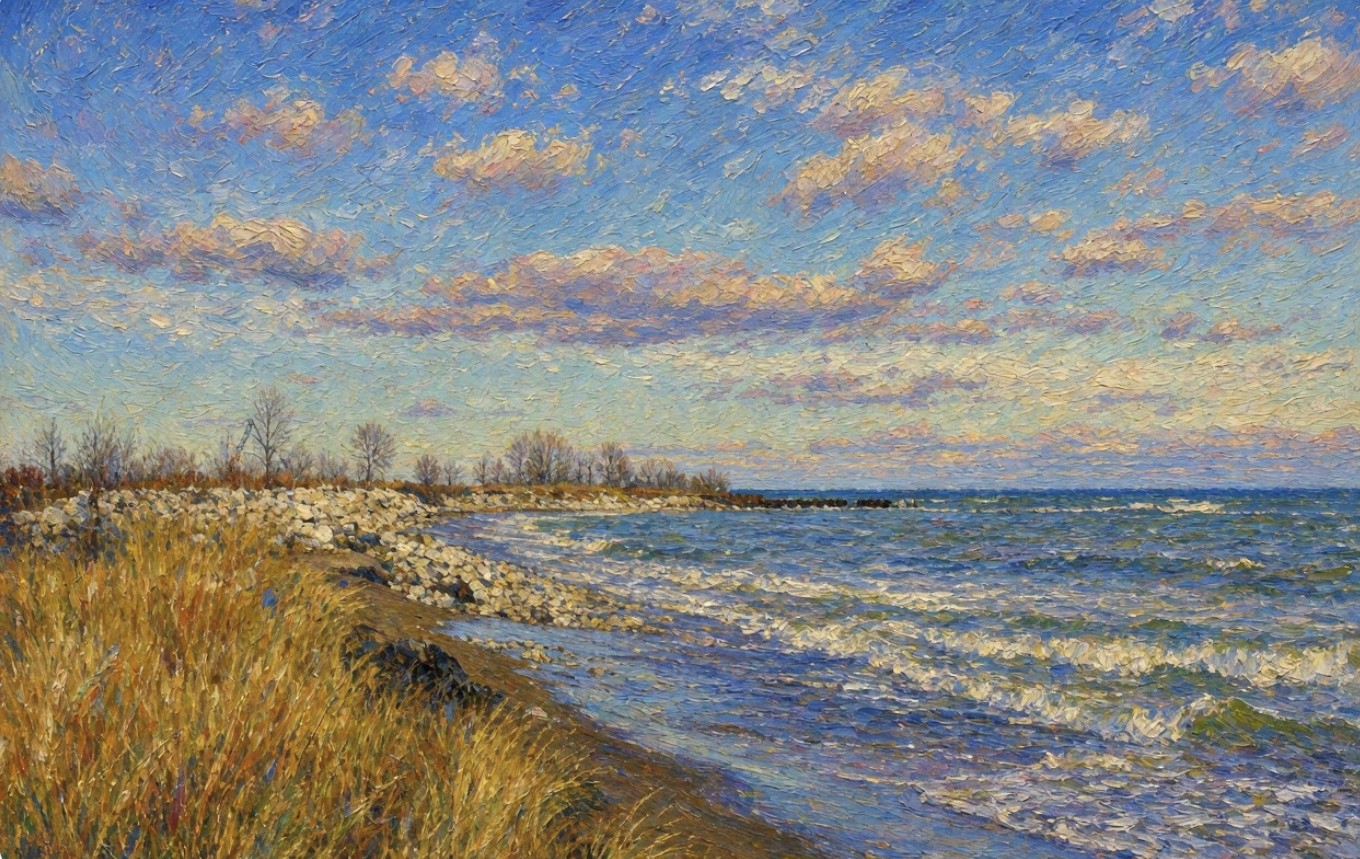
Lake County, Illinois, runs from Chicago’s North Shore to the Wisconsin line. Its eastern edge is Lake Michigan shoreline, while its western half holds glacial lakes, prairie, and fast-growing suburbs. In between sit hospitals, a naval station, and one of the densest life sciences corridors in the Midwest. For students, that mix creates real options.
Access alone, however, does not build a strong application. Selective colleges want to see what a student did with nearby opportunities, and for how long.
The National Admissions Picture for Lake County Students
A Familiar Pool in a Crowded State
Illinois is a large state, and the Chicago suburbs send a steady stream of applicants to selective colleges every year. Admissions readers at those colleges know Lake County’s public high schools well. As a result, a Lake County application rarely surprises anyone on the basis of location alone.
That familiarity cuts against students who rely on grades and test scores. Strong transcripts are common here, so readers look harder at what a student built outside the classroom. In short, geography helps only students who have already built strong profiles; it never substitutes for one.
Testing also changed recently. Illinois replaced the SAT with the ACT as its state assessment for public school juniors, starting with the class of 2026. Students who prefer the SAT can still take it on a national test date at their own expense.
The Urbana-Champaign Default
Many Lake County families treat the University of Illinois Urbana-Champaign as the automatic anchor of a college list. It is an excellent university, and in-state tuition makes it an affordable one. Still, its most popular majors are highly selective, even for strong Illinois applicants. A list built around one flagship can leave a student without enough realistic options.
Instead, students should test that default early. A balanced list might pair Illinois with strong out-of-state publics, liberal arts colleges, and private universities in regions that see fewer Chicago-area applicants. Similarly, students should compare programs by major rather than by name recognition alone.
Early Decision and the Profile That Comes First
For a student with a clear first choice, Early Decision deserves serious thought. Many selective colleges admit a larger share of their ED pool than of their regular pool. That said, ED makes sense only after a family has compared financial aid realistically.
Above all, depth matters far more than volume. A student who spends three years on one sustained project will usually stand out over one who lists ten short commitments.

What Makes Lake County Distinctive
The Last Beach Ridge in Illinois
Illinois Beach State Park stretches 6.5 miles along Lake Michigan between Waukegan and the Wisconsin line. It holds the only remaining beach ridge shoreline in the state, with dunes, swales, marshes, and more than 650 plant species. In 1964, its southern unit became the first dedicated Illinois Nature Preserve.
That history carries a lesson about advocacy. A local preservation society, founded in 1950, pushed for that protection for more than a decade. Consequently, a student writing about the dunes can write about civic persistence, not just scenery.
A Harbor That Came Back
A few miles south, Waukegan Harbor tells a harder story. Manufacturing at Outboard Marine Corporation left PCBs in the harbor’s sediment, and the International Joint Commission named it a Great Lakes Area of Concern in 1981. Public agencies and responsible parties then spent roughly 150 million dollars on cleanup. In 2014, the EPA announced that all required cleanup work was complete.
For students, the harbor offers a case study in industrial legacy, public health, and slow repair. A Waukegan Harbor Citizens Advisory Group took part in that process for years. Notably, few places let a teenager stand on a shoreline and trace four decades of environmental policy.
Bradbury’s Library
Ray Bradbury was born in Waukegan in 1920, and he spent much of his childhood in the city’s Carnegie Library. That building sat vacant for decades after the library moved in the 1960s. In 2025, however, it reopened as the Waukegan History Museum at the Carnegie after a multimillion-dollar restoration.
Today, Bradbury’s personal collection of roughly 4,000 books anchors the museum. For a student interested in writing or preservation, the building offers a concrete subject.
The Navy’s Front Door
Naval Station Great Lakes, near North Chicago, is home to the Navy’s only boot camp. Roughly 40,000 recruits train there each year. Together with the county’s pharmaceutical campuses, the base shapes local traffic, jobs, and family life in ways outsiders rarely see.
Essays that draw on these places work best with precise detail. A student who describes the smell of Dead River marsh or a graduation parade at Great Lakes will write a sharper essay than one who praises “the community.” The programs below offer ways to turn that kind of attention into sustained work.
Programs and Opportunities for Lake County Students
Clinical Exposure: Northwestern Medicine Summer Volunteer Service
Northwestern Medicine runs a summer-only volunteer track for teens and students. In Lake County, its local volunteer office serves Northwestern Medicine Catherine Gratz Griffin Lake Forest Hospital and the Grayslake Outpatient Center. Volunteers must be at least 16 at those sites.
Students must apply between December 1 and January 15. Northwestern Medicine will not consider applications outside that window. Accepted students commit to one day a week for eight weeks between May and August. They must also attend an orientation before the end of May.
Selection is competitive, and participation is limited because of high demand. Applicants interview first, and onboarding then takes about a month. That process includes a health screening and volunteer orientation; volunteers 18 or older also need a criminal background check.
Summer service alone is a short commitment. However, Northwestern Medicine also accepts volunteers willing to serve at least six months and 100 hours. Students who reach 100 hours can request a letter of recommendation based on performance. For a student considering medicine, nursing, or health policy, that longer path shows real commitment. It also builds the kind of depth that a single summer cannot.
Research at a National Laboratory: Fermilab PRISM
Fermilab sits in Batavia, roughly an hour’s drive from much of Lake County. Its Program for Research, Innovation, and STEM Mentorship (PRISM) is a four-week summer program for Illinois high school seniors and recent graduates. Participants explore advanced STEM fields while working with Fermilab scientists and engineers.
The program runs from July through August. Applicants must be U.S. citizens enrolled in an Illinois high school. They must also be seniors or recent graduates, so current juniors are the target group. Each applicant needs proof of medical insurance and a letter of recommendation.
PRISM pays $500 per week. The application opens in January and closes in March. Fermilab sends offers in April. Because Fermilab does not provide housing, Lake County students should plan a reliable commute before applying.
For a Lake County student interested in physics, engineering, or computing, PRISM offers rare access to a national laboratory. Moreover, it pairs well with a school-year project. A student who arrives with a semester of coding or lab work will get far more from four weeks at Fermilab.
Hands in the Soil: Lake County Forest Preserves Volunteering
The Lake County Forest Preserves hosts restoration workdays across the county throughout the year. Volunteers work with a Site Steward on approved projects in prairies, wetlands, and forests. Typical tasks include removing invasive plants, collecting and processing native seed, and planting trees and shrubs.
Workdays require no experience and no ongoing commitment. Minors 10 and older are welcome with an adult, and a legal guardian must sign the waiver. The district’s Native Seed Nursery at Rollins Savanna in Grayslake follows the same age rule.
This adult-accompaniment rule matters. For most high schoolers, forest preserve volunteering works best as a shared project with a parent or another adult. That said, a student who returns to the same site for several seasons can document real change in one piece of land. Pairing that record with an AP Environmental Science project or a science fair study turns casual volunteering into sustained work.
Civic and Literary Service: Waukegan Public Library Teen Volunteers
Waukegan Public Library invites teen volunteers in grades 6 through 12. Volunteers help run events for younger children, prepare supplies for programs, and help the library develop its services. Students apply through an online form or by visiting the Youth and Teen Department during open hours.
The library also runs a Maker Space for patrons 16 and older. Its equipment includes a 3D printer, laser engraving machines, sewing and embroidery machines, and an audio station. Together, those tools let a student move from helping with programs to designing them.
The Waukegan library also has a direct tie to the county’s most famous author. Bradbury left his collection to the library, which now partners with the history museum to preserve and display it. A student who volunteers here, studies Bradbury’s Waukegan, and creates a related program could build a distinctive, place-rooted record.
Students outside Waukegan should check their own library district for similar roles. Many Lake County libraries offer teen volunteer programs, though eligibility and application windows vary.

Building a Standout Profile from Lake County
Lake County offers far more than strong schools. Its shoreline, harbor, hospitals, and libraries give students material that few suburbs can match. Even so, selective colleges reward depth, not access. Students should choose one or two areas of genuine interest and pursue them across several years. They should also keep taking rigorous courses that connect to those interests.
Northwestern Medicine’s volunteer track, Fermilab PRISM, forest preserve workdays, and the Waukegan Public Library each support that kind of sustained engagement. The strongest applicants will link those experiences into one coherent profile, then write about them with precision. College Transitions helps Lake County students do exactly that, from building a balanced college list to shaping essays rooted in place.

