
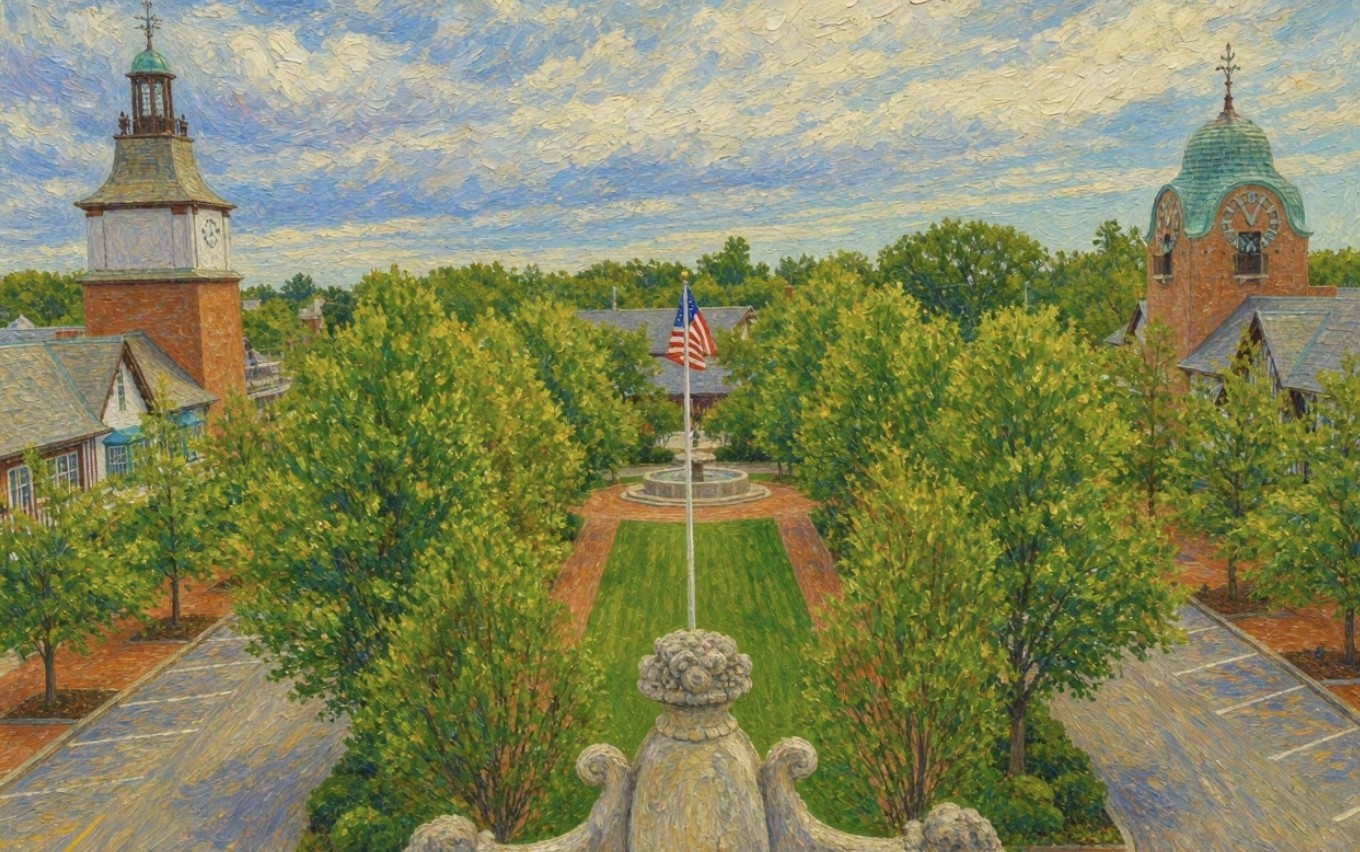
Lake County runs from Chicago’s North Shore suburbs to the Wisconsin state line. Along the way, it packs in some of the most respected public high schools in Illinois. It also offers a medical university, a community college with deep high school ties, and two Metra lines into Chicago. So is Lake County, IL a good place for college admissions? For most students, the answer is yes. However, the same strengths that make the county attractive also make it one of the most crowded applicant markets in the Midwest.

Reading the Lake County School Map
Lake County’s public high schools are organized mostly by township districts. As a result, a single district often serves several towns, and many schools enroll well over 1,500 students.
The Southeastern Corridor
The county’s southeastern towns hold its highest-ranked schools. Adlai E. Stevenson High School in Lincolnshire leads the county and ranks 8th in Illinois, according to U.S. News & World Report. Lake Forest High School follows at 11th. Meanwhile, Community High School District 128 runs Vernon Hills (14th) and Libertyville (20th). Similarly, Township High School District 113 operates Deerfield (17th) and Highland Park (38th).
The Central and Western Townships
Farther west and north, the schools are just as large but less famous. Lake Zurich High School ranks 29th in Illinois. In addition, Lakes Community High School in Lake Villa, Grayslake North, Grayslake Central, and Mundelein High School all rank within or near the state’s top 100. These schools offer substantial AP programs. Moreover, senior classes at Lakes and Grayslake North number under 400, so strong students there are easier for counselors to know well.
Private and Independent Options
Lake Forest Academy, a boarding and day school, anchors the county’s independent sector. Carmel Catholic in Mundelein and Woodlands Academy of the Sacred Heart in Lake Forest add faith-based options.
How Lake County’s Top Public High Schools Compare
| School | US News IL Rank | US News National Rank | AP Rate |
|---|---|---|---|
| Adlai E. Stevenson High School | #8 | #208 | 74% |
| Lake Forest High School | #11 | #277 | 70% |
| Vernon Hills High School | #14 | #343 | 71% |
| Deerfield High School | #17 | #387 | 63% |
| Libertyville High School | #20 | #462 | 65% |
| Lake Zurich High School | #29 | #643 | 57% |
| Highland Park High School | #38 | #756 | 67% |
| Lakes Community High School | #67 | #1,455 | 57% |
| Grayslake North High School | #88 | #2,098 | 48% |
| Mundelein High School | #98 | #2,370 | 47% |
Five of these schools rank among the top 20 in Illinois. In fact, Stevenson’s national rank places it in roughly the top 2% of the nearly 18,000 schools U.S. News ranked. Even so, the table shows a real spread. AP participation ranges from 74% at Stevenson to 47% at Mundelein, and the state ranks stretch from #8 to #98.

Where Lake County Students Have an Edge
A Medical University in North Chicago
Rosalind Franklin University of Medicine and Science sits in North Chicago, and it runs several programs for local high school students. CampMed is a free, five-day summer program for Lake County high schoolers interested in health care and research. It takes place during the last week of July. During the week, students practice CPR, suturing, and head-to-toe exams alongside RFU graduate students in medicine, pharmacy, nursing, and physical therapy.
Additionally, Science Saturdays teaches core lab techniques over nine Saturday sessions on the North Chicago campus between June and August. It enrolls up to 25 students each summer, and the application opens in December. RFU’s Virtual Mentor Program also pairs local high school students with current RFU students for monthly meetings from October through May. Consequently, a Lake County student can test an interest in medicine long before writing a single college essay.
Dual Credit Through the College of Lake County
The College of Lake County (CLC) partners with high schools across the county to offer dual credit courses. These are CLC classes taught at a student’s own high school, and they earn both high school and college credit. Partners include Waukegan, Zion-Benton, and Carmel Catholic, among others. Beyond that, CLC’s dual enrollment option lets high school students register for the college’s regularly scheduled classes. For students who have exhausted a school’s course sequence in a subject, that option keeps their transcript climbing.
College Courses in Lake Forest
Lake Forest College opens its Summer Session to advanced high school students from the Chicago area. Students take credit-bearing courses alongside college students and work directly with the college’s faculty. Moreover, the college offers Summer Merit Scholarships to academically qualified high school students. Because summer housing is not available to high schoolers, the program works best for students who can commute. For many Lake County families, that means a short drive.
A Major Youth Music Conservatory at Fort Sheridan
Midwest Young Artists Conservatory is based in the historic Fort Sheridan community in Highwood. It describes itself as the largest youth music ensemble program in the Midwest. Its offerings include orchestras, chamber music, jazz bands, and choral ensembles for students from more than 80 communities. For a serious young musician, few suburban counties offer this level of training so close to home.
Corporate Headquarters and a Short Train Ride to Chicago
Lake County hosts the headquarters of Abbott in Abbott Park, AbbVie in North Chicago, and Baxter in Deerfield. That concentration gives students real-world settings for projects in science, data, business, and health care. In addition, Metra’s Union Pacific North and Milwaukee District North lines connect county towns to Evanston and downtown Chicago. As a result, the region’s universities, museums, and civic institutions are within practical reach.

The Harder Truths About Applying from Lake County
One of the Most Familiar Applicant Pools in the Midwest
Selective colleges know Lake County’s high schools well. Admissions readers see applications from Stevenson, Deerfield, Lake Forest, and Highland Park every year, often in large numbers. Therefore, readers already understand the rigor of these schools. A strong transcript from them is expected rather than exceptional. Students need something beyond grades and AP counts to stand out.
Senior Classes Measured in the Hundreds
Size compounds the challenge. Stevenson’s senior class exceeds 1,100 students, and U.S. News lists Warren Township’s 12th grade enrollment at 965. Similarly, Mundelein reports 587 seniors and Libertyville reports 500. In classes this large, many students apply to the same colleges with nearly identical profiles. Counselors also carry large caseloads, so the details a student shares with them matter.
Uneven Ground Across the County
Lake County is not uniformly elite. While five schools rank in the state’s top 20, others sit further down the list. For example, Grayslake Central ranks 101st, Warren Township 125th, and Antioch 131th. Students at these schools may have fewer AP sections or smaller peer groups in advanced courses. Nevertheless, colleges evaluate applicants within their school context. A student who maximizes the opportunities available at Grayslake Central can be just as competitive as one from Stevenson.
The Gravity of a Big Ten Default
Many Lake County families build lists around the University of Illinois Urbana-Champaign, Wisconsin, Michigan, and other Big Ten schools. These are excellent universities. However, their most popular programs in engineering, computer science, and business are highly selective, even for strong in-state applicants. A list anchored only by large Midwestern publics leaves too little margin. It can also overlook colleges where a Lake County student would stand out more.
A Game Plan for Lake County Applicants
Rigor Without the AP Arms Race
At schools offering 30 or more AP courses, students sometimes treat the AP count as the goal. Instead, they should choose rigor that fits their academic direction. A future engineer benefits more from calculus, physics, and CLC dual credit math than from a long list of unrelated APs. In other words, selective colleges reward depth and coherence, not volume.
Testing After Illinois’ Switch to the ACT
Illinois now gives the ACT, not the SAT, to public high school juniors as its state assessment. Consequently, most Lake County students will have an official ACT score by the spring of junior year. Students targeting highly selective colleges should aim for an ACT of 33 or higher, or an SAT of 1480 or higher. Those who prefer the SAT can still take it on a national test date. At test-optional schools, submitting a strong score generally helps applicants from such a familiar region.
Essays Rooted in Place
Lake County essays often blur together because so many students share similar suburban experiences. Specific details solve that problem. A student might write about a morning on the Metra, an orchestra rehearsal in a converted Fort Sheridan stockade, or a suturing lesson at CampMed. Accordingly, the best essays show how a particular place shaped a particular way of thinking.
Early Decision as a Differentiator
Early Decision can help Lake County students separate themselves from large regular-round pools. ED acceptance rates at many selective private colleges run meaningfully higher than regular decision rates. For that reason, students with a clear first choice should settle it by the end of junior year. That timeline leaves room to visit, research programs, and write a thoughtful school-specific essay.
A Genuinely National College List
Lake County students should look beyond the Big Ten and the Chicago area. Strong options include liberal arts colleges like Carleton, Grinnell, and Davidson, along with universities like Rice, Emory, and Tufts. Applying farther afield also spreads a student’s chances across pools less saturated with Chicago-area applicants. Ultimately, a balanced list pairs those schools with realistic in-state options.
Starting Before Junior Year
The students who stand out typically start early. By sophomore year, they have identified an academic interest and found a local way to explore it. That might mean CampMed, a CLC dual credit sequence, or a Lake Forest College summer course. By senior year, those experiences add up to a clear and memorable profile.
The Bottom Line on Lake County
So is Lake County, IL a good place for college admissions? Overall, yes. The county offers top-ranked public schools, a medical university with free programs for teens, extensive dual credit options, and a nationally known youth conservatory. Its proximity to Chicago adds even more. At the same time, students compete in large senior classes against classmates admissions readers already know well. Rankings also vary across the county, and Big Ten-heavy lists can leave students exposed. Lake County students who build depth early and plan strategically are very well positioned for selective colleges.
College Transitions works with students from Stevenson, Lake Forest, Vernon Hills, Deerfield, Libertyville, Highland Park, Lake Zurich, Grayslake North and Central, Mundelein, Carmel Catholic, Lake Forest Academy, and other Lake County schools. We help families turn the county’s resources into focused, nationally competitive application strategies.

