
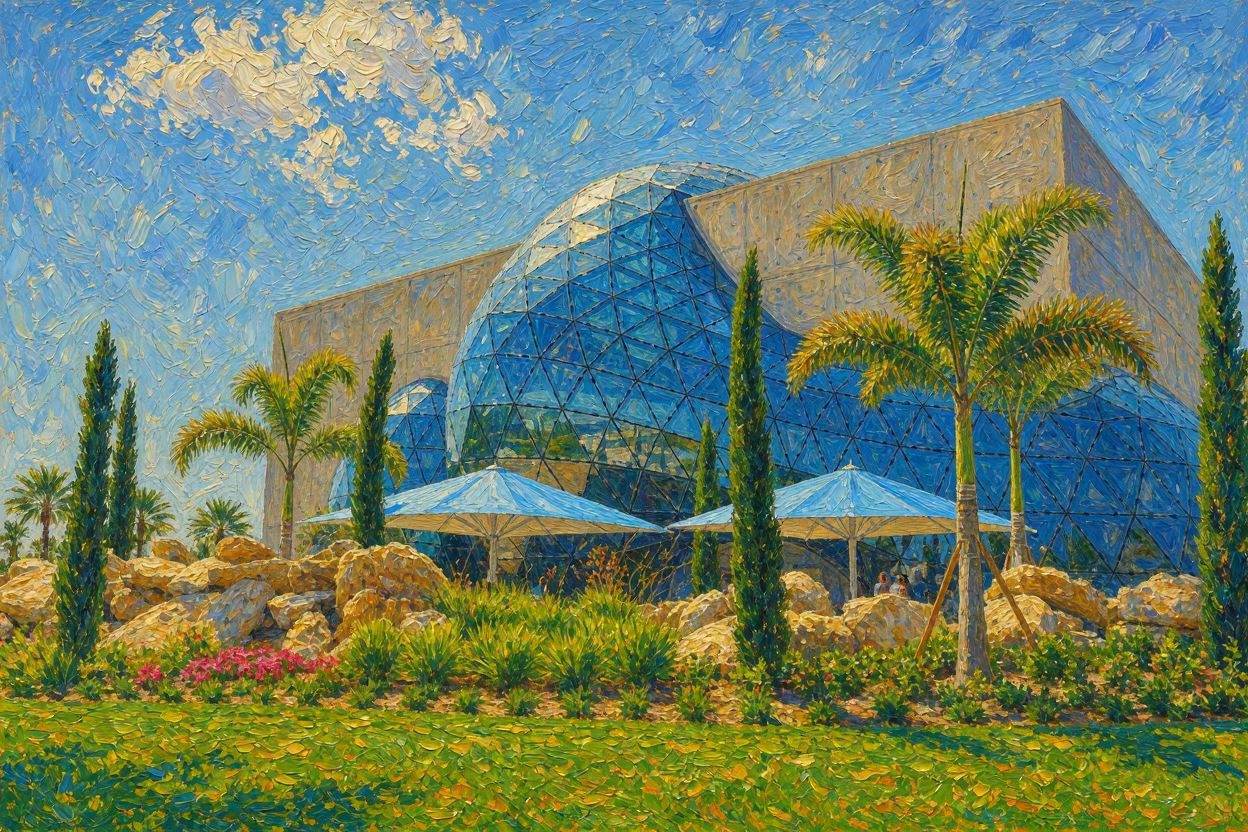
St. Petersburg has spent decades building a reputation as a sun-drenched retirement town. Today, however, downtown hosts a research hospital, a growing biotech corridor, and a genuinely distinctive arts scene. A student who wants exposure to pediatric medicine, urban agriculture, marine biology, or professional theater has options nearby. None of it requires leaving the city limits. Instead, the real challenge is choosing which door to walk through. From there, the goal is consistency. Following one interest closely lets an admissions officer see a real thread running through the application.

The National Admissions Picture for St. Petersburg Students
Florida sits in an unusual spot in the national admissions landscape. The state’s public university system is anchored by the University of Florida and Florida State University. Both are excellent, and both are extraordinarily competitive for in-state applicants. That is thanks in part to the Bright Futures Scholarship. It rewards strong GPAs and test scores with substantial tuition support. As a result, Florida students compete against one of the deepest in-state applicant pools in the country. Even reaching their own state’s flagship schools is a fight. Consequently, that pressure has a paradoxical effect: it pushes many strong students to look beyond Florida. In turn, that pressure can work in a student’s favor elsewhere. Selective out-of-state colleges see relatively few applicants from the Tampa Bay area.
The Local Flagship Anchor Bias
Even so, families in St. Petersburg often default to UF, FSU, or the University of South Florida. Those schools are familiar, affordable, and nearby, so the instinct makes financial sense. That said, it can quietly narrow a student’s list. Other options never get a fair look. Students who broaden their search early tend to end up with more choices. Researching liberal arts colleges, mid-size research universities, and out-of-state public flagships often pays off in more merit aid by senior year. Notably, this does not mean abandoning Florida’s public universities. Instead, it means treating them as one part of a balanced list rather than the default outcome. Early Decision at a strong-fit private college can also be a smart move. It works well for St. Petersburg students who have found a clear first choice. It signals genuine interest to schools that see limited demonstrated interest from this part of Florida.
Geography alone will not carry an application, however. Selective colleges read thousands of files from sunny, coastal cities every year. A St. Petersburg return address only helps a student who has already built real depth. That depth has to come first, in one or two areas. Colleges consistently favor sustained commitment over a scattershot list of activities. Notably, that pattern holds true no matter where an applicant lives. With that context in mind, it helps to understand what actually sets St. Petersburg apart, before turning to the opportunities that make the most of it.
What Makes St. Petersburg Distinctive
St. Petersburg holds the Guinness World Record for the most consecutive sunny days ever recorded. The streak ran 768 straight days, from February 9, 1967, to March 17, 1969. That run is not just a quirky footnote. It shaped the city’s identity as “the Sunshine City,” and it still drives local civic pride today. Beyond the weather, downtown St. Petersburg has become a visually distinctive small city, largely because of the SHINE Mural Festival. Produced annually by the St. Petersburg Arts Alliance since 2015, SHINE has added close to 200 large-scale murals across downtown and the surrounding arts districts. Today, those murals turn ordinary walls into an open-air gallery that students walk past on their way to school.
The city’s civic calendar adds another layer of texture. Each spring, the Firestone Grand Prix of St. Petersburg closes downtown streets for an IndyCar race. Teams and fans arrive from around the world. It is a reminder that this mid-size city operates on a genuinely international stage. Meanwhile, the 22nd Street South corridor, historically known as The Deuces, was once the commercial heart of St. Petersburg’s Black community. It remains an important site of local history. That history belongs most authentically to students from within that community. It is best explored through their own family and neighborhood connections, rather than treated as a generic essay topic. Together, these threads, sunshine and civic ambition, public art and layered history, give St. Petersburg students genuine material for essays no one else could write. The opportunities below build on that same local texture.

Programs and Opportunities for St. Petersburg Students
Hospital Volunteering at Johns Hopkins All Children’s
Students drawn to medicine have a rare asset close at hand. Johns Hopkins All Children’s Hospital is a 259-bed teaching hospital on the downtown waterfront. It ranks among U.S. News & World Report’s Best Children’s Hospitals. The hospital’s Volunteer Program accepts teens starting at age 16. It is a genuine commitment, not a one-time visit. Applicants must attend an in-person information session, submit a formal application, and interview with Volunteer Services before being placed. Once accepted, teen volunteers commit to a weekly shift of two to four hours for at least six months. A parental permission form and a letter of reference are also required. That structure matters for college applications. A six-month minimum, sustained across a school year, tells an admissions reader far more about follow-through than a single afternoon of service ever could. Students who complete the program well often go on to shadow physicians or pursue related research. From there, they build a coherent narrative from a single starting point.
Urban Agriculture and Entrepreneurship at St. Pete Youth Farm
For students more interested in food systems or community development, St. Pete Youth Farm offers something distinct. It is a working urban farm run largely by teens themselves. The farm’s Youth Ambassador Internship accepts paid interns ages 14 to 18. Applicants must live within the South St. Petersburg Community Redevelopment Area. The program treats participants as more than seasonal labor. Interns learn to plant and harvest. They also help manage a small business that sells roughly 70% of the produce they grow. Beyond that, interns take on real leadership roles, from steering-committee decisions to public speaking. In addition to the entrepreneurship track, the program builds workforce-readiness skills such as communication and financial literacy. It also distributes a portion of its harvest to Daystar Life Center, addressing food insecurity in the surrounding neighborhood. For a student interested in agricultural science, public health, or social enterprise, few local programs offer this much real responsibility this early.
Marine Science at Eckerd College
St. Petersburg’s marine science opportunities extend well beyond the red-tide research already tied to the city’s downtown institutions. Eckerd College sits on a 188-acre waterfront campus just south of downtown. It runs a Pre-College program, open to students entering 11th or 12th grade. There are four week-long options students can choose from, including Sharks and Rays, Animal Studies, Coastal & Wildlife Ecology, and Marine Science. Students spend the week pairing classroom lectures from marine science faculty with hands-on work. That includes handling preserved specimens in the lab, collecting live species from the shoreline, and heading out on college research vessels. Participants must also pass a basic swim test to work fully without a life jacket. It is a small but telling sign of how field-based the program actually is. For a student who has already dabbled in biology or environmental science, however, a week exploring marine science and coastal ecology can sharpen a vague interest into a specific one. That kind of clarity strengthens both an essay and a list of intended majors.
Performing Arts through St. Petersburg City Theatre
Students drawn to the stage rather than the lab have their own dedicated pipeline. St. Petersburg City Theatre is the longest continuously running community theater on Florida’s west coast. It runs a program called Theatrical Teens of Tomorrow. The program is completely free for incoming, current, and recently graduated high school students. It covers every side of a production, including performance, backstage technical work, design, and stage management. As a result, a student who prefers building sets or running lights has just as much of a home there as a lead actor does. Because the theater mounts a full summer musical each year, participants also gain a sustained, deadline-driven experience. That means weeks of rehearsal building toward a real public performance. It is exactly the kind of commitment that colleges value in arts-focused applicants.

Building a Standout Application from St. Petersburg
None of these programs will build a college application on their own. Selective colleges look for depth over breadth. The strongest applicants from St. Petersburg tend to pick one or two threads, whether that is medicine, food systems, marine science, or the arts. From there, the key is staying with that thread across multiple years, rather than sampling everything once. Rigorous coursework matters just as much as any outside program. Students should pair these opportunities with the most challenging classes their school offers. In short, extracurriculars should sharpen a story, not substitute for academic rigor. Together, St. Petersburg’s particular mix, a major children’s hospital, a youth-run urban farm, a marine science campus, and a working community theater, gives students unusually varied ways to build that depth without ever leaving the city. College Transitions works with families throughout the Tampa Bay area to turn opportunities like these into a coherent, compelling application strategy tailored to each student’s goals.

