Mesa sits in an unusual spot in the national admissions landscape. It is the third-largest city in Arizona, with a population approaching 520,000. Yet it rarely appears in the college counseling conversation the way smaller, better-branded cities do. Families here default comfortably toward Arizona State University in nearby Tempe. That gravitational pull is understandable. ASU is large, well-resourced, and geographically familiar. For many students, it is genuinely the right fit. Ambitious students capable of competing at more selective institutions, however, may find that it represents a ceiling rather than a deliberate choice.
The Admissions Landscape for Arizona Students
Arizona is not a heavily overrepresented state at elite colleges. Students from the Northeast, the San Francisco Bay Area, and competitive suburban markets in Illinois and Georgia tend to dominate applicant pools at schools like Yale and MIT. Consequently, a Mesa student with strong credentials enters most selective pools without facing the most saturated regional competition. That is a quiet structural advantage worth recognizing. However, geographic advantage does not manufacture strength where none exists. Sustained, substantive engagement over time matters more than any zip code. Mesa students who can point to real work, and who write with precision about the place they come from, enter these conversations on equal footing with students from more famous addresses.
The ASU Anchor Bias
A common pattern in Mesa is for students to default to ASU without exploring other options. ASU is a serious research university, and Barrett, the Honors College, offers a rigorous academic track. For some Mesa students, ASU with a merit scholarship is the best decision available. However, families should know that need-blind institutions like Amherst, Williams, and Pomona can cost less than ASU for middle-income families. That happens once institutional aid is factored in.
Early Decision strategy is also worth considering. Many selective colleges, including Vanderbilt, Tufts, and Emory, offer meaningful admissions advantages to ED applicants. Moreover, ED admit rates at some schools are two to three times higher than Regular Decision rates. Students should evaluate whether a binding commitment fits their financial situation and their certainty about a first choice. For well-prepared applicants who have done their research, it is a legitimate strategic tool.

What Makes Mesa Genuinely Distinctive
A City Built on Ancient Engineering
Very few American cities carry the physical evidence of their own engineering history in the ground beneath them. Mesa does. The Hohokam people constructed what researchers recognize as the most complex pre-contact canal system in the Western Hemisphere. By 1100 CE, they had built over 500 miles of canals irrigating more than 110,000 acres across the Salt River Valley. Some canals reached 90 feet wide and 10 feet deep. When Mormon pioneers arrived in 1878, they located and re-excavated those same channels. Modified and expanded over subsequent decades, portions of those channels still deliver water today.
This layered history is not merely interesting trivia. It offers Mesa students a specific, grounded lens for thinking about water, sustainability, infrastructure, and the relationship between ancient knowledge and modern practice. Students who have visited Sce:dagĭ Mu:val Va’aki, the Hohokam platform mound preserved in central Mesa, carry a kind of place-specific understanding that students from other cities simply cannot access in the same way. Similarly, students who have walked the Park of the Canals bring something concrete to their writing and thinking. That knowledge, when articulated precisely and honestly, produces compelling college essays.
Aerospace and Defense at Scale
Mesa is one of the most concentrated aerospace and defense manufacturing hubs in the United States. Falcon Field Airport hosts over 100 aerospace and defense companies, including Boeing, Northrop Grumman, MD Helicopters, and Nammo Defense Systems. Boeing’s Mesa facility, which produces and sustains the AH-64 Apache helicopter, employs roughly 4,200 people. Arizona, additionally, ranks fifth nationally in aerospace and defense employment. For students interested in engineering or defense policy, this industrial density is not background noise. It is a direct source of real opportunities.
A Desert Laboratory for Climate and Water
The Sonoran Desert context gives Mesa students a front-row seat to some of the most pressing environmental questions of the century. Water scarcity, extreme heat, and the limits of traditional infrastructure in arid urban landscapes are not abstract problems here. They are operational daily realities. Students interested in environmental science, public policy, or sustainability engineering can draw on this environment in ways that feel specific and earned rather than borrowed from a textbook.

Opportunities for High School Students in Mesa
Aerospace Internships at Falcon Field
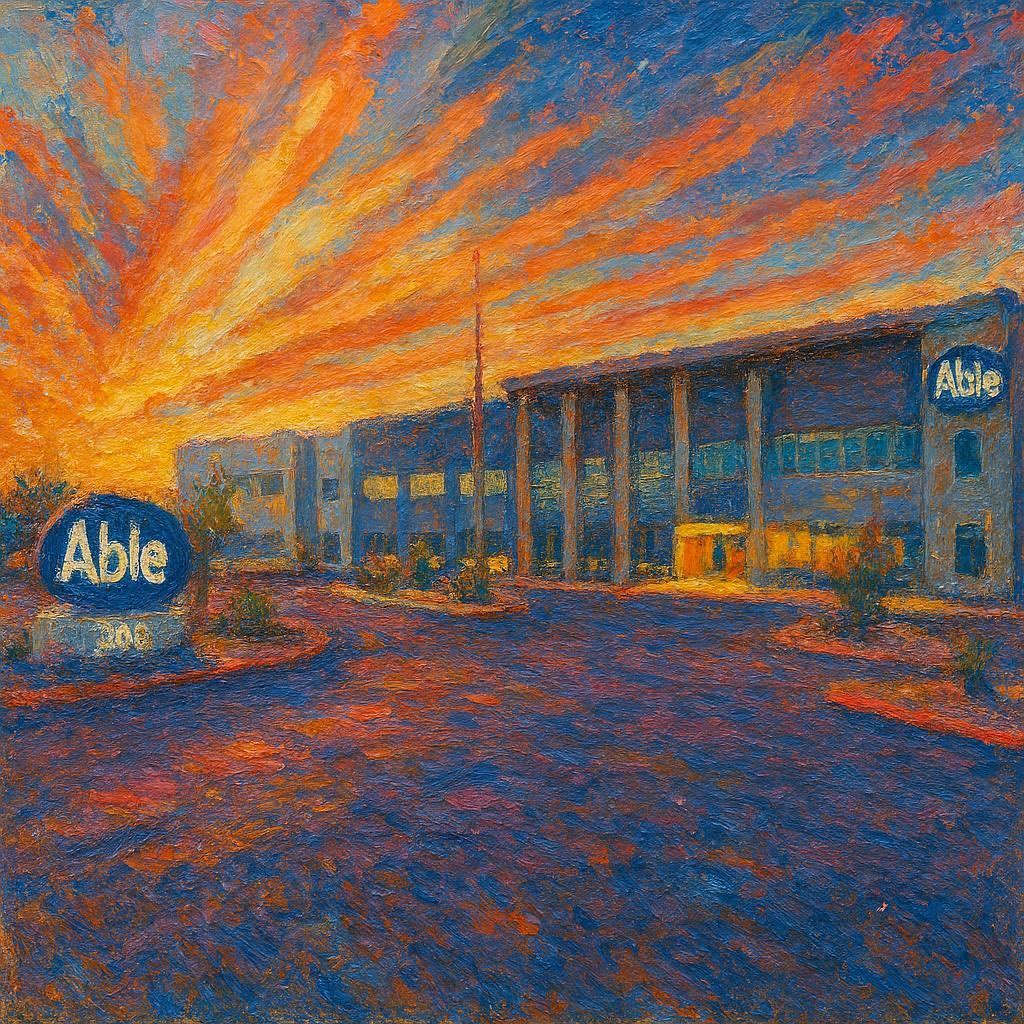
Able Aerospace Services, a Textron Aviation subsidiary, is located at Falcon Field Airport in Mesa. The company recruits current high school students aged 16 and older for paid, semester-long co-op placements. Departments include engineering, information technology, finance, and business management. Participants work 20 to 40 hours per week alongside professional mentors and complete a Campus to Corporate professional development series. The program accepts applications on a rolling basis throughout the year.
Students who spend a semester working in aerospace repair and maintenance operations at Falcon Field build both professional references and real-world technical context. For students interested in aerospace engineering or aviation management, this kind of sustained engagement is precisely what admissions readers at selective engineering schools respond to. In fact, very few programs in the country offer high school students this level of access to working aerospace operations.
Honeywell Aerospace, additionally, partners with K-12 programs across Arizona at facilities in Phoenix and surrounding communities. These paid engineering and manufacturing internships place high school students on teams focused on aerospace component design and quality systems. Participants work under direct mentor supervision with defined project deliverables.
Research Internships in Bioscience
Two programs stand out for Mesa students interested in life sciences.
The KEYS Research Internship, offered by the University of Arizona BIO5 Institute, is a seven-week, paid summer program. It is open to Arizona high school students aged 16 and older who have lived in the state for at least one year. Participants complete one week of laboratory training and then spend six weeks working in a UA research lab under faculty mentorship. Fields include bioscience, biomedical engineering, environmental health, and biostatistics. In 2025 the program launched a dedicated Phoenix-area cohort, making the opportunity significantly more accessible for Mesa students. Applications open in early November and close in mid-December. Completion earns three University of Arizona college credits in molecular and cellular biology at no cost. The acceptance rate in recent cycles was approximately 13%.
The TGen Bioscience Leadership Academy, based at the Translational Genomics Research Institute in Phoenix, offers a two-week intensive summer experience for 20 Arizona rising juniors and seniors each year. TGen scientists guide participants through laboratory shadowing, clinical trials, bioethics, and precision medicine research. Focus areas include cancer, neurological disease, and infectious disease. Each participant receives a $1,000 scholarship. Applications open in December. Notably, TGen selects only one student per Arizona high school annually, which meaningfully reduces competition for students at schools where awareness of the program is low.
Creative and Design Industries
The Mesa Youth Creative Agency (MYCA) is a paid, after-school creative agency operated by Mesa Public Schools. It is supported by Maricopa County funding and hires current Mesa Public Schools high school students aged 14 and older. Paid roles span graphic design, digital design, video production, animation, and painting. Students work on real client projects under professional mentor supervision, building portfolios that reflect genuine industry output. The program runs Monday through Thursday during the school year from a studio in historic downtown Mesa. For students interested in design or creative entrepreneurship, MYCA offers something most extracurricular programs simply cannot: a paying professional role alongside regular coursework. In addition, the program is structured to build a portfolio over time rather than produce a single project, which means students who commit to MYCA emerge with substantive, datable evidence of professional work.
Furthermore, the Mesa Arts Center in downtown Mesa offers volunteering and internship opportunities. Students interested in curatorial work, arts administration, and exhibition management can engage with professional staff through Mesa Contemporary Arts. Interns there participate in object management, exhibition installation, and arts education.
The Arizona Museum of Natural History
The Arizona Museum of Natural History in downtown Mesa manages the Hohokam archaeological site Sce:dagĭ Mu:val Va’aki. The museum’s Youth Ambassadors volunteer program is open to teens interested in science education and public engagement. For students with sustained interest in anthropology, paleontology, or science communication, this is a meaningful local anchor for extracurricular involvement. Students who volunteer consistently over multiple semesters can speak authentically to the intersection of Indigenous engineering history and contemporary science that distinguishes Mesa from virtually any other American city.

Building a Competitive Profile from Mesa
Choose Depth Over Breadth
Admissions offices at selective colleges are not impressed by long lists of activities. They respond to students who have identified something they care about and gone further into it than most people would. A student who spends three semesters working at Able Aerospace and reads independently about rotorcraft engineering will, consequently, read more compellingly than one who lists five loosely connected clubs. Depth requires commitment over time. Students who build it generally do so because the interest itself is genuine, not because an advisor assigned it.
Write About Place with Specificity
Mesa students have material for essays that no student from Connecticut or California can replicate. The Hohokam canal network underlying modern water infrastructure is one example. The Apache helicopter production floor visible from a highway overpass is another. The particular heat and light of the Sonoran Desert in August is a third. College essays that feel generic often earn that description because they avoid place. Essays rooted in Mesa, written honestly, by contrast, sidestep that problem.
Students should resist the temptation to write about place in a boosterism register. Admissions readers are not looking for tourism copy. Instead, they reward students who observe the tensions and complexities of a place. The fact that Mesa’s water infrastructure today rests on a system built by a civilization that eventually collapsed, for example, is the kind of honest, analytical observation that selective colleges respond to. So is the strangeness of manufacturing military helicopters in a sunlit desert suburb. That combination of specificity and intellectual curiosity is exactly what these applications call for.
Leverage the Greater Phoenix Ecosystem
Mesa students should not limit themselves to Mesa-only opportunities. The greater Phoenix metropolitan area, including Tempe, Chandler, Scottsdale, and Phoenix itself, offers a substantially larger ecosystem of research and professional engagement. ASU’s Polytechnic campus in southeast Mesa partners with Boeing, Honeywell, Intel, and Raytheon on applied engineering projects. The ASU Barrett Summer Scholars program, open to rising 9th through 12th graders, moreover, provides an on-campus introduction to honors-level university coursework. TGen and the KEYS program, both discussed above, operate out of Phoenix but explicitly serve students from across the state.
Students should also consider national programs that pair well with Mesa’s industrial context. NASA’s Office of STEM Engagement (OSTEM) offers paid internships to high school students aged 16 and older with a minimum 3.0 GPA, placing them at NASA centers and facilities across the country or in virtual roles. Projects range from aerospace engineering and robotics to data science and Earth science research. The Science and Engineering Apprenticeship Program (SEAP), a paid eight-week Navy research internship, places students in federal labs nationwide. Both programs reward students who can articulate a coherent STEM interest. Students who have already worked at Falcon Field are consequently well-positioned to apply.
Academic Competitions and Independent Research
Selective colleges respond to students who have pursued intellectual work beyond the classroom assignment. In Mesa’s aerospace and engineering context, students can pursue entries for AIAA student design competitions, Science Olympiad, and FIRST Robotics. Several Mesa Public Schools teams compete in FIRST Robotics annually. Students interested in writing and policy can pursue National Merit recognition through PSAT/NMSQT performance. They can also develop independent research projects in the social sciences and humanities. In each case, the goal is the same: identify one area of intellectual interest and go deeper into it than the school curriculum requires. Notably, the most compelling of these students are rarely chasing resume items; they are following genuine curiosity.

From a College Admissions Standpoint
Mesa occupies a distinctive position. It is a large Sun Belt city with substantial industrial and research infrastructure. However, it lacks the well-established private college counseling culture of places like Scottsdale or Chandler. As a result, motivated students who seek out opportunities proactively, rather than waiting for announcements, often find less competition for seats in the programs that matter most.
The aerospace and defense concentration in Mesa is more than a regional employment base. It is a coherent intellectual environment. Students who engage seriously with it, through Able Aerospace internships or FIRST Robotics or independent engineering study, develop subject-area fluency. That fluency translates directly into compelling applications at schools like MIT, Georgia Tech, Carnegie Mellon, Purdue, and the University of Michigan.
For students interested in life sciences, similarly, the Phoenix-area biomedical corridor anchored by TGen and the University of Arizona Health Sciences campus provides real access to faculty mentorship and credentialed research experience. The Sonoran Desert context, additionally, gives environmental science students a field laboratory most national peers cannot match.
Mesa students applying to selective colleges will need to explain what they did with the specific resources of their city. That explanation, when honest and specific, is not a liability. It is, in the end, an asset that few applicants from anywhere can replicate.
How College Transitions Helps
College Transitions works with students from communities across the country to build competitive, honest applications that reflect who students are and where they come from. Our team includes former admissions officers and experienced counselors who understand the specific dynamics of applying to selective colleges from the Southwest. We help students identify which opportunities to pursue, how to frame regional experiences for national audiences, how to build balanced college lists, and how to approach Early Decision. If you are a Mesa student or family thinking seriously about selective college admissions, we would be glad to help.