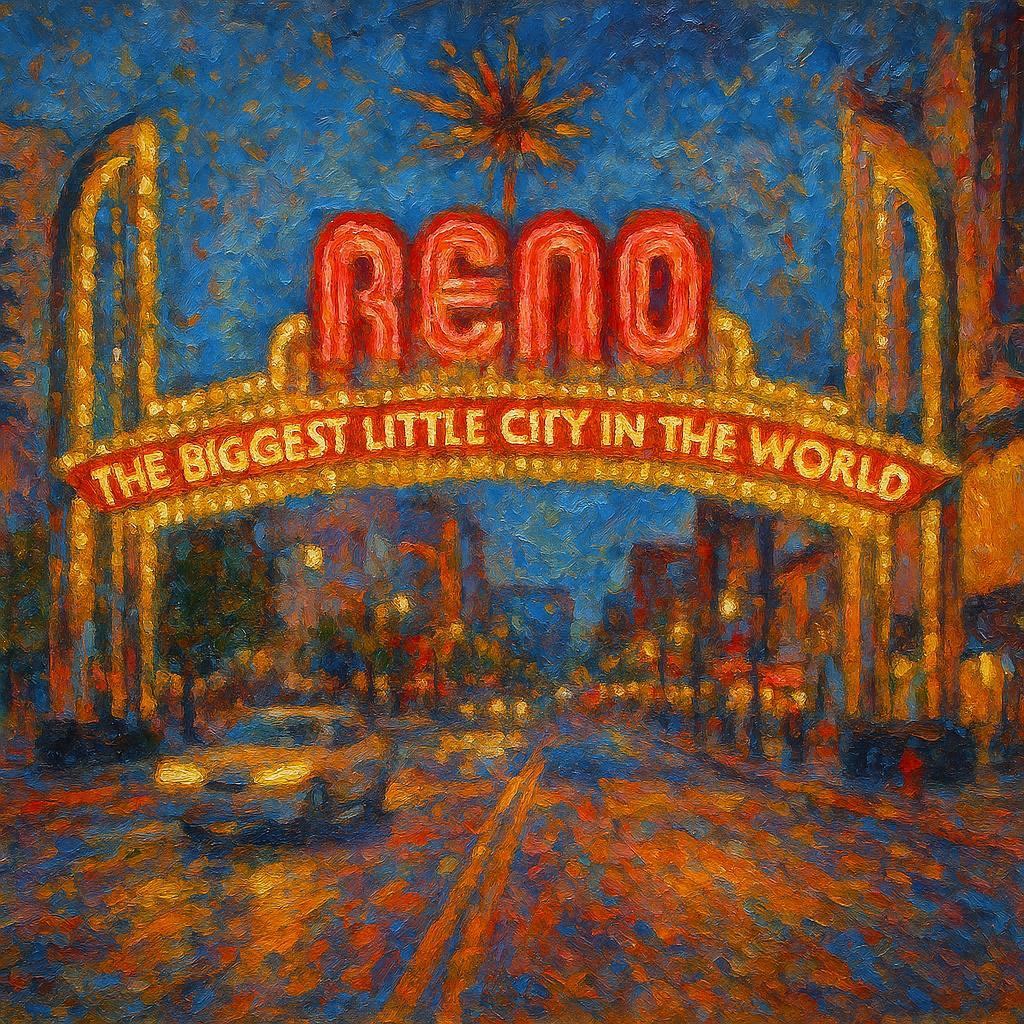
A Rising Tech Hub with More to Offer Than Most Families Realize
Reno is a city in the middle of a genuine transformation. Once defined almost entirely by its casino economy, it now hosts a growing concentration of advanced manufacturing, environmental research, and clean energy infrastructure that rivals what you’ll find in much of the Mountain West. The Tesla Gigafactory sits outside Sparks, just east of downtown. The Desert Research Institute conducts more than $50 million in environmental research annually from its Northern Nevada Science Center on Raggio Parkway. The University of Nevada, Reno anchors the city’s identity as a research institution and pipeline for professional development in medicine, journalism, engineering, and the sciences.
For high school students who are serious about selective college admissions, that combination matters. Reno is not a saturated feeder market. Consequently, students who engage deliberately with its specific opportunities arrive at their applications with material that is both authentic and unusual.

The Geographic Picture: Nevada’s Admissions Landscape
Nevada occupies a genuinely advantageous position in the national admissions map. It is one of the most underrepresented states in the selective college applicant pool. Very few students from Nevada apply to elite institutions each year, and those who do tend to cluster around Las Vegas, which is home to the state’s largest school district. Reno sits in a noticeably less competitive sub-pool within an already underrepresented state. That combination is meaningful; admissions offices at selective schools actively track state and regional representation, and a strong, well-contextualized application from Reno carries real geographic distinction.
The complication is the local flagship anchor. The University of Nevada, Reno is the obvious default for many families in the Truckee Meadows area. UNR is an accessible and affordable public university, and the Governor’s Millennium Scholarship provides additional financial incentive to stay in-state. For students whose profiles and goals align with UNR, that path makes sense. However, high-achieving Reno students often underinvest in their broader college searches. They default to UNR or a small handful of out-of-state schools, bypassing selective institutions where their profiles would be genuinely competitive and where their Nevada origin would be an asset rather than a neutral factor.
Students who have built strong academic records and deep extracurricular engagement should build college lists that extend well beyond the Nevada System of Higher Education. Early Decision is worth considering seriously. Selective schools with robust financial aid programs, including many in the Northeast and Midwest, often become more affordable than families expect once need-based and merit aid are factored in.
What Makes Reno Genuinely Distinctive
Reno is a city with several distinct layers, and the best application essays tend to render those layers precisely rather than reaching for easy tourist imagery.
The Truckee River is the city’s spine, flowing west to east from Lake Tahoe to Pyramid Lake through downtown Reno. Its management is the subject of ongoing legal, environmental, and tribal negotiation; water rights in the Great Basin are among the most contested resource questions in the American West, and the Truckee is at the center of them. Reno itself sits at the edge of the Great Basin Desert, bordered to the west by the Sierra Nevada, and surrounded by terrain that shapes local hydrology, wildfire patterns, and public policy debates in ways that are specific and consequential.
The city’s history adds further texture. Founded in 1868 as a railroad crossing and gateway to Virginia City’s Comstock Lode, Reno reinvented itself multiple times over the following century. It became the “Divorce Capital of the World” in the early 20th century, then a regional gaming hub, and is now reinventing itself again as a tech and clean energy center. That pattern of reinvention is a real and ongoing civic story, not just backdrop.
The Nevada Museum of Art, the only accredited art museum in the state, focuses specifically on art and environment, an unusual mission that reflects the region’s particular relationship with the land. The Burning Man festival, held annually in the nearby Black Rock Desert, has visibly influenced Reno’s arts culture, particularly in the Riverwalk and Midtown districts.
Students who write about this place with precision, grounding essays in its actual texture rather than generic Western imagery, produce work that stands apart. Admissions readers notice the difference.

Research and Academic Opportunities
The Desert Research Institute
The Desert Research Institute is one of the most significant research assets in northern Nevada and one of the most underutilized by Reno-area high school students. DRI is a nonprofit environmental research campus of the Nevada System of Higher Education, with more than 500 researchers and staff working on approximately 300 projects per year across every continent. Its three core research divisions are Atmospheric Sciences, Earth and Ecosystem Sciences, and Hydrologic Sciences, each of which maps directly onto the environmental challenges most visible from Reno: wildfire, drought, water availability, air quality, and climate change.
DRI’s Northern Nevada Science Center is located on Raggio Parkway in Reno. DRI researchers have conducted high-profile work in climate change, ice core analysis, fire ecology, drone-based archaeology, and microplastics detection (including the first confirmed presence of microplastics in Lake Tahoe, documented by DRI scientists in 2019). The institute maintains active outreach to K-12 educators through its STEM Education Program and Nevada Robotics initiative.
For high school students, the most direct path to DRI engagement is through proactive contact with research faculty. DRI researchers who accept NSF grants and external contracts often have flexibility to involve motivated student volunteers or assistants in data collection, field work, or lab support. Students interested in atmospheric science, hydrology, fire ecology, or climate research should reach out directly to DRI faculty whose published work aligns with their interests. A student who can describe genuine research assistance at DRI, whether formal or informal, arrives at a college application with a credential that is genuinely unusual.
University of Nevada, Reno: High School-Accessible Programs
UNR offers several programs specifically accessible to high school students in northern Nevada.
Women in STEM
Funded through the U.S. Department of Education, this program serves Nevada high school juniors and seniors with particular focus on supporting women and others who have faced barriers in STEM education. It connects participants with campus research environments and STEM career pathways.
CBESS Summer Research Program
Coordinated through UNR’s Raggio Center, this 17-month pipeline selects up to 30 bilingual English/Spanish-speaking Northern Nevada high school juniors. Between junior and senior year, participants complete a one-week residential stay on the UNR campus and additional virtual programming, conduct a student-led community health research project, and are matched with a bilingual undergraduate mentor for monthly guidance during senior year.
Davidson THINK Summer Institute
Hosted at UNR, this three-week program enrolls high-achieving students in college-level courses taught by university faculty. Participants are enrolled as UNR students and earn three transferable college credits. The program requires U.S. citizenship and an educator nomination. For students who qualify, it is one of the few programs that places high schoolers directly inside UNR’s academic structure before graduation.
Upward Bound Math Science
This federally funded program serves income-eligible, first-generation high school students in Washoe and Lyon Counties. Its summer component is structured as one residential week at UNR’s Lake Tahoe campus followed by five commuter weeks on the main Reno campus. The program also provides STEM research experiences, dual-enrollment college courses, and college preparatory Saturday sessions during the academic year.
The Renown Medical Explorer Program
Renown Health is northern Nevada’s largest not-for-profit health system and the primary clinical affiliate of UNR’s School of Medicine. Renown Regional Medical Center in Reno is a Level II trauma center and the hub of healthcare delivery for much of northern Nevada and rural areas beyond.
The Renown Medical Explorer Program offers high school students ages 15-17 a structured healthcare experience across summer and fall cycles. According to program information available through the Washoe County School District, the summer cycle runs June through August, with applications due in early April; the fall cycle runs October through December. Each cohort is highly selective, admitting approximately 25 students. Participants engage in clinical-style activities including IV preparation, medication draws, lab cultures, tourniquet training, and tours of hospital facilities including ambulance bays and helipads, while working directly alongside healthcare professionals. The program also requires 12 volunteer hours per month during the school year and eight hours per week during the summer, in addition to one hospital service project and community outreach work.
For students seriously considering medicine, nursing, or allied health fields, the Renown Medical Explorer Program is one of the most substantive pre-professional high school experiences available anywhere in the Mountain West.
Internship and Professional Experience Opportunities
The James Lathrop and Wayne Capurro Memorial Internship
The Nevada Department of Wildlife operates this paid summer internship specifically for graduating Nevada high school seniors (and current undergraduates) who intend to pursue a degree in wildlife management, biology, ecology, or a closely related field. Eligibility requires a minimum 2.50 GPA and a valid driver’s license. Interns are assigned to one of NDOW’s three administrative regions, which include the Western region based in Reno. According to available program data, the paid rate is approximately $16.85 per hour, with the internship running from late May or early June through August. Applications are due in early February each year.
The internship is substantively demanding: participants hike remote terrain, camp in backcountry areas, conduct wildlife surveys, assist with radio telemetry tracking, and help build water developments and other wildlife infrastructure. It is not an office internship. For students committed to environmental or wildlife careers, it is one of the most authentic and intensive paid experiences available at the high school level in the state, and its placement in the Great Basin specifically means that students engage with ecosystems that are both scientifically important and underrepresented in most environmental education contexts.
The KUNR Youth Media Program
KUNR Public Radio (88.7 FM), the NPR affiliate based at UNR, operates a semester-long journalism internship program specifically for Washoe County high school students. Established in 2017 in partnership with the Reynolds School of Journalism at UNR and the Washoe County School District (WCSD), the program trains student reporters to pitch, write, voice, and edit audio stories that air on KUNR FM and are published on KUNR.org. The program runs during both fall and spring semesters; students work with a WCSD educator and the KUNR Youth Media Coordinator and have the opportunity to earn course credit.
KUNR Youth Media was recognized in 2026 with a Career and Technical Education Champion Award from the Washoe County School District. Students who have completed the program have produced reporting on topics ranging from school funding shortfalls to Reno’s local music communities to environmental issues in the Truckee Meadows. For students interested in journalism, communications, or public media, this program produces a bylined, broadcast portfolio that is available online and immediately verifiable by college admissions offices.
The Northern Nevada International Center
The Northern Nevada International Center, based in Reno, offers internships for young adults in the Reno-Tahoe area focused on international engagement, global citizenship, and civic outreach. According to program information, cohorts run across spring, summer, and fall semesters, with spring and fall placements lasting approximately three months and summer placements approximately two months. The program accepts rolling applications on a semester basis and requires strong written and verbal communication skills. Placements are unpaid but may count for course credit.
For students interested in international relations, diplomacy, nonprofit work, or civic advocacy, the NNIC provides a structured organizational setting in which they can develop both professional skills and substantive knowledge of international issues as they affect a regional community.
The Washoe County School District CTE Internship Network
The Washoe County School District operates a broad group internship network through its Career and Technical Education department, connecting students to local employers including Renown Health, KUNR, law enforcement programs, and others. Students access the program through their school’s CTE coordinator and the WCSD Internship Request Form. For students who have not yet identified a specific internship target, the WCSD CTE network is a useful starting point for exploring structured professional placements while still in high school.

Building a Competitive Application from Reno
Identify a Thread and Follow It
Reno’s specific landscape makes certain thematic threads particularly strong: environmental and climate science (the Great Basin, Truckee River, and DRI); healthcare and biomedical research (Renown Health and UNR Med); journalism and public media (KUNR and the Reynolds School); and wildlife and conservation (NDOW, Great Basin ecosystems, and proximity to remote Nevada terrain). Students who choose one of these threads and pursue it with genuine depth over multiple years, rather than sampling broadly, arrive at selective admissions with applications that are coherent, specific, and credible.
The most common mistake among strong Reno-area students is treating their geographic context as background rather than foreground. A student who can explain precisely how a specific summer spent surveying bighorn sheep in a remote NDOW region shaped their understanding of wildlife ecology writes a more compelling essay than one who describes a generic interest in the environment. That precision requires actual experience.
Engage with DRI and UNR Proactively
Both the Desert Research Institute and the University of Nevada, Reno have shown consistent interest in engaging motivated high school students who seek them out. Students interested in research should not wait for a formal program to open a door. They should identify specific faculty or labs whose work matches their interests, read that research, and reach out directly with thoughtful questions and genuine engagement. That kind of initiative, especially when it leads to a sustained relationship over junior and senior year, is exactly what selective college admissions offices respond to.
Use Geography as Narrative Fuel
The Truckee Meadows is a place with genuine specificity: the river that connects two of the West’s most ecologically important lakes; the Great Basin Desert extending to the east; the Sierra Nevada rising to the west; the Comstock Lode towns still visible in the foothills; the contested water rights that shape Nevada’s political future. Students who write about this place precisely, grounding their essays in its actual texture rather than generic desert imagery, produce work that is immediately distinctive to admissions readers who see thousands of essays from students in saturated coastal markets.
Write About Transformation, Not Just Setting
Reno is a city visibly reinventing itself. Students who have grown up watching that transformation, and who have engaged with it through journalism, environmental research, civic work, or the arts, have natural material for essays that go beyond description into genuine reflection. The tension between Reno’s casino-era identity and its emerging tech and research identity is a real and ongoing civic drama, and students who have paid attention to it have something interesting to say.
Broaden the College List Meaningfully
Many Reno families anchor their college searches around UNR, UNLV, and a handful of California schools. Students with strong profiles and deep engagement in Reno’s distinctive opportunities should also investigate selective schools in regions where Nevada applicants are genuinely rare. Schools including the University of Denver, Colorado College, University of Vermont, Tulane, Colby, Dickinson, Wheaton College (Massachusetts), and Gonzaga all see relatively few applications from northern Nevada each year. For students interested in environmental science, schools with strong programs including Middlebury, Colby, University of Vermont, and Lewis and Clark are natural fits for students who have built authentic credentials through DRI, NDOW, or fieldwork in the Great Basin.
Additionally, students interested in journalism should look seriously at schools with strong undergraduate journalism programs, among them Northwestern, Syracuse, Emerson, and Boston University, where a KUNR Youth Media portfolio would be immediately legible and impressive.
For students with the strongest academic profiles, Early Decision to a selective school where Nevada applicants are rare can meaningfully improve chances. A student applying Early Decision to a school like Colby, Middlebury, or Tulane as a genuine northern Nevada environmental science or journalism applicant is in a noticeably different position than the same student applying Regular Decision.

The Bottom Line
Reno is a better launchpad for selective college admissions than most students and families there recognize. The Desert Research Institute is a world-class environmental research institution accessible to motivated high school students who seek it out. The KUNR Youth Media Program produces real journalism that airs on public radio. The Nevada Department of Wildlife’s Lathrop-Capurro internship places graduating seniors in authentic Great Basin conservation fieldwork at a paid professional rate. UNR provides multiple structured pipelines into research and STEM experiences for students who qualify.
Furthermore, Nevada’s underrepresentation in the national applicant pool means that students who have built strong academic records and genuine, place-specific experiences arrive at selective college applications with a geographic asset that many of their peers from larger, more competitive feeder markets simply do not have.
The city does not do the work for you. Geographic advantage only matters once a student has already built the kind of profile, through sustained engagement, real academic rigor, and honest self-reflection, that selective colleges are looking for. But for Reno students who have done that work, the city’s specific identity is a genuine and underused asset.
If you’d like help mapping your Reno experiences to the right college list and building an application strategy that puts your place on the page where it belongs, College Transitions is ready to help. Schedule a free consultation and let’s get started.