Reno is not the first city that comes to mind when selective college admissions offices scan a map. That relative obscurity, however, is changing. The Reno-Sparks metro has grown rapidly, and Washoe County’s secondary school landscape has diversified considerably in the past decade. Families raising college-bound students here now navigate a market that includes one of the highest-ranked public schools in the country, a nationally recognized independent school, a STEAM-focused charter option, a well-established IB program, and a Catholic college-preparatory institution, all within a modest-sized metro set against the Sierra Nevada foothills.
From a college admissions standpoint, Reno-area schools differ meaningfully in:
- Academic depth and course sequencing, from AP-saturation to university-level dual enrollment
- School recognition among selective admissions offices outside the Mountain West
- Access to individualized college counseling versus high caseload environments
- How well a school’s profile translates to a legible narrative for out-of-state institutions
- The degree to which students can differentiate through research, arts, or specialized pathways
The Reno-Area College Admissions Landscape: What Families Need to Know
Reno occupies an unusual position in the national admissions ecosystem. It is neither a heavily recruited market like Chicago, Dallas, or Atlanta, nor a completely overlooked one. Selective colleges, including UC campuses, liberal arts colleges, and top research universities, do recruit in Reno, particularly via the University of Nevada, Reno’s (UNR) proximity and Nevada’s growing economic profile. That said, Reno does not generate the volume of competitive applicants that large metros do. This cuts both ways.
On one hand, a strong student from Davidson Academy, Sage Ridge, or Galena is not competing against thousands of local peers for a limited regional “slot.” On the other hand, admissions offices at schools like Williams, Vanderbilt, or Georgetown may need more context to evaluate a Reno applicant’s school environment, particularly at mid-tier public schools that lack strong national reputations.
Nevada’s state flagship, UNR, plays a central role in how local students plan their academic careers. With an acceptance rate near 74% and a median SAT of 1180, UNR is an accessible destination for most Washoe County graduates. More notably, the Governor Guinn Millennium Scholarship provides up to $10,000 in tuition support for Nevada graduates who earn a 3.25 GPA or qualifying SAT/ACT score and attend an eligible in-state institution. This scholarship creates a genuine financial incentive to stay in-state, and many families weigh it heavily when constructing a college list.
For students targeting highly selective institutions, however, the Millennium Scholarship is beside the point. The strategic challenge for Reno families is building the kind of differentiated academic and extracurricular profile that stands out not just in Nevada, but nationally. Internal school competition is less intense than in major metros, which in turn means Reno students must work harder to signal ambition through external validation: national competitions, dual enrollment, research, and visible extracurricular leadership.

Public Schools: How the Top Reno-Area Public Options Compare
The following table summarizes key metrics for the most college-relevant public high schools in the Reno area.
| School | U.S. News NV Rank | U.S. News National Rank | AP Participation Rate | Graduation Rate | Student-Teacher Ratio | Enrollment (Grades 9–12) |
|---|---|---|---|---|---|---|
| Davidson Academy | #1 | #4 | — | ~100% (4-yr grads) | 10:1 | ~172 (total 5–12) |
| Coral Academy of Science (HS) | #6 | #764 | 100% | N/A | 9:1 | ~382 |
| Galena High School | #15 | #1,782 | 63% | 90% | 26:1 | ~1,287 |
| Reno High School | #16 | #1,892 | 55% | 90% | 26:1 | ~1,770 |
| Earl Wooster High School (IB) | #53 | #9,591 | 37% | 81% | 21:1 | ~1,483 |
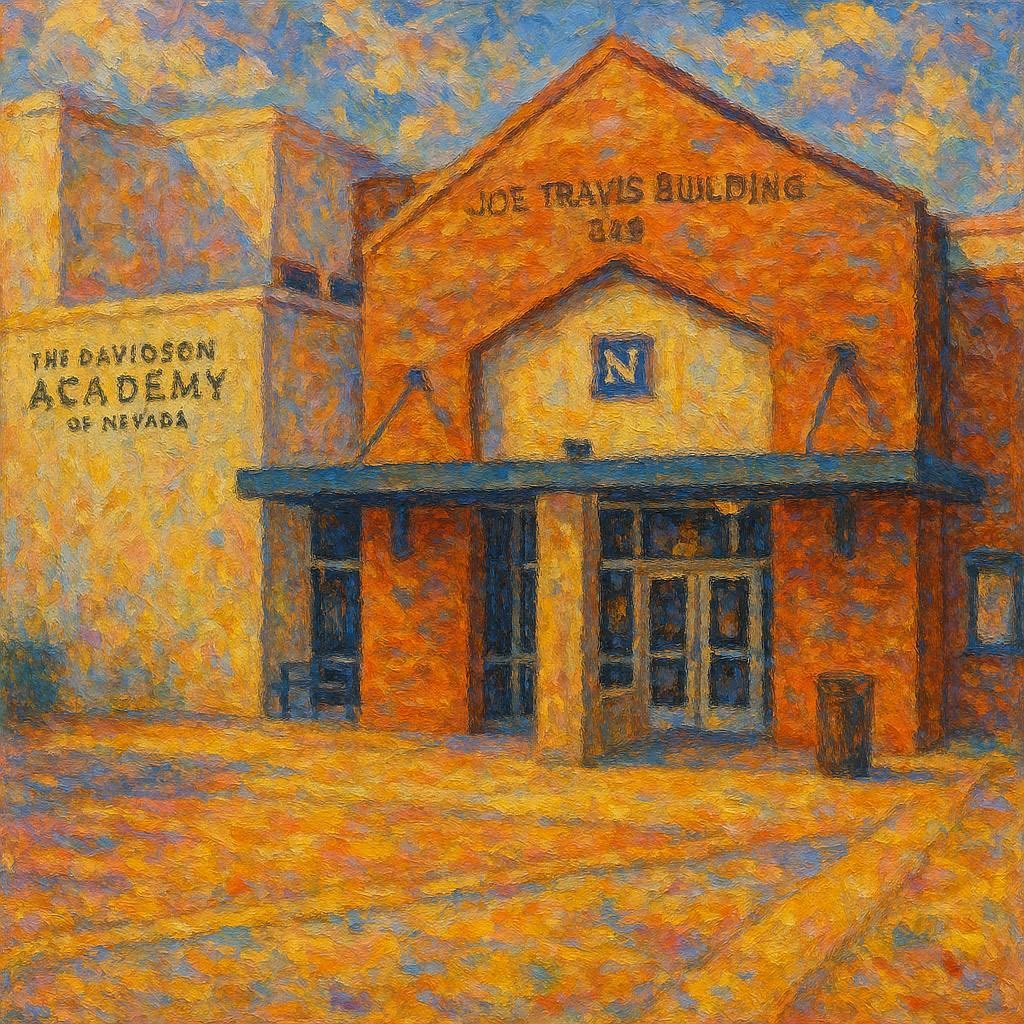
Davidson Academy of Nevada
Public Gifted Charter · Reno, NV (University of Nevada, Reno campus)
| Metric | Data |
|---|---|
| U.S. News National Rank | #4 |
| U.S. News Nevada Rank | #1 |
| Enrollment (total 5–12) | ~172 (Reno campus) |
| Student-Teacher Ratio | 10:1 |
| Average Class Size | ~10 students |
| AP Exam Pass Rate (3+) | 96% (May 2023 sitting) |
| Mean GPA (Class of 2024) | 3.8 (unweighted, 4.0 scale) |
| 4-Year College Enrollment | 100% |
| National Merit Semifinalists | 16 (Class of 2024) |
| Notable Dual Enrollment | UNR undergraduate and graduate courses |
Academic Model
Davidson Academy is not a typical high school. Established in 2006 by Nevada legislation and located on the University of Nevada, Reno campus, it operates as a university school designated for “profoundly gifted pupils.” Admission requires a score at the 99.9th percentile on nationally normed intelligence or achievement tests, combined with demonstrated social-emotional readiness. Enrollment across all grades hovers around 172 students at the Reno campus, making it among the smallest secondary programs in the country relative to its national stature.
The curriculum does not follow grade-level progressions. Students, instead, are grouped by ability and develop individualized Prospective Learning Plans (PLPs) in collaboration with counselors and faculty. Course offerings span advanced high school, undergraduate, and graduate-level material. Students routinely enroll in UNR upper-division courses (like linear algebra, organic chemistry, and legislative process seminars) before completing a high school diploma. An Academy diploma is classified as an advanced diploma under Nevada law.
Davidson does not offer AP courses as structured classes. Many students, however, independently sit for AP exams. In May 2023, 62 students across the school took 113 AP exams, with 96% scoring 3 or higher. National Merit recognition is consistent and exceptional; 16 of 25 seniors in the Class of 2024 were named National Merit Semifinalists, a concentration almost certainly unmatched by any public school in the country at comparable enrollment.
Extracurriculars and College Placement
Extracurricular participation at Davidson is notably intentional. The school encourages students to engage in “a modest, but meaningful amount” of activities. Science Bowl (Nevada champions in 2016, 2020–2026), Science Olympiad, DECA, math competitions, and graduate-level independent research represent the school’s strongest pathways. Several students design and teach their own elective courses, which signals the kind of intellectual initiative that resonates with top colleges.
College placement across the Classes of 2019–2023 (124 graduates across 63 institutions) included Harvard, MIT, Stanford, Caltech, Harvey Mudd, Yale, Columbia, Carnegie Mellon, WashU, and Rice, alongside strong representation at UC Berkeley, UIUC, and the University of Michigan. All graduates attend four-year colleges.
From a college admissions standpoint: Davidson Academy is one of the most extraordinary public schools in the United States, and selective colleges know it. A 100% four-year college placement rate, consistent National Merit Semifinalists representing more than half a senior class, and routine graduate-level coursework mean that Davidson students present profiles that are genuinely unusual, even by elite private school standards. The primary strategic challenge is differentiation within this intensely gifted peer group; with so few seniors competing for top-tier slots, even small distinctions in research depth, extracurricular impact, or narrative clarity matter enormously. Students should develop clear intellectual identities early and pursue recognition beyond the school itself. Outside college counseling is valuable here, not because Davidson lacks advising infrastructure (two dedicated counselors serve a tiny class), but because the caliber of competition at elite schools demands a highly tailored strategic approach.
Coral Academy of Science High School
Public Charter (STEAM) · Reno, NV
| Metric | Data |
|---|---|
| U.S. News Nevada Rank | #6 |
| U.S. News National Rank | #764 |
| Enrollment (9–12) | ~382 |
| Student-Teacher Ratio | 9:1 |
| AP Participation Rate | 100% |
| AP Exam Pass Rate (3+) | 56% average (school reports) |
| AP Courses Offered | 9 AP + 8 Pre-AP |
| Dual Enrollment | UNR Collegiate Academy program (launched 2023) |
| Notable Programs | PLTW Engineering, Biomedical, Computer Science |
| GreatSchools College Success Award | 2021–22 and 2023–24 |
Academic Model
Coral Academy of Science (CAS) High School is the largest charter school in Washoe County and one of the highest-ranked public high schools in northern Nevada outside Davidson Academy. Operating as a tuition-free STEAM-focused institution, CAS serves roughly 382 high school students with a 9:1 student-teacher ratio, among the lowest of any public school in the region.
The AP program at CAS is notable for its universal participation rate. Every high school student takes at least one AP course, a requirement reinforced by a parallel Pre-AP infrastructure beginning in earlier grades. The school was among the first 100 nationally selected by College Board to pilot the Pre-AP program in 2018. In 2023, CAS expanded its offerings through a University of Nevada, Reno Collegiate Academy dual enrollment program, allowing eligible students to earn college credit in courses taught on the CAS campus.
Project Lead the Way (PLTW) provides a four-year, honors-level engineering, biomedical science, and computer science pathway. These programs are specifically designed to prepare students for college STEM environments, and their presence has strengthened CAS’s positioning with engineering-focused universities.
Extracurriculars and Programming
CAS competes in 18 NIAA-sanctioned sports and supports clubs in Science Olympiad, robotics, and student government, among others. The school’s Science Olympiad program has performed well in regional competition. A dedicated college counselor supports upperclassmen through test registration, scholarship research, and essay development.
From a college admissions standpoint: Coral Academy is Reno’s strongest STEAM-specific public pathway outside Davidson Academy. The 9:1 student-teacher ratio, 100% AP participation, and PLTW programming create a legible, coherent story for STEM-focused colleges, particularly engineering programs, UC campuses, and schools that reward students who demonstrate sustained commitment to a technical discipline. That said, the relatively limited AP catalog (9 courses) means that students whose intellectual interests extend beyond STEM may find the breadth of coursework constrained. College counseling is individualized, but because the school is still establishing its national profile, students applying to highly selective institutions benefit from supplementing in-house guidance with external strategy. An applicant who pairs strong CAS academics with published research, national STEM competitions, or meaningful dual enrollment at UNR will present a compelling, differentiated profile.
Galena High School
Public · Southwest Reno, NV (Washoe County School District)
| Metric | Data |
|---|---|
| U.S. News Nevada Rank | #15 |
| U.S. News National Rank | #1,782 |
| Enrollment (9–12) | ~1,287–1,345 |
| Student-Teacher Ratio | 26:1 |
| AP Participation Rate | 63% |
| Graduation Rate | 90% |
| Notable Recognition | Newsweek Top 500 U.S. High Schools |
| Curriculum | AP, Honors, Project Lead the Way |
Academic Model
Galena High School is Washoe County’s most academically decorated traditional public school, consistently ranking among Nevada’s top 15 high schools in U.S. News assessments. Located in the southwest Reno foothills, Galena serves roughly 1,300 students in a suburban setting with an AP catalog that spans most standard subject areas. At 63% AP participation, Galena’s advanced course access compares favorably with many larger public schools regionally.
AP pass rates at Galena have historically exceeded Washoe County and Nevada averages, a noteworthy result given the school’s comprehensive enrollment. Galena also offers Project Lead the Way curriculum, dual enrollment options through Truckee Meadows Community College, and a range of honors coursework across disciplines. The school’s graduation rate of 90% exceeds the Nevada state average of 82%.
Athletics has been a defining aspect of Galena’s identity since its founding in 1992. The school has won league, regional, or state championships in every sport it fields, including a Triple Crown (football, basketball, baseball) in the Northern Nevada 4A Region. The cross country program has drawn national attention, with invitations to Nike Team Nationals.
From a college admissions standpoint: Galena is Reno’s strongest traditional public school for college-bound students who do not qualify for or choose not to pursue Davidson Academy or Coral Academy. The school’s AP access is solid, and admissions offices at Nevada schools and regional institutions will recognize it as a rigorous environment. For students targeting highly selective colleges, however, Galena’s profile requires work. The 26:1 student-teacher ratio means individualized counseling is limited, and students must take intentional ownership of their academic sequencing and extracurricular narrative. The most successful Galena applicants to competitive schools tend to combine maximum AP coursework with a clear, sustained extracurricular specialization: research, athletics at the state or national level, arts, or entrepreneurship. Applying with only a generic high-achiever profile is unlikely to differentiate in a selective pool.
Reno High School
Public · Central Reno, NV (Washoe County School District)
| Metric | Data |
|---|---|
| U.S. News Nevada Rank | #16 |
| U.S. News National Rank | #1,892 |
| Enrollment (9–12) | ~1,770 |
| Student-Teacher Ratio | 26:1 |
| AP Participation Rate | 55% |
| Graduation Rate | 90% |
| Notable Programs | Project Lead the Way, Gifted Program |
Academic Model
Reno High School is the oldest public high school in the city and one of the largest in Washoe County. Serving roughly 1,770 students, Reno High provides broad AP access at a 55% participation rate across a wide range of subjects. The school offers Project Lead the Way programming and maintains a gifted program for eligible students. Graduation rates are consistent with Galena’s at 90%, above the Nevada state average.
The academic culture at Reno High is notably mixed. Advanced coursework is available and well-regarded by students who pursue it, with AP teachers often described as highly engaged with motivated learners. However, the high student-teacher ratio of 26:1 limits individualized advising, and the general population spans a wide spectrum of academic preparation and post-secondary intent.
Extracurricular programming is extensive, with robust athletics, a strong arts tradition, a speech and debate program, and a variety of clubs. The school’s location near central Reno provides access to community partnerships and extracurricular pathways outside the school building. Spirit culture and school identity are strong.
From a college admissions standpoint: Reno High School is a solid college-preparatory environment for motivated students who take advantage of its most rigorous offerings. Colleges reading Reno High applications will contextualize them appropriately; the school’s profile reflects an accessible, broad public school rather than a specialized academic program. This means students pursuing selective admissions need to demonstrate that they have pushed well beyond the default curriculum. Four or more AP courses, strong scores on those exams, meaningful extracurricular depth, and clear intellectual or professional direction are essential. Students who rely on GPA alone, without contextualizing their course rigor relative to what Reno High offers at its ceiling, are unlikely to stand out at competitive schools. The school’s college counselors manage large caseloads; external advising is particularly valuable here.
Earl Wooster High School (IB World School)
Public Magnet · East Reno, NV (Washoe County School District)
| Metric | Data |
|---|---|
| U.S. News Nevada Rank | #53 |
| U.S. News National Rank | #9,591 |
| Enrollment (9–12) | ~1,483 |
| Student-Teacher Ratio | 21:1 |
| AP Participation Rate | 37% |
| Graduation Rate | 81% |
| IB Program | International Baccalaureate Diploma Programme |
Academic Model
Earl Wooster High School occupies a unique and somewhat complex position in the Reno admissions landscape. As a designated IB World School, Wooster offers the full International Baccalaureate Diploma Programme, the only traditional Washoe County public school to do so. The IB Diploma is a globally recognized, two-year credential that demands sustained writing, research (the IB Extended Essay), a Theory of Knowledge course, and demonstrable engagement across academic disciplines. When completed successfully, it is among the most legible forms of academic rigor a public-school student can present to a selective admissions office.
The challenge at Wooster is context. The school’s overall U.S. News ranking reflects its broader population’s academic outcomes, which fall well below state averages on proficiency measures. The school serves a community with significant economic challenges, with 100% of students qualifying for free or reduced-price lunch. The IB Diploma program operates as a distinct academic track within this larger environment. Students who commit to the IB pathway experience a rigorous, structured curriculum; those outside the IB track engage with a more mixed academic experience.
The school’s graduation rate of 81% trails the Nevada state average, and the overall AP participation rate of 37% reflects the reality that much of the student population is not enrolled in the IB or advanced coursework tracks.
From a college admissions standpoint: For the specific subset of Wooster students who complete or pursue the IB Diploma, the school offers a genuine admissions advantage. IB Diploma candidates present clearly to selective colleges; the credential is internationally standardized and understood. A Wooster student who earns the IB Diploma, maintains strong scores on Higher Level exams, and builds a coherent extracurricular profile can compete meaningfully for admission to selective universities that might otherwise discount a low-ranked public school. The strategic challenge is that Wooster’s overall school context, as colleges will read it, is less distinguished than its IB program alone. Students must be prepared to articulate their IB commitment clearly in applications and ensure their recommenders can speak specifically to their engagement within the program. External college counseling can be particularly impactful for Wooster IB students navigating this contextual complexity.

Independent and Faith-Based Schools: How They Compare
The following table summarizes key metrics for Reno’s primary independent and faith-based secondary options.
| School | Type | Enrollment (9–12) | Student-Teacher Ratio | AP Courses | 4-Year College Enrollment | NAIS Member |
|---|---|---|---|---|---|---|
| Sage Ridge School | Independent (non-sectarian) | ~256 total (1–12) | 8:1 | Offered (all AP students must sit for exam) | 100% | Yes (NAIS + NWAIS) |
| Bishop Manogue Catholic HS | Catholic | ~786 | 20:1 | 21 AP subjects | 91% (4-year) | No (NCEA) |
Sage Ridge School
Independent (Non-Sectarian) · Southwest Reno, NV
| Metric | Data |
|---|---|
| Grades Served | 1–12 |
| Total Enrollment (all grades) | ~256 |
| Student-Teacher Ratio | 8:1 |
| NAIS Member | Yes (also NWAIS accredited) |
| AP Policy | All AP students required to sit for the exam |
| 4-Year College Enrollment | 100% |
| Jay Mathews Challenge Index | Ranked Top 100 nationally |
| Financial Aid | Sage Ridge Scholars full-scholarship program (grade 9–12) |
Academic Model
Sage Ridge School is Northern Nevada’s only non-sectarian, independent, co-educational college-preparatory day school. A NAIS member institution accredited by the Northwest Association of Independent Schools, it serves grades 1 through 12 on a 40-acre campus in southwest Reno. Total school enrollment across all grades is roughly 256, producing average class sizes often in the single digits or low double digits, with an 8:1 student-teacher ratio.
The academic model emphasizes liberal arts breadth alongside AP depth. All students enrolled in AP courses are required to sit for the exam, creating strong internal accountability. Latin and Greek are offered in grades 7–12, reflecting a classical humanities tradition uncommon in the Mountain West. Fine arts (theater, music, and visual arts) are integrated throughout the upper school. A Sage Ridge Scholars program provides full four-year scholarships for high-achieving students from socioeconomically diverse backgrounds.
Extracurriculars and College Placement
Extracurricular depth at Sage Ridge is amplified by small enrollment. Students can participate in eight interscholastic sports, including Alpine Skiing, Cross Country, Swimming, and Track and Field, programs that have earned state championships and national rankings. Because the school is small, students often compete in multiple sports and hold multiple leadership roles simultaneously, building the kind of multi-dimensional profile that differentiates applications.
The school reports 100% four-year college enrollment. Alumni have attended Stanford Law (on a Knight-Hennessy Scholarship), University of Wisconsin-Madison, and a range of selective universities. The Capstone senior thesis defense requirement and Outdoor Education Week experiences reflect a commitment to college readiness through applied learning.
From a college admissions standpoint: Sage Ridge is the most strategically well-positioned independent school option in the Reno area for families targeting selective colleges. Its NAIS membership, small class sizes, liberal arts foundation, and universal AP exam accountability create a legible and honest rigor narrative. Selective colleges reading a Sage Ridge application will understand the school context clearly, particularly when the school profile and counselor recommendation speak specifically to a student’s rank within the small class. Because enrollment is small, Sage Ridge graduates are not lost in the crowd — they stand out. The primary strategic challenge is the school’s limited national visibility outside the Mountain West; students applying to East Coast and Midwest schools should expect that context-setting in their applications may be necessary. The school’s individualized counseling and small senior cohort make this entirely manageable.
Bishop Manogue Catholic High School
Catholic College-Preparatory · South Reno, NV
| Metric | Data |
|---|---|
| Enrollment (9–12) | ~786 |
| Student-Teacher Ratio | 20:1 |
| Faculty with Advanced Degrees | 70% |
| Average Teaching Experience | 18 years |
| AP Subjects Offered | 21 |
| AP Exams Administered (2024–25) | 665 exams to 447 students |
| AP Scholars | 61 (including 30 AP Scholars with Distinction) |
| AP Capstone Diplomas | 11 |
| SAT Composite Mean (Grade 11, 2024–25) | 1086 |
| ACT Composite Mean (Grade 11, 2024–25) | 20.7 |
| 4-Year College Enrollment | 91% |
| Class of 2025 Total Scholarship Offers | $10.2M |
| Accreditation | Western Catholic Education Association; AdvancED |
Academic Model
Bishop Manogue Catholic High School is Reno’s only private Catholic college-preparatory institution and, at roughly 786 students, the largest private high school in the market. Founded in 1948 and located on 41 acres in south Reno, Manogue operates on an eight-period modified block schedule and offers 21 AP subjects. The AP Capstone diploma program (requiring AP Seminar, AP Research, and four additional AP exams) is an increasingly valued credential at research-oriented universities.
A mandatory 100 hours of Christian Service, Kairos retreats, and Campus Ministry shape the school’s character-formation environment. Specialized diploma endorsements in engineering and mining (the G.E.M. diploma) and computer science (the Next Reality endorsement) reflect Nevada’s economic landscape and allow students to build industry-relevant academic profiles.
Faculty credentials are strong: 70% hold advanced degrees, and the average teaching experience of 18 years signals a stable instructional environment. Class of 2025 scholarship offers totaled $10.2 million, with 25% of students receiving tuition assistance.
Extracurriculars and College Placement
Manogue competes in 26 varsity sports and offers 19 clubs. The school’s Associated Student Body provides meaningful student governance experience, and Campus Ministry leadership offers community service at scale. Recent Class of 2025 matriculation includes Columbia University, Dartmouth, Georgetown, MIT, Northwestern, Stanford, University of Notre Dame, University of Pennsylvania, Villanova, and Washington University in St. Louis, alongside strong UC representation and Nevada institutions.
From a college admissions standpoint: Bishop Manogue is a strong choice for families seeking a structured, faith-integrated environment with genuine AP depth. The 20:1 student-teacher ratio is higher than Sage Ridge’s 8:1, but the school’s size creates more extracurricular breadth and sports access than smaller institutions can offer. The SAT composite mean of 1086 and ACT mean of 20.7 suggest that average academic performance falls below what selective colleges expect, so strong applicants need to distinguish themselves clearly within the school context. Students targeting highly selective universities should pursue the AP Capstone diploma, maximize course rigor, and extend extracurricular impact to regional or national recognition. The school’s faith-service dimension (Campus Ministry, mission trips, service leadership) can provide authentic narrative material that purely secular schools rarely generate as naturally.

How College Transitions Helps Reno-Area Families
College Transitions works with students from across the Reno-area secondary school landscape. We help families:
- Understand how selective admissions offices read and contextualize each specific Reno school, from Davidson Academy’s extraordinary profile to the strategic complexity of Wooster’s IB context
- Build course selection strategies that maximize academic signaling within each school’s particular curriculum and grading environment
- Develop multi-year extracurricular plans that move beyond school-level participation toward the regional and national recognition that distinguishes competitive applicants
- Construct data-driven, balanced college lists that account for the Millennium Scholarship, in-state and out-of-state financial dynamics, and each student’s genuine range
- Write application essays that give admissions readers a clear, specific understanding of who a student is. This is especially critical when applying from a market that selective schools do not visit as frequently as major metros
Final Thoughts
Davidson Academy occupies a singular position in American public education. Students who qualify and thrive there position themselves for admission to universities at the very top of the selectivity spectrum, and the school’s small senior class means individual attention is genuinely available. Coral Academy of Science, meanwhile, is Reno’s strongest STEAM-specialized public pathway, with a 9:1 student-teacher ratio and universal AP engagement that rivals many private schools. Galena and Reno High offer solid, broad college-preparatory environments for students willing to pursue the most rigorous coursework available and supplement school counseling with external strategy.
For families considering independent options, Sage Ridge School’s NAIS membership, 8:1 student-teacher ratio, and strong liberal arts identity make it Reno’s clearest analog to the kind of independent school experience that selective colleges know well. Bishop Manogue’s depth in AP subjects, a dedicated faculty, and faith-formation programming create a well-rounded environment for families whose values and college goals align with what Catholic education provides.
The Reno market is not without its strategic challenges: limited national visibility, heavy UNR gravitational pull, and counselor caseload constraints at many public schools all create real friction for ambitious students. Wherever your student attends, College Transitions helps families in the Reno area turn strong academic options into clear, differentiated admissions plans.