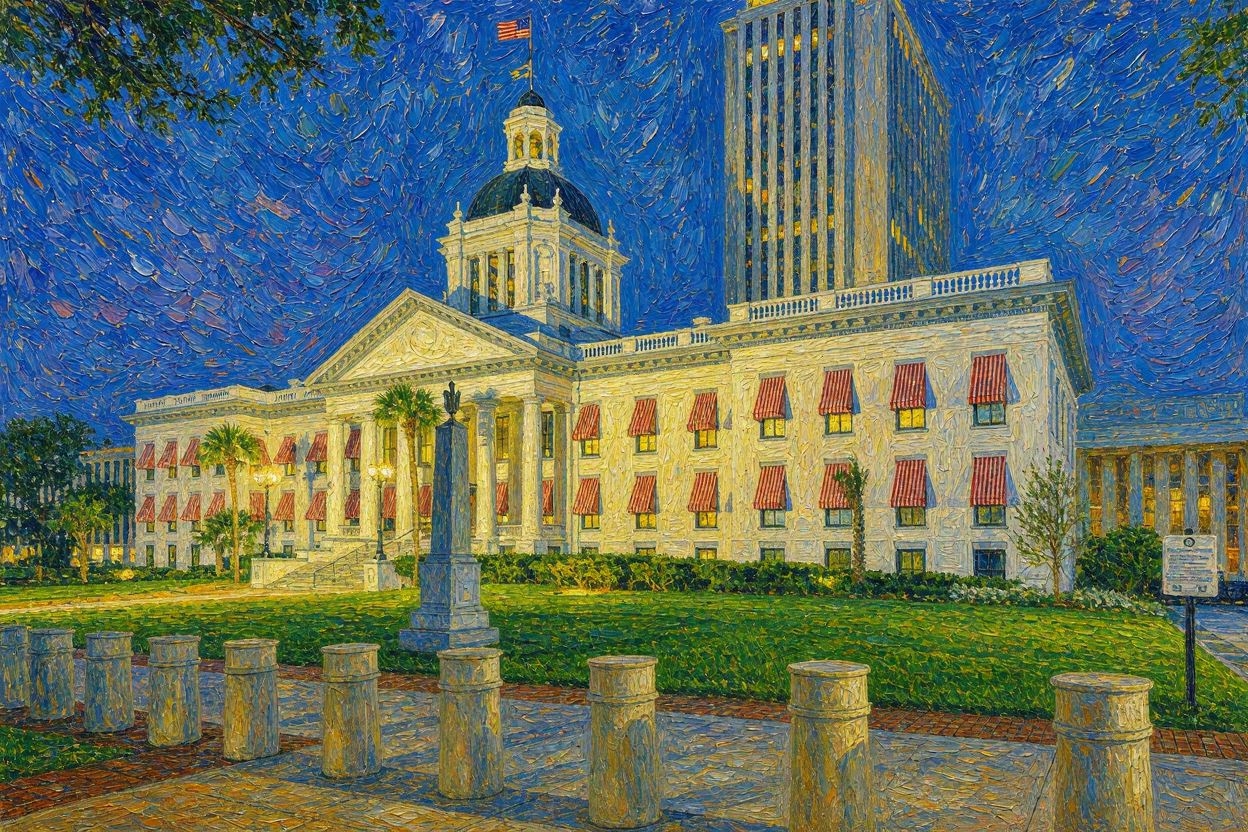
Tallahassee is a college town twice over. Florida State University and Florida A&M University both call it home, and the city is also Florida’s seat of state government. For a high schooler, that combination is unusual. A single city offers major research universities, a working state capitol, and a rural, forested county line just minutes from downtown. Students who treat these as separate backdrops, instead of connected resources, leave an advantage on the table. This guide covers where Tallahassee students can find real opportunities. It also covers how to use them to build an application that stands out nationally, not just locally.
The National Admissions Picture from Tallahassee
Florida sends a large volume of applicants to selective colleges every year. Tallahassee students compete within that pool alongside far larger metro areas like Miami, Orlando, and Tampa. That size cuts both ways. Florida’s public universities are genuinely excellent, so admissions officers already respect what the state produces. Still, a familiar Tallahassee profile can blend into a large stack of similar Florida files. A few honors classes, a leadership title, a handful of clubs: none of that reads as distinctive on its own. Standing out takes depth in one specific area. That depth needs to build across more than a single summer, not across a longer activity list.
Breaking the Flagship Anchor Habit
FSU and FAMU are both in Tallahassee, so many strong students default to applying there and stop their college search short. That instinct makes sense. Tuition savings are real, and Bright Futures makes in-state attendance financially attractive. However, students aiming for the most selective national colleges should treat FSU and FAMU as one part of a broader list, not the automatic outcome. Early Decision at a private university outside Florida can be a smart move for a student whose academic profile and finances both support it.
What Makes Tallahassee Distinctive
Tallahassee sits in the Red Hills region, a landscape of rolling clay hills and old-growth longleaf pine forest. It is ecologically distinct from the flat, sandy terrain most people associate with Florida. Canopy roads, arched over by centuries-old live oaks, connect the city to surrounding land. That land was once plantation acreage; today it is managed for conservation and prescribed fire research. This environmental character sits right next to the state’s political center. The Capitol building, the Florida Legislature, and dozens of advocacy organizations operate within walking distance of downtown. A student who writes about the canopy roads, the fire ecology, or the policy hub produces an essay that feels specific. By contrast, a student who only writes “I live in a college town” wastes the material sitting outside their own door.
Programs and Opportunities for Tallahassee Students
Building a Research Profile at Florida State
The Florida State University Young Scholars Program (YSP) is a six-week residential summer program on FSU’s campus. It is designed for students who have completed the eleventh grade, though narrow exceptions are occasionally made for exceptionally advanced tenth graders. Participants take specialized math, science, and computer programming coursework. They also complete an independent research project under faculty and graduate student mentorship, ending in a poster presentation. Florida State covers room, board, and tuition for every admitted student. The program values this award at more than $7,000, and students with significant financial need can apply for a supplemental stipend to cover travel and books. Applicants must maintain a permanent Florida residence. They must also have scored at or above the 90th percentile in math on a standardized test such as the SAT, PSAT, or ACT. Applications open January 1 and are due February 15, with decisions finalized by mid-May. For a Tallahassee student, YSP offers something rare: a residential research experience without the cost or travel of an out-of-state program.
Learning Health Care from the Inside at Tallahassee Memorial
Tallahassee Memorial HealthCare (TMH) runs an intensive Teen Summer Volunteer Program for students entering their junior or senior year. The program runs three weeks, all day, and rotates participants through a range of hospital units. Consequently, students see what different health care careers actually involve day to day, not just what they look like from a waiting room. Interested students must submit an application to TMH’s Volunteer Services. Because the program requires a full three-week commitment with no partial attendance, students should plan their summer schedule around it well in advance. That kind of sustained, structured hospital exposure carries far more weight than a single job-shadow day.

Engineering Immersion at the Challenger Learning Center
The Challenger Learning Center of Tallahassee serves as the K-12 outreach facility for the FAMU-FSU College of Engineering. That is the joint engineering school shared by Florida’s two Tallahassee-based public universities. Each summer the center runs a set of specialized high school camps. The most demanding is the Engineering Overnight Camp, a week-long residential program held on the FSU campus. Students explore multiple engineering disciplines, work hands-on in campus labs, and take field trips to research facilities around the city. Eligibility is specific: applicants must be at least 15, must have completed the 9th grade, and must hold a minimum 3.0 GPA. They must also show demonstrated STEM achievement before admission. For a Tallahassee student who wants a technical credential grounded in both of the city’s public universities at once, a week here does exactly that.
A Steady Foothold at Leon County’s Library
The LeRoy Collins Leon County Public Library accepts volunteers starting at age 12. Its Teen Advisory Board gives older students a more structured, ongoing role. Board members meet twice a month, on the first and third Thursday from 4 to 5 p.m. at the Main Library, where they brainstorm and help market teen programming. In return, members are expected to attend at least one teen event each semester. This is not a research fellowship or a hospital rotation, and it should not be framed as one. Instead, it is a low-barrier, low-cost way for a Tallahassee student to demonstrate consistent civic involvement over multiple years. That matters most for a student whose other activities are less structured or harder to document. Colleges reviewing thousands of applications notice patterns of sustained commitment. A two-year run on a library board says more than a single-semester club membership ever could.
Turning Local Access into Selective Admissions
None of these programs substitutes for strong grades, rigorous coursework, and genuine intellectual engagement. They work only for students who have already built that foundation and are looking for ways to deepen and document it. Consider a Tallahassee student who spends two summers in FSU’s Young Scholars Program. Now layer in a year of Teen Advisory Board meetings, plus a week at the Challenger Learning Center’s Engineering Overnight Camp. Together, those build a coherent, place-rooted story instead of a scattered list. This kind of depth, sustained over time and grounded in specific local institutions, is exactly what selective admissions committees want to see. It is also exactly where College Transitions can help Tallahassee families turn genuine local access into a standout application.