
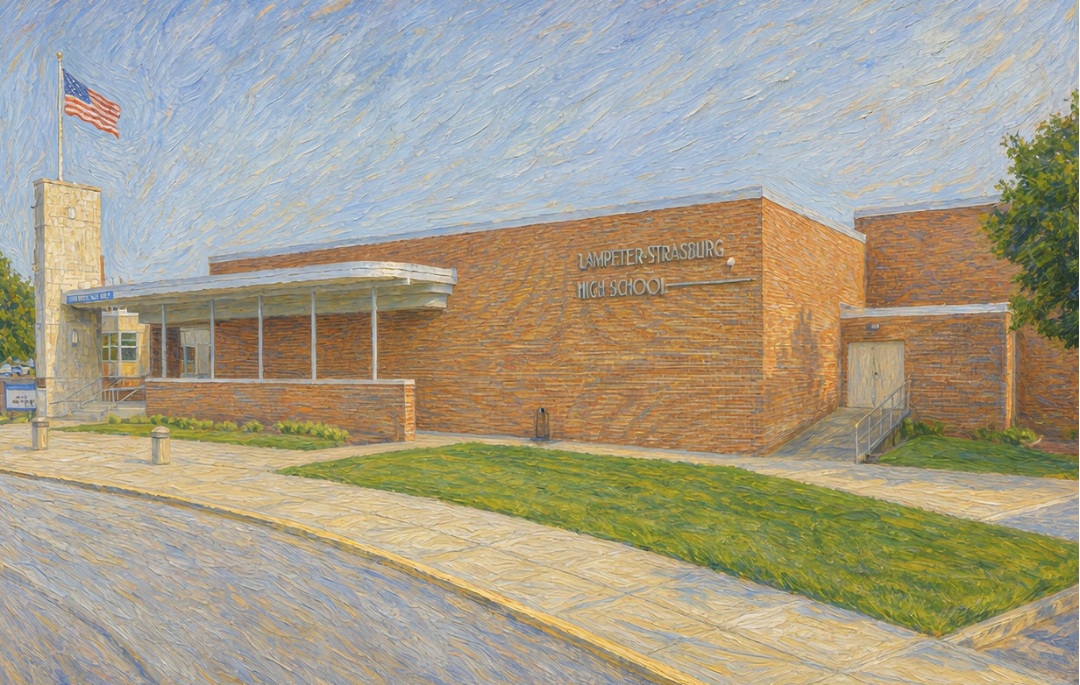
Families across Lancaster and the surrounding county know that selective college admissions grow more competitive every year. Notably, the area’s strongest public high schools now trade places at the top of the U.S. News & World Report rankings almost annually. In the most recent rankings, Hempfield High School placed first in Lancaster County and 65th in Pennsylvania. Penn Manor, Lampeter-Strasburg, and Manheim Township followed closely behind. Meanwhile, Conestoga Valley, Garden Spot, and Warwick round out a deep field of comprehensive public schools. Consequently, high-achieving students across the county often present similar transcripts filled with AP and honors courses. The real question, therefore, is not whether a Lancaster student can compete. Instead, it is how that student can stand out.
Today’s case study highlights Gabby, a student at Lampeter-Strasburg High School. Through a focused strategy rooted in her own corner of the county, she earned:
- EA acceptance to Penn State’s Eberly College of Science
- EA acceptance to the University of Maryland
- ED acceptance to Emory University
Above all, Gabby’s story shows that Lancaster County’s most distinctive features can become a genuine admissions advantage.
Meet Gabby: A Strong Science Student Living Beside an Untold Story
When Gabby began working with College Transitions in the spring of her sophomore year, she already had real strengths. She attended Lampeter-Strasburg High School, the only high school in its district. U.S. News ranks the school 85th in Pennsylvania and third in the Lancaster metro area. Additionally, 35% of its students take at least one AP exam, and the school posts a 93% graduation rate.
Gabby earned top grades in honors biology and chemistry. However, her activities were scattered across science club, track, and occasional volunteering. Like many students in southern Lancaster County, she had grown up beside Amish and Mennonite farms without connecting that setting to her academic interests.
Her family lived a short drive from the Clinic for Special Children, a nonprofit medical practice founded in Strasburg in 1989. The clinic diagnoses and treats rare genetic disorders that appear more often in Plain communities, since those populations descend from a small number of founding families. In 2024, it moved into an expanded facility in nearby Gordonville. That institution would become the anchor for everything Gabby built.

1. Choosing a Strategic Major: Biology with a Focus on Human Genetics
Many strong science students in Lancaster County default to pre-med or general biology. Those paths are crowded, and they rarely signal a specific intellectual direction. After reviewing Gabby’s coursework and interests, our counselors guided her toward biology with a focus on human and medical genetics.
Why Human Genetics Made Sense
- It connected her strongest coursework to a real scientific story unfolding a few miles from her home.
- It gave her one unifying theme for activities, research, essays, and supplements.
- It separated her from the large pool of generic pre-med applicants.
- It aligned with programs at her target schools, including Penn State’s Genetics and Development option, Maryland’s Cell Biology and Genetics specialization, and Emory’s Biology major.
Importantly, this direction was authentic. Gabby had heard about the clinic’s work for years at community events. Now, she finally had an academic framework for understanding it.
2. Improving Her SAT Score: From 1270 to 1480
Gabby’s first official SAT score of 1270 was solid. Still, it fell below the typical range for Emory and other selective research universities. Therefore, College Transitions built a targeted plan around her diagnostic results.
Her plan emphasized data interpretation in science passages, advanced algebra, and problem-solving under time pressure. Additionally, she kept a weekly error log sorted by skill type. She took a full-length timed practice test about once a month and worked through short section drills targeting her weakest skills.
By early fall of her senior year, Gabby had raised her score to 1480. That 210-point gain placed her firmly in range at every school on her list. Equally important, the improvement demonstrated persistence, a trait selective colleges value in future scientists.
3. Deepening Her Extracurriculars: From Participant to Organizer
Gabby’s involvement was genuine but scattered. Consequently, we helped her consolidate it around one commitment that fit her new direction.
Each spring, the Clinic for Special Children hosts a 5K race through Lancaster County farmland, starting at the Leola Produce Auction. Gabby first ran the course as a freshman. As a junior, she organized a Lampeter-Strasburg student team, recruited classmates from track and science club, and led the team’s fundraising effort. Subsequently, she volunteered at the clinic’s annual Lancaster County Benefit Auction, also held in Leola. There, Plain and non-Plain neighbors bid on handmade quilts, furniture, and food to support the clinic’s care.
Furthermore, Gabby launched a genetics reading group within her school’s science club. Members discussed accessible articles on founder populations, newborn screening, and gene therapy. The group gave her a leadership role that matched her academic focus. It also supplied concrete material for her essays and interviews.

4. Adding a Major-Aligned Research Project
To move beyond volunteering, our team helped Gabby design an independent project built on publicly available sources. She drew on peer-reviewed studies by the clinic’s researchers, the federal ClinVar variant database, and Pennsylvania’s newborn screening panel. Additionally, a biology professor at nearby Franklin & Marshall College agreed to review her methods.
Project Scope
Project title: Founder Variants and Newborn Screening Coverage in Lancaster County’s Plain Communities
- Compiled genetic disorders documented at elevated frequency in Lancaster County’s Amish and Mennonite populations
- Classified each disorder by inheritance pattern and treatment window
- Compared that list against conditions on Pennsylvania’s newborn screening panel
- Identified treatable disorders that standard screening could miss
Gabby summarized her findings in a written paper and a research poster. Most importantly, the project showed that she could ask a precise question and answer it with real data.
5. Entering Competitions for External Validation
Selective colleges value outside recognition that confirms a student’s direction. Accordingly, we encouraged Gabby to enter competitions that rewarded original research rather than general science knowledge.
First, she presented her project at the North Museum Science and Engineering Fair in Lancaster. It is one of six Pennsylvania fairs affiliated with the Regeneron International Science and Engineering Fair. Her poster earned a category award in the senior division. She also presented the same work at her regional meeting of the Pennsylvania Junior Academy of Science. A first-place rating there qualified her for the state meeting at Penn State’s University Park campus.
Each result reinforced her genetics focus. Just as important, none of them pulled attention toward unrelated interests.
6. Writing a Personal Statement Rooted in Place
Gabby’s early drafts were sincere but predictable. She wrote about loving science and wanting to help children with rare diseases. Admissions readers see that message in thousands of essays every year. Our essay coaches pushed her toward a single, specific scene.
Her final personal statement opened at the Leola benefit auction. Gabby described a handmade quilt drawing a long bidding war while the auctioneer’s chant echoed through the produce barn. Then she noticed a young boy she recognized from the clinic’s 5K, sitting with his family near the auction ring. In that moment, she understood what she was watching: an entire community financing genetic medicine one bid at a time.
The essay never announced her intended major. Instead, it revealed curiosity, empathy, and a precise eye for detail. Consequently, it connected naturally to her research without repeating it.

7. Using Early Action and Early Decision Strategically
With her counselor, Gabby built a list that paired an ambitious top choice with two strong Early Action options.
Early Action Schools
For Early Action, Gabby applied to Penn State’s Eberly College of Science for the Genetics and Development option. She also applied to the University of Maryland’s Biological Sciences program with a Cell Biology and Genetics specialization. Both schools admitted her. Penn State offered a vast research enterprise within driving distance of home. Meanwhile, Maryland offered proximity to the National Institutes of Health and the federal genomics community.
Early Decision School
Emory University was Gabby’s clear first choice. Its Biology major, undergraduate research culture, and Department of Human Genetics in the School of Medicine matched her goals precisely. Therefore, applying Early Decision allowed her to demonstrate genuine commitment. Her supplements referenced specific genetics coursework and her interest in genetic counseling. The acceptance arrived in mid-December.
Why Gabby’s Strategy Worked
- She chose a human genetics focus rooted in her own community.
- She raised her SAT score by 210 points into a competitive range.
- She turned scattered activities into sustained leadership tied to the Clinic for Special Children.
- She completed an original research project using real public data.
- She earned recognition at ISEF-affiliated and statewide competitions.
- She wrote a personal statement only a Lancaster County student could write.
Gabby did not reinvent herself. Instead, she connected her genuine interests to resources close to home and showed admissions readers exactly who she was.
What This Means for Lancaster Families
Lancaster County’s public high schools offer real academic depth. According to U.S. News, Hempfield ranks first in the county with a 30% AP participation rate. Manheim Township ranks 87th in Pennsylvania with a 44% AP participation rate, while Lampeter-Strasburg ranks 85th with a 35% AP rate. Penn Manor, Conestoga Valley, Garden Spot, and Warwick also produce strong applicants each year.
However, strong grades are the baseline in that environment. Moreover, many Lancaster students overlook the region’s most distinctive resources: a world-renowned genetics clinic, deep agricultural roots, and nearby colleges such as Franklin & Marshall and Millersville. Standing out at selective colleges requires:
- A clear academic direction connected to a student’s interests
- Sustained commitment rather than scattered participation
- At least one original research or project experience
- Recognition through competitions
- Essays grounded in specific, personal moments
- A thoughtful Early Action and Early Decision plan
Ultimately, this is the work College Transitions does with students across Lancaster County, and it is the work that made Gabby’s outcome possible.
Additional Resources
- Top High Schools in the Lancaster, PA Area: How They Compare for College Admissions
- Is Lancaster, PA a Good Place for College Admissions? Strengths, Gaps, and Strategy in the Garden Spot
- Rooted in Red Rose Soil: How to Get into Top Colleges from Lancaster, Pennsylvania
- 21 Best Colleges in Pennsylvania

