
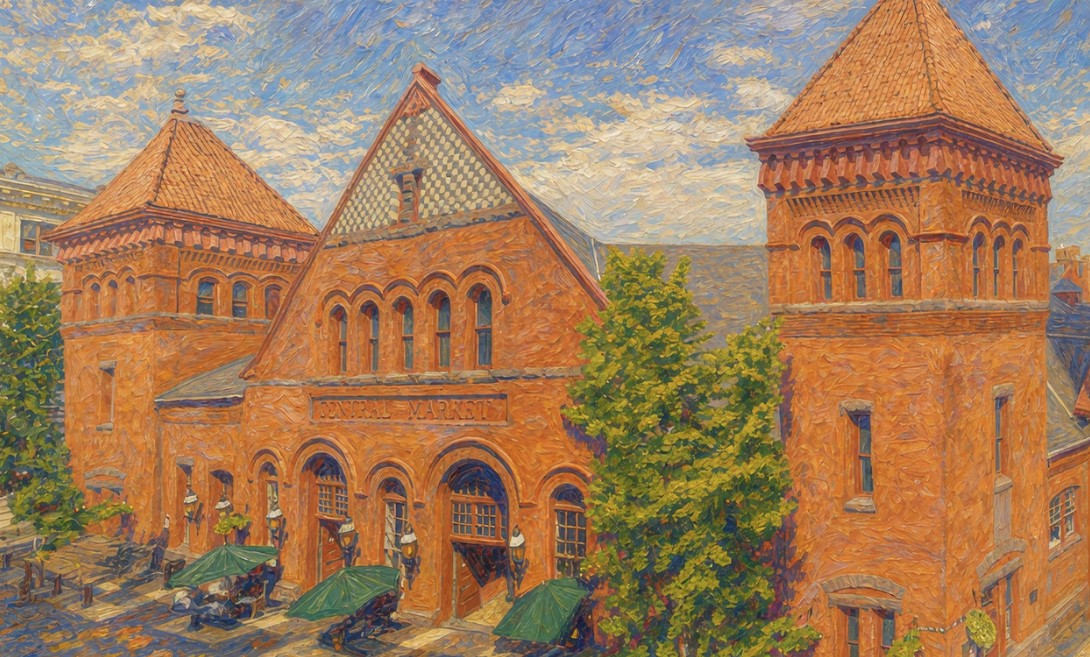
Lancaster sits about 70 miles west of Philadelphia, surrounded by some of the most carefully protected farmland in the country. The city itself is small, with roughly 58,000 residents. Yet its history runs deep: Congress met here for a single day in 1777, and Central Market has traded on the same square since 1730. For students, that combination of farmland, civic history, and a compact downtown creates real opportunities. However, those opportunities rarely announce themselves. Many of Lancaster’s best options are small, local, and easy to miss.

The National Admissions Picture
Pennsylvania sends a large number of applicants to selective colleges every year. As a result, Lancaster students compete within a crowded Mid-Atlantic pool. Admissions officers at Penn, Carnegie Mellon, Johns Hopkins, and Georgetown see many strong applicants from eastern Pennsylvania. Consequently, a Lancaster address alone offers little geographic lift.
That said, Lancaster applicants can stand apart in another way. Students from Philadelphia’s Main Line or the New Jersey suburbs often describe similar experiences. By contrast, a student who has worked with Lancaster’s agricultural, historical, or civic institutions brings a less familiar perspective. Readers notice specificity, especially when it reflects years of commitment.
Still, geography only helps students who have already built strong profiles. Rigorous coursework, strong grades, and sustained involvement come first. Local opportunities then add texture and evidence to that foundation.
Looking Beyond the Nearby Flagship
Many Lancaster families default to Penn State, which sits about two hours away in University Park. Others look first at Millersville University, just a few miles south of the city. Both are solid options. However, a list built only around familiar names can leave a strong student underserved.
Instead, students should research schools that match their academic interests, regardless of distance. A future agricultural economist might compare Cornell, Wisconsin, and UC Davis. Similarly, a student drawn to public history might look at Georgetown, Brown, or William & Mary.
Early Decision can also strengthen an application when a student has a clear first choice. ED applicant pools at many selective colleges admit students at higher rates than regular rounds. For that reason, students should identify a genuine top choice by the summer before senior year. With that broader view in place, the next step is understanding what makes Lancaster itself distinctive.
What Makes Lancaster Distinctive
Lancaster County has long treated farmland as something worth protecting. The county’s Agricultural Preserve Board formed in 1980 and began buying development rights in 1983. As of December 2025, it had preserved 90,867 acres on 1,109 family farms. That commitment shapes the landscape, the local economy, and many public debates about growth.
The city also carries layered history. Central Market began as a deeded public marketplace in 1730, and its current Romanesque Revival building dates to 1889. A short walk away, the Fulton Theatre opened in 1852 on the foundation of the city’s former jail. It takes its name from Lancaster native Robert Fulton, the steamboat pioneer. Today, the theater is a National Historic Landmark and one of the oldest continuously operating theaters in the country.
Notably, Lancaster has also become a destination for newcomers. Recent arrivals include families from Ukraine, Southeast Asia, Latin America, and Africa, and the city has held Certified Welcoming status since 2019.
Writing About Place with Care
These features can inform strong essays, but only with precision. For example, a student might write about a specific vendor stall at Central Market or a zoning hearing over a farm parcel. Generic praise for “small-town charm” adds nothing. With that in mind, the following programs offer concrete ways to engage with Lancaster directly.

Programs and Opportunities for Lancaster Students
History and Civic Engagement
LancasterHistory Student Advisory Council
LancasterHistory runs a summer Student Advisory Council for teens who want to shape how museums teach history. The council is open to students entering grades 9 through 12 in the fall, from any school. Priority goes to Lancaster County students, and the council requires no prior experience.
The program typically takes place in early July from 9:30 a.m. to 2 p.m. each day. Sessions alternate between LancasterHistory’s President Avenue campus, home to Wheatland and its Museum and Research Center, and the new Stevens & Smith Center downtown. Members tour sites and help develop new field trips and youth programs. Participants who attend every day receive a $200 gift card, plus lunch and transportation support.
For students interested in history, museum studies, or education policy, the council offers rare access. Moreover, it puts teens in the role of designers rather than visitors. Beyond history, Lancaster also offers hands-on opportunities tied to its industrial past.
Railroad Museum of Pennsylvania Junior Volunteers
The Railroad Museum of Pennsylvania in Strasburg, operated by the Pennsylvania Historical and Museum Commission, accepts junior volunteers. Junior volunteers must be at least 14 years old. Volunteers ages 14 to 16 need a parent or guardian present for the entire shift. At 16, a junior volunteer may work under direct staff supervision with parental approval.
Junior volunteers generally share the same duties and benefits as adults, with a few exceptions. State rules may limit how many hours or days minors can work. Active volunteers receive the quarterly Crew Caller newsletter, along with training opportunities and recognition at events. To apply, students download the volunteer application from the museum’s website or contact the volunteer coordinator.
This option suits students interested in engineering, transportation history, or museum work. A student who volunteers here for several years could connect that experience to coursework in physics, history, or design. From there, students can build academic depth through Lancaster’s colleges.
College Coursework and Agricultural Science
Millersville University Dual Enrollment
Millersville University offers dual enrollment for high school juniors and seniors. Students should have completed most of the challenging courses their high school offers. The university recommends grades of B or better, or roughly a 3.0 GPA. Students choose from an approved course list, and most courses meet on campus.
Partner-school students receive 50% off tuition and pay a per-credit technology fee. Students at non-partner schools pay full tuition and fees, so families should ask their counselor about partner status. Applicants may request up to two courses at first. Deadlines are November 15 for spring courses and May 15 for fall courses.
Additionally, Millersville received a $736,000 Dual Credit Innovation Grant from the Pennsylvania Department of Education. The grant supports a Dual Enrollment Scholars Academy with weeklong residential summer workshops in teaching, business, applied engineering, and human services. That academy serves students from the School District of Lancaster, Penn Manor, and La Academia Partnership Charter School.
For students, college coursework shows readiness for selective academics. It also lets them test an intended major before applying.
Pennsylvania School for Excellence in the Agricultural Sciences
Lancaster’s farm economy makes agricultural science a natural interest for many students. The Pennsylvania School for Excellence in the Agricultural Sciences, formerly the Governor’s School for the Agricultural Sciences, serves academically talented rising seniors from across the state. Selected students spend two weeks in residence at Penn State’s University Park campus.
Tuition, room, board, materials, and activities are free for selected students. Two sessions are offered and applicants rank their session preference, with each participant attending only one session. Applications are due in late February, and selection notices go out in March.
Each session includes a special project on a food, agricultural, or natural resource issue, with a service component. Students who return home with that experience could study local questions, such as manure management or farmland preservation. Closer to home, community service offers another steady path to sustained involvement.
Community Volunteering
Lancaster Public Library
Lancaster Public Library accepts volunteers ages 16 and older. Volunteers under 18 need consent from a parent or guardian. Roles include shelving, teaching computer classes, staffing the bookstore, helping with book sales, and supporting special events.
Shifts typically last about two hours. Applicants list their weekly availability and two personal references who are not relatives. The library asks volunteers to treat each assignment as a serious commitment and to stay in touch with their supervisor.
Library work may seem modest, yet it can reveal real interests. For instance, a student who teaches computer classes to adults might discover a passion for digital literacy or education. Over several years, that role can grow into leadership and a meaningful essay topic.

Building a Profile That Lasts
Selective colleges reward depth far more than a long list of activities. Students should take the most rigorous courses that fit their goals and earn strong grades in them. They should also choose one or two areas of interest and commit to them over several years. A student who volunteers at the Railroad Museum for three summers, for example, shows more than one who samples five programs once.
Lancaster supports that kind of sustained work. LancasterHistory, the Railroad Museum of Pennsylvania, Millersville University, the agricultural sciences program at Penn State, and the public library all reward students who return year after year. Together, they offer paths in history, engineering, agriculture, and education. Students who connect these experiences to their coursework can show admissions readers a clear direction, and College Transitions can help Lancaster families plan that path from first activities through final applications.

