
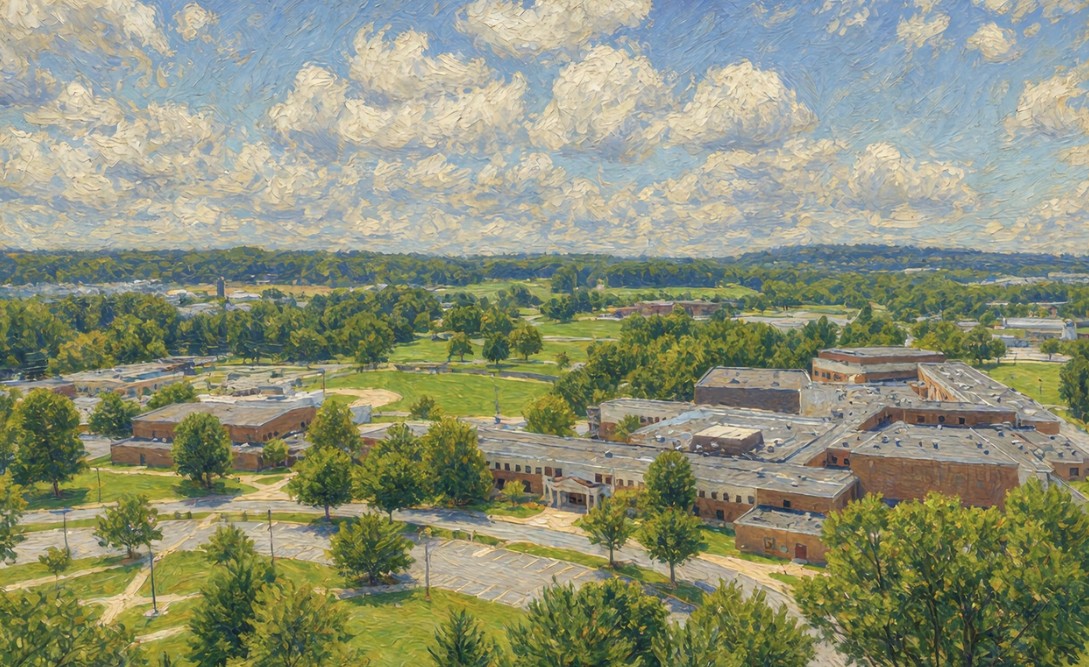
Lancaster’s School Landscape: Farmland, Small Cities, and a Deep Public Bench
Lancaster County sits roughly an hour west of Philadelphia, yet it feels like its own world. Amish and Mennonite farms surround a revitalized small city with a working market house and a busy arts district. Meanwhile, Franklin & Marshall College and Millersville University anchor the area’s academic life. Families here choose among strong suburban public districts, an urban IB school, a small charter school, and several independent and faith-based schools. In fact, the county’s top public schools now trade places in the U.S. News rankings almost every year.
Each of these options prepares students differently for selective college admissions. Specifically, Lancaster-area schools differ in:
- Depth of AP, IB, and dual enrollment coursework
- How familiar selective admissions offices are with each school’s transcript
- Counselor caseloads and the timing of college guidance
- Access to career and technical programs, including agriculture
- The size and density of each school’s high-achieving peer group
With that context in place, here is how the region’s leading high schools compare, one campus at a time.

The Lancaster Admissions Context: A Strong Market That Flies Under the Radar
How Selective Colleges Read Lancaster Applications
Selective admissions offices know Pennsylvania well. However, they see far more applicants from the Philadelphia suburbs than from Lancaster County. As a result, a Lancaster transcript rarely arrives with the instant name recognition of a Main Line school. That said, regional readers at schools such as Penn, Lehigh, Bucknell, and Johns Hopkins know the county’s major districts. In practice, the school profile a counselor sends carries real weight here. It explains course rigor, grading scales, and AP or IB access to readers who may not know the building.
The county’s culture also shapes how applicants present themselves. Agriculture, family businesses, and Plain community traditions run through daily life. Consequently, many students hold genuine responsibilities that never appear on a typical activities list. Farm work, shop labor, and family caregiving all count as meaningful commitments. In each case, students should describe that work in concrete, specific terms.
State Dynamics and Internal Competition
Penn State remains the default flagship for many Lancaster families. Notably, Penn State’s University Park campus sits about two hours north, and its Schreyer Honors College attracts many of the state’s top students. Meanwhile, Pennsylvania’s PHEAA State Grant program helps eligible residents attending in-state colleges. Locally, Franklin & Marshall and Millersville give students easy access to college faculty, research, and summer programs. HACC’s Lancaster campus also offers dual enrollment to many county high schools.
Internal competition, in turn, looks different here than in larger metros. The county has more than a dozen comprehensive public high schools, and no single school dominates. Accordingly, top students at each school compete mainly within their own building for rank, leadership roles, and counselor attention. In particular, applicants from the same school who target the same selective colleges need clearly different academic stories.
Comprehensive Public High Schools
| School | US News PA Rank | US News National Rank | Enrollment | AP Participation | Graduation Rate |
|---|---|---|---|---|---|
| Hempfield High School | #65 | #1,650 | 2,254 | 30% | 95% |
| Penn Manor High School | #75 | #1,944 | 1,624 | 34% | 95.9% |
| Lampeter-Strasburg High School | #85 | #2,099 | 914 | 35% | 93% |
| Manheim Township High School | #87 | #2,125 | 1,928 | 44% | 92% |
Hempfield High School
Public · Landisville, PA
| Metric | Data |
|---|---|
| U.S. News PA Rank | #65 (#1 in Lancaster County) |
| Enrollment | 2,254 |
| Student-Teacher Ratio | 16:1 |
| AP Participation | 30% |
| AP Subjects Offered | 17 |
| Graduation Rate | 95% |
Academic Model and Course Depth
Hempfield climbed from 96th to 65th in Pennsylvania in the latest U.S. News rankings. As a result, it now holds the top spot among Lancaster County high schools. The school enrolls roughly 2,200 students in Landisville, west of Lancaster city. It offers AP courses across 17 subjects, including calculus, chemistry, physics, computer science, statistics, and economics. Additionally, weighted honors courses in the humanities give students a rigorous track even outside the AP catalog.
About 30% of Hempfield students take at least one AP exam. In contrast to smaller schools, that rate reflects a very large student body with many different pathways. The school also posts a 95% graduation rate. Furthermore, roughly 82% of graduates continue to some form of postsecondary education.
Arts, Activities, and College Placement
Beyond the classroom, Hempfield runs one of the county’s largest performing arts programs. Its 1,300-seat Performing Arts Center hosts a spring musical and a long-running original dance theater production. Moreover, the music department supports a marching band of more than 100 members, jazz bands, choirs, and two orchestras. Its math team has won regional and league titles over the years. For its part, the school has produced multiple National Merit Finalists.
From a College Admissions Standpoint
Hempfield’s new top ranking helps, but its size remains the defining factor. With so many strong students, a high GPA alone will not separate one applicant from another. Instead, students should build a focused course sequence in one or two areas and pair it with sustained leadership. In particular, arts students can use Hempfield’s large stage programs to document real growth over four years.
Penn Manor High School
Public · Millersville, PA
| Metric | Data |
|---|---|
| U.S. News PA Rank | #75 (#2 in Lancaster metro) |
| U.S. News National Rank | #1,944 |
| Enrollment | 1,624 |
| Student-Teacher Ratio | 13:1 |
| AP Course Options | 23+ |
| Graduation Rate | 95.9% |
Academic Model and Course Depth
Penn Manor ranks second in the Lancaster metro and 75th in Pennsylvania. Nationally, U.S. News places it 1,944th out of nearly 18,000 high schools. The school serves a large district that stretches from Millersville south toward the Susquehanna River. Accordingly, its student body mixes college-town families with rural households. Penn Manor offers more than 23 AP course options. Its 95.9% graduation rate also sits well above the state average of 87.9%.
Career Programs and Local Partnerships
Penn Manor stands out for its career and technical depth. Notably, it has the highest participation in the county’s Career and Technology Center programs. Its Agriculture Career Program has earned both state and national awards. Meanwhile, Millersville University sits just minutes from campus. That proximity gives motivated students a realistic path to college courses, faculty mentors, and campus events. In addition, the school supports more than 95 clubs and 17 varsity sports.
From a College Admissions Standpoint
Penn Manor students should treat the school’s career programs as an asset rather than a detour. For example, an agriculture student who pairs AP Biology and Chemistry with a sustained research project builds a distinctive profile. Similarly, college coursework at Millersville shows selective readers that a student has tested real academic interests. In short, Penn Manor applicants should connect advanced coursework to the practical skills the school does especially well.

Lampeter-Strasburg High School
Public · Lampeter, PA
| Metric | Data |
|---|---|
| U.S. News PA Rank | #85 (#3 in Lancaster County) |
| Enrollment | 914 |
| Student-Teacher Ratio | 15:1 |
| AP Participation | 35% |
| Graduation Rate | 93% |
| World Languages | German, Spanish |
Academic Model and Course Depth
Lampeter-Strasburg ranks third in Lancaster County and 85th in Pennsylvania. With about 900 students, it is the smallest school in this group. Even so, 35% of its students take at least one AP exam. That rate sits above Hempfield’s despite a much smaller student body. The school also posts a 93% graduation rate. As the only high school in its district, it draws students from Lampeter, Strasburg, and the surrounding farmland.
Community Setting and Activities
The district sits in the heart of Lancaster County’s Amish country. Specifically, Strasburg’s rail heritage and the area’s farms shape much of the local identity. Students choose between German and Spanish in world languages. Additionally, the school fields a broad slate of sports, from field hockey to wrestling. Its music program includes a noncompetitive marching band and a competitive indoor color guard.
From a College Admissions Standpoint
A smaller school offers a real advantage: students can stand out sooner and lead earlier. However, a smaller AP catalog means students should plan their junior and senior schedules carefully. Dual enrollment at nearby colleges can fill gaps in advanced math or science. Above all, Lampeter-Strasburg applicants should draw on their local setting. Some of the county’s most distinctive opportunities, from agricultural research to rare-disease medicine, sit just down the road.
Manheim Township High School
Public · Lancaster, PA
| Metric | Data |
|---|---|
| U.S. News PA Rank | #87 (#4 in Lancaster County) |
| Enrollment | ,1928 |
| Student-Teacher Ratio | 16:1 |
| AP Participation | 44% |
| AP Courses Offered | 21 |
| Mean SAT (Class of 2024) | 1164 |
| Mean ACT (Class of 2024) | 25.9 |
| IB Diploma Recipients (2025) | 21 of 27 candidates |
Academic Model: AP, IB, and Dual Enrollment
Manheim Township slipped from 54th to 87th in the latest Pennsylvania rankings. Nevertheless, it offers the broadest advanced menu of any suburban school in the county. Students can choose from 21 AP courses, the IB Diploma Programme, College in the High School, and dual enrollment. In 2025, 535 students took 979 AP exams, and nearly 89% of scores reached 3 or higher. On the IB side, 21 of 27 diploma candidates earned the full diploma. Its 44% AP participation rate is the highest among the county’s top-ranked schools.
Counseling, Activities, and College Placement
The school employs seven counselors, including one dedicated to college, career, and CTC planning. Its mean SAT score was 1164 for the Class of 2024, with a middle 50% range of 1040 to 1280. Notably, 66% of the Class of 2025 enrolled at four-year colleges. Recent acceptances include Yale, Princeton, Stanford, Columbia, Cornell, Penn, and Johns Hopkins. Beyond academics, its Quiz Bowl team won a national title in 2000 and a state title in 2022.
From a College Admissions Standpoint
Manheim Township’s ranking dip should not worry families much. Selective colleges care far more about a student’s rigor within the school’s available curriculum. Here, that means choosing between AP and IB with a clear plan. For instance, the IB Diploma suits students who want an integrated, writing-heavy program with an Extended Essay. In contrast, a targeted AP sequence fits students who want maximum depth in one field.

Urban IB Option: J.P. McCaskey High School
J.P. McCaskey High School
Public · Lancaster, PA
| Metric | Data |
|---|---|
| District | School District of Lancaster |
| Enrollment | 2,620 |
| Student-Teacher Ratio | 15:1 |
| AP and IB Courses | 54 |
| IB Diplomas Earned (Class of 2025) | 12, including 2 bilingual diplomas |
| AP Exams Administered (2024) | 589 |
Academic Model and the IB Diploma
McCaskey opened in 1938 as a Works Progress Administration project, and its Art Deco building remains a city landmark. Today, it serves as the main high school for the School District of Lancaster. It is also an authorized IB World School. In the Class of 2025, 206 McCaskey students took 421 IB exams. Twelve students earned the full IB Diploma, and two earned bilingual diplomas.
AP access has also grown quickly. In fact, McCaskey administered 589 AP exams in 2024, up from 498 a year earlier. Across the district, 59% of AP exams scored 3 or higher, the fifth straight year of gains. Additionally, nearly 1,300 students enrolled in 54 AP or IB courses during the 2024-25 school year.
Urban Setting and Opportunities
McCaskey sits in Lancaster city, close to Franklin & Marshall and the downtown arts district. As a result, students have walkable access to college events, galleries, and civic organizations. Its IB students complete Creativity, Activity, and Service projects through musical theater, Model United Nations, athletics, and community service. In addition, one recent IB student represented peers on the district’s Board of Directors.
From a College Admissions Standpoint
Selective colleges value the IB Diploma highly, especially at a large urban public school. A McCaskey diploma candidate competes within a small cohort, which helps that student stand out. Accordingly, students should treat the Extended Essay as a showcase research project tied to a clear academic interest. City-based civic or arts work also gives McCaskey applicants material that suburban peers cannot easily match.

Independent Schools
| School | Grades | Enrollment | Student-Teacher Ratio | Avg Class Size | Affiliation |
|---|---|---|---|---|---|
| Lancaster Country Day School | PreK-12 | ~575 | 8:1 | 11 (Upper School) | NAIS, nonsectarian |
| Linden Hall | 6-12 and PG | 123 | 8:1 | 18 | NAIS, TABS |
| Lancaster Catholic High School | 9-12 | ~500 | 6:1 | 20 | Diocese of Harrisburg |
Lancaster Country Day School
Independent · Lancaster, PA
| Metric | Data |
|---|---|
| Founded | 1908 |
| Grades | PreK-12 |
| Enrollment | ~575 |
| Student-Teacher Ratio | 8:1 |
| Average Upper School Class Size | 11 |
| AP Subjects | 11 |
| NAIS Member | Yes |
History and Academic Model
Lancaster Country Day traces its roots to the Shippen School for Girls, founded in 1908. Later, the school became coeducational in 1943 and took its current name. It moved to its Hamilton Road campus on Lancaster’s west side in 1949. Today, it is a nonsectarian, coeducational PreK-12 day school and a member of NAIS. Upper School classes average just 11 students, and the overall student-teacher ratio is 8:1.
Signature Programs and College Counseling
The Upper School offers AP courses in 11 subjects, along with independent study for advanced students. Its signature experience is an International Model United Nations course for juniors and seniors. Students in that course travel each year to a conference in The Hague or Qatar. Moreover, students can study Spanish, Latin, or Mandarin Chinese. College guidance begins in middle school, and 100% of seniors earn acceptance to four-year colleges.
From a College Admissions Standpoint
Small classes mean teachers know students well, which strengthens recommendation letters. However, a small senior class also means fewer peers and fewer leadership slots to share. Consequently, Lancaster Country Day students should seek opportunities off campus through research, internships, or summer programs. In particular, the Model UN program gives globally minded students a rare, documented international experience.
Linden Hall
Independent · Lititz, PA
| Metric | Data |
|---|---|
| Founded | 1746 |
| Grades | 6-12 and postgraduate |
| Enrollment | 123 |
| Student-Teacher Ratio | 8:1 |
| Boarding Options | Five-day and seven-day |
| NAIS Member | Yes (also TABS) |
History and Academic Model
Linden Hall began in 1746 under Lititz’s Moravian congregation. Today, it is the oldest girls’ boarding and day school in continuous operation in the United States. The school sits on 49 acres in Lititz, north of Lancaster city. With roughly 120 students and an 8:1 student-teacher ratio, classes stay very small. Additionally, it offers both five-day and seven-day boarding, so its community draws students from far outside the county.
Signature Programs
Linden Hall’s aviation program has few parallels at any high school. Students as young as 15 can begin one-on-one ground school with a certified flight instructor. They then train in the school’s reserved Cessna 150 and can solo at 16. Students who complete all modules and any extra lessons can pursue a private pilot certificate at 17. Beyond aviation, the school offers equestrian, robotics, and arts programs. Furthermore, a cooperative agreement with Warwick High School expands athletic options.
From a College Admissions Standpoint
A single-sex boarding environment gives students early leadership roles and close faculty mentorship. As a result, recommenders can speak in detail about each student’s growth. Signature programs such as aviation also provide a rare, verifiable story for engineering or aerospace applicants. That said, students should pair those experiences with the most rigorous math and science courses available.
Lancaster Catholic High School
Private (Catholic) · Lancaster, PA
| Metric | Data |
|---|---|
| Founded | 1929 |
| Grades | 9-12 |
| Enrollment | ~500 |
| Faculty | ~72 |
| Accreditation | Middle States Association |
| Diocese | Roman Catholic Diocese of Harrisburg |
Academic Model and Service
Lancaster Catholic opened in 1929 and serves students across the county as part of the Diocese of Harrisburg. Its curriculum sets college prep as the minimum level, with honors and AP courses above it. Specifically, the school weights AP classes on a 5.5 scale and honors classes on a 5.0 scale. Every student takes religious studies each year. In addition, the Good Samaritan Program requires 20 hours of unpaid service annually.
Athletics, Arts, and Community
The Crusaders compete in the Lancaster-Lebanon League and have won PIAA state titles in football, baseball, and boys’ basketball. Its arts program has a notable history: the marching unit competed on national circuits until 2013 and now performs at local showcases. The school also partners with McCaskey, Lancaster Country Day, and Conestoga Valley on several joint athletic teams.
From a College Admissions Standpoint
Lancaster Catholic’s service requirement gives every student a starting point for community engagement. However, selective colleges want depth, not just required hours. Students should therefore turn that service into a sustained commitment with clear impact. For recruited athletes, the school’s strong athletic tradition offers visibility. Even so, those students still need a rigorous honors and AP schedule.
Other Notable Options
Several other schools deserve a close look. Warwick High School in Lititz ranks 90th in Pennsylvania and fifth in Lancaster County. Lancaster Mennonite School earned a spot on the College Board’s 2025 AP School Honor Roll at the Silver level. It offers 28 AP and honors courses and houses international and out-of-state students in two residence halls. For families seeking a charter option, La Academia Partnership Charter School serves about 240 students in grades 6 through 12 in Lancaster city. Its model, in particular, centers on project-based learning and community partnerships.

How College Transitions Helps Lancaster-Area Families
- Building four-year course plans that weigh AP, IB, College in the High School, and dual enrollment options at each district
- Helping students turn agricultural, family business, and community responsibilities into compelling activities and essays
- Identifying research and summer opportunities at Franklin & Marshall, Millersville, and Penn State
- Differentiating applicants from the same high school who target the same selective colleges
- Guiding families through Penn State, PHEAA State Grant eligibility, and out-of-state merit aid comparisons
Final Thoughts
The Lancaster area offers a deep bench of public schools, plus a small but distinctive group of independent options. Hempfield now leads the county rankings with broad AP access and major arts programs. Meanwhile, Penn Manor pairs a strong national ranking with award-winning career programs. Lampeter-Strasburg, in turn, delivers high AP participation in a small-school setting.
Manheim Township offers the county’s broadest suburban menu of AP, IB, and dual enrollment courses. In the city, McCaskey gives IB diploma candidates a rigorous program within a large urban public school. Lancaster Country Day stands out for small classes and its international Model UN program. Linden Hall, for its part, offers a historic girls’ boarding experience with rare programs like aviation. Lancaster Catholic combines faith-based education with service and strong athletics.
Ultimately, no single school guarantees an admissions edge in this market. Instead, the strongest applicants use their school’s specific resources with intention and connect them to a clear academic direction. Wherever your student attends, College Transitions helps families in the Lancaster area turn strong academic options into clear, differentiated admissions plans.

