
Lawrence is a small city with an outsized sense of purpose. Abolitionists founded it in 1854, and the University of Kansas has crowned Mount Oread for more than 150 years. Today, the town blends prairie, river, and research university in a way few Midwestern places can match. For ambitious high school students, that mix creates unusual opportunities.
However, living near a major university does not automatically produce a strong application. Students still need rigorous coursework, sustained commitments, and work that shows genuine initiative. In addition, they need to notice opportunities that a visitor might miss, from a butterfly lab on KU’s West Campus to a hospital mentorship program on Maine Street. This guide maps those opportunities and explains how to use them well.
To begin, it helps to understand where Lawrence applicants stand in the national admissions picture.

Lawrence in the National Admissions Picture
Kansas sends relatively few students to the most selective private colleges. Consequently, admissions offices on the coasts read Kansas files far less often than files from New Jersey, Massachusetts, or California. A strong Lawrence applicant can therefore add geographic range to a freshman class. That said, geography works as a tiebreaker rather than a credential. In short, it helps only students who have already built excellent profiles.
The competition is also closer to home than many families expect. Selective colleges typically evaluate applicants by region, so Lawrence students often appear alongside peers from across the Kansas City metro. As a result, a Lawrence student needs a profile that stands out regionally, not just within Douglas County. For students, depth matters most here. Two or three commitments sustained over several years will outweigh a long list of one-season activities.
The Mount Oread Effect
KU’s presence creates a powerful version of local flagship anchor bias. The university offers assured admission to first-year applicants with a cumulative GPA of 3.25 or higher. Students with at least a 2.0 GPA and a 21 ACT or 1060 SAT also qualify. For many families, that guarantee makes KU feel like the obvious choice, and sometimes the only one.
KU is an excellent university, and it belongs on many Lawrence lists. Still, an assured option should anchor a list rather than define it. Strong students should also research selective private universities within driving range, such as Washington University in St. Louis and Grinnell College. Out-of-state public flagships and national liberal arts colleges also deserve a look. A weekend trip to St. Louis or Chicago can turn an abstract college name into a concrete option.
Where Early Decision Fits
For students with a clear first choice, Early Decision can offer a meaningful advantage. Many selective colleges fill a substantial share of their classes through ED. Because Kansas applicants appear less often at these schools, a well-prepared ED candidate from Lawrence can stand out. That said, ED is binding, so families should compare financial aid estimates before committing. With that strategy in mind, the next step is to look closely at what makes Lawrence itself distinctive.

What Makes Lawrence Distinctive
A Town Built Around a Cause
Lawrence began as a political project. The New England Emigrant Aid Company established it in 1854 to help bring Kansas into the Union as a free state. Pro-slavery forces sacked the town in 1856. Then, on August 21, 1863, William Quantrill’s raiders burned much of Lawrence and killed more than 180 people. Today, the Watkins Museum of History preserves that past inside an 1888 bank building on Massachusetts Street, and admission is free.
For students, this history offers more than background color. A strong essay might examine how a town born from conflict still argues about its civic identity. Precision matters, however. A student who has walked the self-guided tour of Quantrill’s Raid sites will write with more authority than one who simply cites “Bleeding Kansas.”
Water, Power, and the Prairie
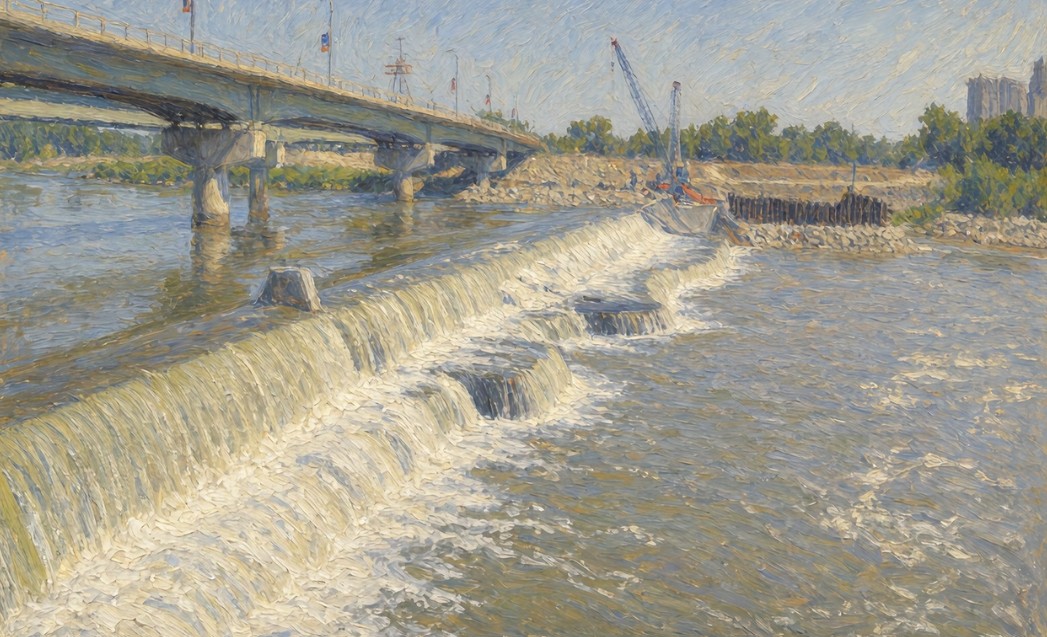
Lawrence’s environment is highly specific. The Bowersock dam has spanned the Kansas River since 1874. Today, it supports the only operating hydroelectric plant in Kansas, which can produce about 7 megawatts. Moreover, Monarch Watch, a KU program founded in 1992, tracks one of North America’s great insect migrations from KU’s West Campus. Each September, its volunteers tag migrating monarchs at the Baker Wetlands south of town.
Basketball and Its Founding Document
KU’s DeBruce Center displays James Naismith’s original 1891 rules of basketball. Naismith also became KU’s first basketball coach. In short, even a sports essay set in Lawrence can carry real historical weight.
Heritage That Belongs to Its Communities
Lawrence is also home to Haskell Indian Nations University, which opened in 1884. Haskell’s history and cultural life belong to the Native nations and students who have shaped it for generations. Similarly, Lawrence’s Black history, including Langston Hughes’s childhood here, belongs first to the community that lived it. Students from within those communities may write about that heritage with authentic connection. Other students should not treat it as a general application asset. Instead, they should write about the places and causes they have personally engaged with. With that landscape in mind, the opportunities below show how students can turn local access into sustained, credible work.
Programs and Opportunities for Lawrence Students
Research Opportunities at KU and Beyond
ChEER Youth Internship at KU
KU’s Chemical Engineering Experience in Research (ChEER) program places high school students in working chemical engineering labs. Students ages 15 to 18 who have not yet earned a diploma may apply with parental consent. The internship runs about four weeks, from late June to mid-July, for four hours each weekday. Interns work in the LEEP2 engineering building on KU’s Lawrence campus.
The program is unpaid, and KU does not provide housing or transportation. Notably, KU designed it for students who live locally, which gives Lawrence applicants a natural edge. Recent projects have included degradable polymers made from corn starch and membranes that recover refrigerants. Interns also receive safety training, one-on-one mentorship, and job shadowing. Applications typically open each spring.
SPUR Internships at the KU Medical Center
Students drawn to biomedical research can also look about 40 miles east to the KU Medical Center in Kansas City, Kansas. Its Polycystic Kidney Disease Center accepts high school students age 16 and older for Summer PKD Undergraduate Research (SPUR) internships. However, high school participants serve as volunteers rather than paid interns. The commitment is substantial: 10 weeks of full-time work, 40 hours a week, between June and August.
To apply, students email a resume, a one-page statement of interest, and their preferred dates. Applications are typically due in late February, and decisions arrive in April. At the end of the program, each intern presents a 20-minute seminar on their results to center faculty and staff. That presentation gives a student polished research to discuss in essays and interviews. Research is one path, and health care offers another through Lawrence’s community hospital.
Health Care Pathways at LMH Health
LMH Health Summer Leadership Academy
LMH Health has run its Summer Leadership Academy since 2019. The paid program spans roughly eight weeks, from early June through late July. Juniors and seniors at Lawrence-area high schools may apply if they turn 16 by June 1. Participants meet with mentors, shadow health care executives, and work alongside medical professionals. In recent years, the Academy has also included fellows mentored by City of Lawrence leaders.
That said, the application demands real effort. Students submit a transcript, a recommendation from an adult outside the family, and six short essays. Applications typically close in early April, and finalists may interview later that month. Recent cohorts have included only six to nine students, so earning a spot is a notable achievement.
Junior Volunteer Program
Students who want a longer-term role can join LMH’s year-round Junior Volunteer Program. Volunteers must be at least 14 and commit to at least 60 hours, usually three to four hours a week. The program dates to 1966, and LMH revived it in 2023 after a four-year hiatus. Over time, steady hospital service can grow into a credible health care commitment, especially alongside strong science coursework. For students more interested in ecology, Lawrence’s best-known research program welcomes volunteers of every age.

Citizen Science with Monarch Watch
Tagging the Migration
Monarch Watch may be Lawrence’s most distinctive resource for aspiring ecologists. KU biologist Chip Taylor co-founded it in 1992 with local high school science teacher Brad Williamson. Today, more than 2,000 schools, nature centers, and other organizations across the United States and Canada participate. Kristen Baum, a KU ecologist, now directs the program.
Each September, Monarch Watch hosts a free Fall Open House at Foley Hall on KU’s West Campus. About a week later, it runs a public tagging event at the Baker Wetlands Discovery Center. Staff provide nets, tags, and instruction. As a result, participants need no prior experience. In addition, a spring open house and plant fundraiser takes place each May.
Turning a Weekend into Research
One tagging morning will not strengthen an application on its own. However, students can build something much larger from it. Monarch Watch distributes tagging kits and datasheets that record each butterfly’s tag code, sex, wing length, and location. A student could tag monarchs across several falls, compare results against local nectar conditions, or plant and register a Monarch Waystation. Over two or three years, that work becomes a genuine independent project. It also produces the specific, place-rooted material that strong essays require. Science offers one way to engage the city, and its arts organizations open several more.
Arts and Humanities Opportunities
Lawrence Arts Center
The Lawrence Arts Center offers two strong options for teens. First, its SYT Internship Program gives students in grades 8 through 12 a hands-on theatre work-study experience. Each intern takes a specific role on a youth theatre production and attends weekly meetings from late May through late July. Moreover, every position pays a stipend, and the program enrolls only 12 to 14 participants. Interested students typically email a resume and letter of interest by early May.
Second, the Teen Artist Co-Op invites teens to develop personal projects through open studios, workshops, and drop-in sessions. Co-Op artists may display work in the Arts Center’s showcases and keep the proceeds from any sales. Recent sessions have served ages 13 to 16, and the Arts Center offers financial aid.
Spencer Museum of Art
On campus, KU’s Spencer Museum of Art welcomes high school students over 14 as volunteers. Visitor Experience volunteers greet guests at the Welcome Desk and sometimes support public programs. Although the role is modest, it places students inside a major university art museum. Paired with serious studio work, museum service can show a coherent, long-term interest in the visual arts. For students who want long-term leadership and civic experience, Douglas County 4-H offers a different kind of path.
Douglas County 4-H
Many families associate 4-H with livestock, but the program offers far more. K-State Research and Extension runs 4-H in Douglas County, and Kansas 4-H is open to youth ages 7 to 19. The 4-H year begins each October, yet students can enroll at any point during the year. In addition, members who plan to exhibit at the Douglas County Fair must enroll by May 1.
Members join one of the county’s ten community clubs, which meet monthly. Within those clubs, teens speak about their project work, plan service activities, and practice running meetings. Notably, teens may also lead sub-clubs focused on individual projects. Once in a community club, members can also join countywide project clubs devoted to a single area. Beyond the county, Douglas County 4-H members have taken part in Citizenship in Action at the Statehouse in Topeka and applied for the national Citizenship Washington Focus program.
For students, 4-H rewards exactly the kind of sustained effort that strengthens applications. A teen who leads a project club for several years can show both depth and leadership. Taken together, these programs show how much Lawrence offers students willing to commit.

Making Lawrence Work for You
Lawrence rewards students who treat its resources as a foundation rather than a checklist. Strong applications to selective colleges combine rigorous coursework, sustained involvement, and visible growth in one or two areas. Accordingly, students should take the most demanding courses available, including AP and KU credit options, before chasing extra activities. A student who tags monarchs for three falls will impress more than one who samples ten programs once. Similarly, a Leadership Academy fellow who keeps volunteering at LMH shows a commitment that a single summer cannot.
Essays, in turn, should reflect the same precision. Students might write about the Kansas River rising against the Bowersock dam, a dawn shift at the Baker Wetlands, or one monarch’s tag code. In the end, specific detail persuades readers in ways that general claims about “community” never can. College Transitions helps Lawrence families build that kind of focused profile. Our counselors support course planning, summer program strategy, balanced college lists, Early Decision choices, and essays rooted in place.

