
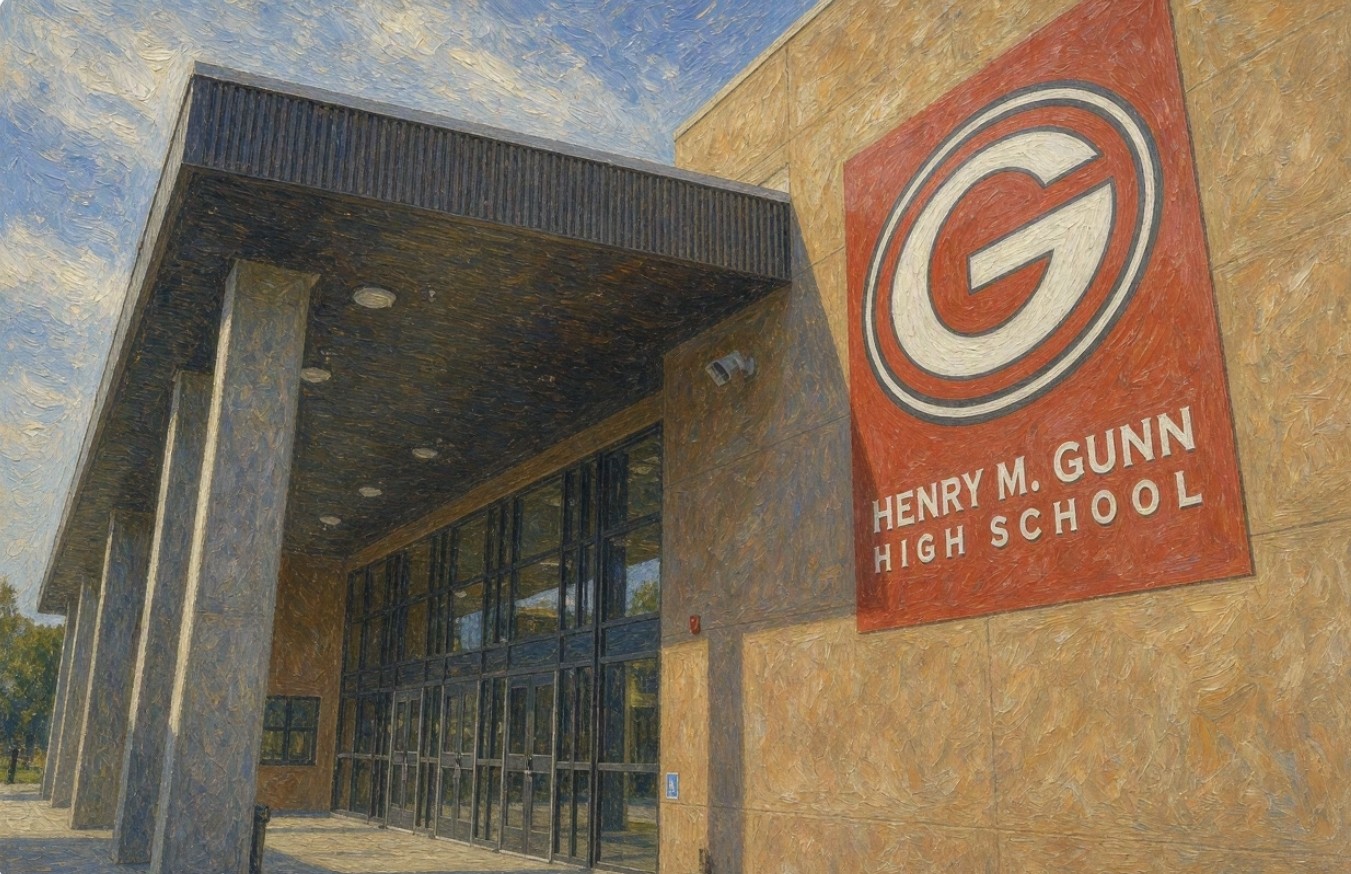
Few communities in the country take college admissions as seriously as Palo Alto. Students at Gunn High School, Palo Alto High School, and nearby campuses like Los Altos, Mountain View, and Menlo-Atherton routinely carry long lists of AP courses and strong test scores. Many of them also share the same ambition: computer science or engineering at a highly selective university. As a result, a Palo Alto applicant who looks impressive on paper can still look remarkably similar to hundreds of classmates.
Today’s case study highlights Lena, a student from Gunn High School. Through deliberate planning and strategic positioning, she earned:
- EA acceptance to the University of Chicago, History, Philosophy, and Social Studies of Science and Medicine (HIPS)
- EA acceptance to the Georgia Institute of Technology, History, Technology, and Society
- ED acceptance to Cornell University, Science & Technology Studies
Lena’s story is a roadmap for Palo Alto families who want to understand what moves the needle at selective colleges. In a town defined by technology, her advantage came from studying technology from a different angle.
Meet Lena: A Capable Student in a Crowded Field
When Lena began working with College Transitions in the spring of her sophomore year, she already had real strengths. She attended Gunn High School, which U.S. News & World Report ranked 135th nationally in its 2025–26 Best High Schools list. Gunn enrolled 1,606 students in 2025–26 and offers 29 AP courses. Additionally, the school posts a four-year graduation rate of roughly 97%, according to California Department of Education data. Notably, Gunn sits on land that was once part of the Stanford campus, a detail that later mattered to Lena’s story.
Academically, Lena earned mostly A grades in AP U.S. History, AP English Language, and AP Computer Science Principles. However, her activities were scattered across robotics, speech and debate, and a coding club. Like many Gunn students, she assumed computer science was the logical major. Our first goal was to find an academic identity that would set her apart from the thousands of Bay Area applicants pursuing the same path.

1. Choosing a Strategic Major: Science & Technology Studies
During our early conversations, Lena kept returning to questions about history rather than code. She wanted to know why Silicon Valley formed around Palo Alto and who had been left out of its official story. Consequently, we guided her toward Science & Technology Studies (STS), a field that examines how technology shapes society and how society shapes technology in return.
Why Science & Technology Studies Made Sense
- It drew on her genuine curiosity about local history while keeping her technical coursework relevant.
- It separated her from the large pool of Palo Alto applicants listing computer science as a first choice.
- It gave her a single theme that could unify her activities, research, essays, and supplements.
- It aligned with distinctive programs at her target schools, including Cornell’s S&TS major and UChicago’s HIPS program.
Importantly, this choice did not ask Lena to abandon her technical skills. Instead, it reframed them as tools for understanding a larger human story.
2. Improving Her SAT Score: From 1310 to 1490
Lena’s initial SAT score of 1310 was solid, but it sat well below the typical range at her target schools. Moreover, Gunn’s strong testing culture meant that admissions readers would compare her against classmates with very high scores.
We built a focused plan that emphasized:
- Reading comprehension with dense historical and scientific passages
- Advanced algebra and data interpretation
- Timed, full-length practice tests under realistic conditions
- Weekly error reviews organized by question type
By the fall of her senior year, Lena had raised her score to 1490. That improvement placed her within a competitive range at every school on her list. Furthermore, it showed admissions committees a sustained willingness to put in effort and grow.
3. Deepening Her Commitment: From Club Member to Local Guide
Lena had been an active but quiet member of several clubs. Rather than add more activities, we helped her consolidate around one project that matched her new direction.
What Lena Did Differently
- She designed a self-guided walking tour of Palo Alto’s technology landmarks, starting at the HP Garage on Addison Avenue (viewed from the sidewalk, since the site is privately owned).
- She researched each stop and wrote short historical summaries for a free online map.
- She led small group walks for middle school students and visiting families over two summers.
- She stepped back from robotics and the coding club to give the project consistent time.
As a result, Lena could point to a concrete contribution that only a Palo Alto student could make. The tour also generated specific material for her essays and supplements.
4. Adding a Major-Aligned Research Experience
To add academic depth, we helped Lena design an independent research project grounded in primary sources. She drew on the Stanford Libraries’ Silicon Valley Archives, which are open to qualified researchers regardless of affiliation (outside visitors are asked to contact staff before planning a visit). Additionally, she used freely available transcripts from the Computer History Museum’s oral history collection in nearby Mountain View.
Project Focus
Leasing the Future: How Stanford’s Land Policy Shaped the Growth of the Stanford Research Park
Lena examined:
- How Stanford’s land-lease arrangements influenced which companies settled near campus
- How early tenants described the area’s culture in later oral history interviews
- How the park’s growth changed housing and commuting patterns in Palo Alto
- Which voices appeared least often in the official narrative of the region
Ultimately, she produced a 4,000-word paper and an annotated timeline. A College Transitions advisor helped her refine her argument and cite archival sources correctly. The project gave her a serious piece of humanistic research, which is less common among Palo Alto applicants than lab or coding work.
5. Entering Competitions for External Validation
Selective colleges value evidence that a student’s work holds up outside the classroom. Therefore, we encouraged Lena to enter competitions that reinforced her STS direction.
- National History Day, Santa Clara County contest (Senior Historical Paper) under the theme “Revolution, Reaction, Reform in History”: first place, advancing to the National History Day–California state contest
- National History Day–California state contest: finalist in the Senior Historical Paper category
- Gunn High School History Department Research Award: recipient
Each recognition supported the same story. Similarly, none of them pulled her profile back toward the generic computer science applicant she had once planned to be.
6. Crafting a Personal Statement Rooted in a Specific Observation
Lena’s early drafts described her love of history and her excitement about technology. Those themes were sincere, but they could have come from almost any student in Silicon Valley. Instead, we encouraged her to look for one moment that only she had experienced.
Her final personal statement opened on Addison Avenue during one of her walking tours. A visiting family was photographing the HP Garage while their son asked whether two people really built Silicon Valley by themselves. Lena wrote about how that question stayed with her for weeks. She realized the garage story was true but incomplete, and that her research into Stanford’s land policy was really an attempt to answer that boy more honestly.
Notably, the essay never announced her intended major. However, it made clear why she wanted to study how technologies and communities shape each other. That restraint made the essay more memorable than a direct statement of purpose.
7. Using Early Action and Early Decision Strategically
Early Action Schools
- University of Chicago, History, Philosophy, and Social Studies of Science and Medicine (HIPS): accepted
- Georgia Institute of Technology, History, Technology, and Society: accepted
UChicago’s HIPS program, with its small faculty-led tutorials, matched Lena’s interest in reading primary sources closely. Meanwhile, Georgia Tech offered a rare chance to study the history of technology inside a major engineering institution.
Early Decision School
- Cornell University, Science & Technology Studies: accepted
Cornell was Lena’s clear first choice. Its S&TS major requires additional coursework in science or engineering, which suited her technical background. In addition, the program’s breadth would let her keep exploring the questions that began on Addison Avenue. Applying ED allowed her to show genuine commitment to the program that fit her best.
Her Cornell acceptance arrived in December, the result of more than two years of focused work.

Why Lena’s Strategy Worked
- She chose a specific, differentiated major.
- She raised her SAT score into a competitive range for her target schools.
- She replaced scattered activities with one sustained, locally rooted project.
- She completed archival research that showed real intellectual initiative.
- She earned competition recognition that reinforced her academic direction.
- She wrote a personal statement built on a single, specific moment.
- She used Early Action and Early Decision to present one consistent profile.
Above all, Lena did not try to out-compete her classmates at their own game. Instead, she found the version of Palo Alto’s story that she was best positioned to tell.
What This Means for Palo Alto Families
Palo Alto is home to two of California’s most academically demanding public high schools. According to U.S. News, Gunn High School ranks 135th nationally, while Palo Alto High School ranks 183rd. Nearby, Los Altos High School, Mountain View High School, and Menlo-Atherton High School serve similarly ambitious students. Consequently, families across this area compete in one of the most crowded applicant pools in the country.
In that environment, strong grades and rigorous courses are the baseline, not a competitive advantage. Standing out at selective colleges requires more. Specifically, it requires:
- A clear and authentic academic direction
- Extracurricular depth rather than a long list of activities
- At least one self-driven research or project experience
- External validation through competitions or recognition
- Essays that are specific, personal, and rooted in place
- Smart use of Early Action and Early Decision
This is the work College Transitions specializes in, and it is the work that made Lena’s outcome possible.

