
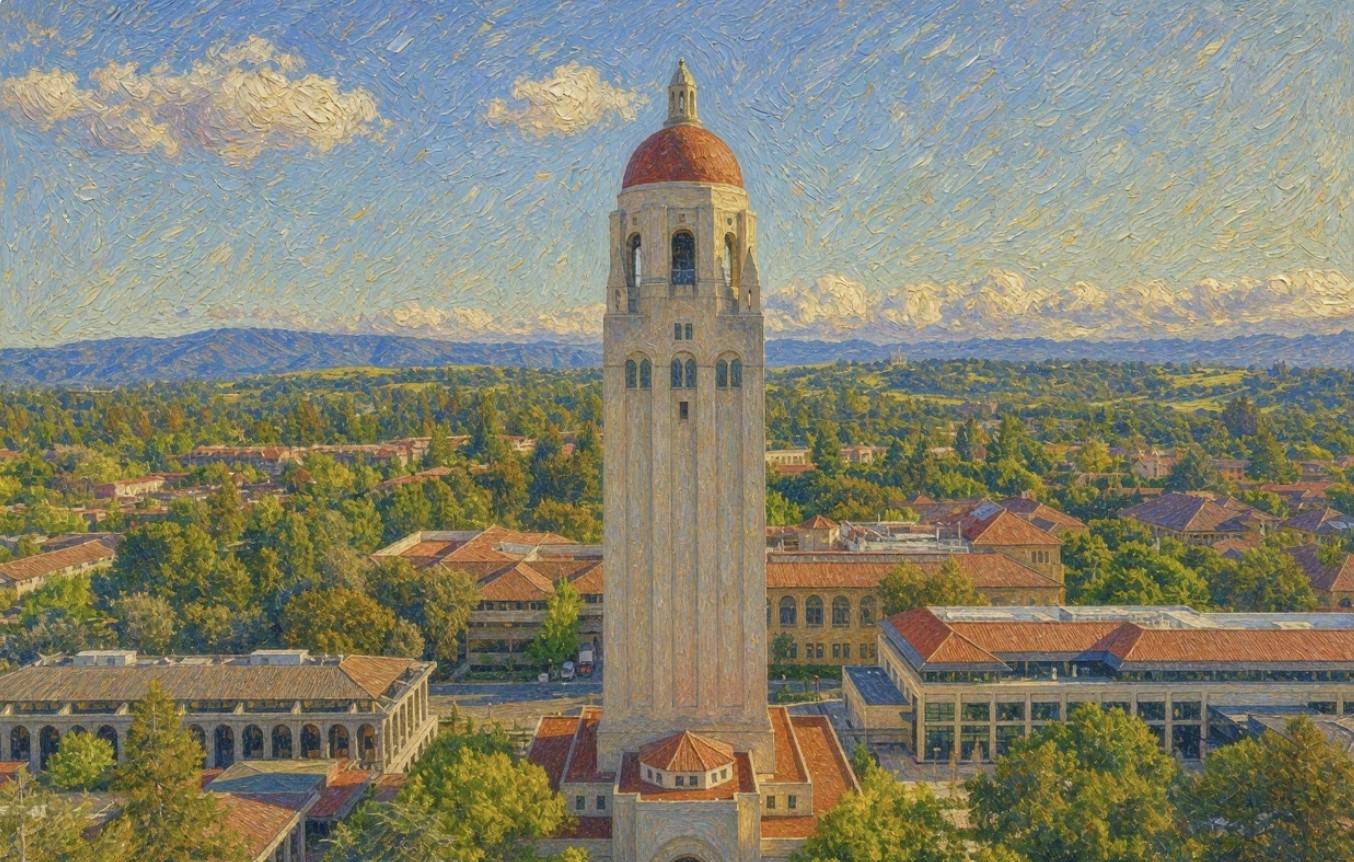
Few American cities are as closely tied to a single university as Palo Alto. Stanford’s campus borders downtown, and Paly sits directly across El Camino Real from it. The city’s economy, history, and school culture all grew up around that relationship. Naturally, many families assume this proximity gives local students a built-in edge.
The reality is more nuanced. Palo Alto offers extraordinary academic resources, two of California’s strongest public high schools, and research access that most students never get. However, those same advantages produce one of the most familiar and crowded applicant pools in the country. So, is Palo Alto a good place for college admissions? The honest answer is yes, but only for students who use the city’s resources deliberately rather than passively.

The Midpeninsula School Landscape
Palo Alto Unified operates two comprehensive high schools: Henry M. Gunn High School and Palo Alto High School (Paly). In recent U.S. News rankings, Gunn ranks 23rd in California and 180th nationally, with an 84% AP participation rate. Paly, for its part, ranks 56th in California with a 76% AP rate. PAUSD also runs Palo Alto Middle College, a small program housed on the Foothill College campus.
Neighboring Public Districts
Many Palo Alto-area families also consider schools just across city lines. To the south, the Mountain View-Los Altos district operates Los Altos High School and Mountain View High School. Both rank among California’s top 70 schools. To the north, the Sequoia Union district serves Menlo Park, Atherton, Redwood City, and Belmont. Carlmont High School leads that district at 41st in California. Sequoia High School, meanwhile, offers one of the few open-access IB Diploma programs on the Peninsula.
Independent Schools
The private landscape is equally strong. Castilleja School, an all-girls school in Palo Alto, and Menlo School in Atherton both use school-designed advanced curricula. Sacred Heart Preparatory, also in Atherton, keeps a traditional AP structure. Stanford Online High School serves advanced students who need a flexible format.
How Palo Alto-Area Public Schools Compare
| School | US News California Rank | US News National Rank | AP/IB Rate |
|---|---|---|---|
| Henry M. Gunn High School | #23 | #180 | 84% AP |
| Carlmont High School | #41 | #296 | 74% AP |
| Los Altos High School | #54 | #370 | 76% AP |
| Palo Alto High School | #56 | #394 | 76% AP |
| Mountain View High School | #68 | #463 | 73% AP |
| Menlo-Atherton High School | #203 | #1,262 | 54% AP |
| Woodside High School | #451 | #2,811 | 50% AP |
| Sequoia High School | #671 | #4,759 | 55% IB |
The table shows a steep gradient across a few miles. Gunn, Carlmont, Los Altos, Paly, and Mountain View all sit in California’s top 70. By contrast, Menlo-Atherton, Woodside, and Sequoia serve broader populations and rank lower. As a result, students on opposite sides of the same freeway can face very different competitive contexts.

What Palo Alto Offers Ambitious Students
Research Access at Stanford
Stanford’s influence is not just symbolic. The Stanford Institutes of Medicine Summer Research Program (SIMR) places high school students in eight weeks of medically oriented lab research with Stanford faculty and researchers. Applicants must be current juniors or seniors, at least 16 by the June start, and U.S. citizens or permanent residents. Importantly, SIMR states that its selection process heavily favors Bay Area students.
For a Palo Alto student, that local preference is a genuine advantage. Few selective research programs explicitly prioritize applicants who live nearby. In fact, a student at Gunn or Paly can commute to SIMR in minutes, which removes the housing barrier that limits out-of-area applicants.
Palo Alto Middle College
Palo Alto Middle College offers a distinctive alternative within PAUSD. Housed at Foothill College in Los Altos Hills, the program serves academically capable students who want a different setting from a large comprehensive high school. It is specifically designed for sophomores and juniors with a serious academic focus. Students combine high school requirements with college-level coursework alongside older peers. Consequently, Middle College students can present a transcript that demonstrates real college-level independence.
Civic and Creative Outlets Close to Home
City Government That Listens to Teens
Palo Alto gives high schoolers unusually direct access to local government. The Palo Alto Youth Council is a group of 15 to 20 high school students who serve as youth ambassadors to the City Council. Members plan events, address issues teens face, and attend city-sponsored community events each year.
Similarly, the city’s Youth Climate Advisory Board brings high schoolers into Palo Alto’s sustainability policy work. Members attend monthly board meetings and subcommittee sessions for a full September-to-August term. Eligibility requires attending a high school in Palo Alto, public or private.
A Home for Teen Artists
Beyond civic work, the Palo Alto Art Center runs several teen volunteer programs. Its Art Center Teen Leadership group is open to high schoolers who make and exhibit art, plan a teen-only event, and learn about art careers. The program is open to rising ninth through twelfth graders. Additionally, the Center’s Ceramics Apprentice Program asks teens to volunteer at least two hours a week to help with its ceramics classes and camps. For students interested in design or studio art, these programs offer sustained, portfolio-building experience close to home.

The Honest Challenges of Applying from Palo Alto
Stanford Does Not Grade on Proximity
Living next to Stanford creates no admissions advantage there. Stanford evaluates Palo Alto applicants by the same standards as everyone else. If anything, the opposite pressure applies. Admissions readers at Stanford, the Ivies, and the UC campuses know Gunn and Paly extremely well. They receive many applications from these schools every year. Therefore, a strong transcript is expected here rather than remarkable.
Familiar Profiles Blur Together
Palo Alto’s identity as the birthplace of Silicon Valley shapes student interests. Hewlett-Packard started in a Palo Alto garage, and Stanford Research Park still anchors the local economy. An enormous share of local students gravitate toward computer science, engineering, and biology. When dozens of classmates share the same coding resume, even impressive achievements start to look interchangeable. In other words, the challenge is not a lack of opportunity but a surplus of similar applicants using it.
Geography Works Against You
Selective colleges value geographic diversity, but that preference does not help Palo Alto students. The Bay Area is already heavily represented in elite applicant pools. Specifically, a student from Palo Alto is one of many, while a student from rural Montana is one of few. Families who assume their zip code carries weight should adjust their expectations accordingly.
A Two-School District Means Constant Comparison
Because PAUSD has only two comprehensive high schools, admissions offices compare Palo Alto students against a small, highly visible group. Moreover, the University of California’s Eligibility in the Local Context program identifies only the top 9% of students at participating schools. At Gunn or Paly, reaching that threshold is a very high bar. Ultimately, a student’s standing within their own building matters as much as their raw numbers.

Building a Standout Application from Palo Alto
Rigor With a Clear Direction
At Gunn and Paly, students should take the most demanding courses in their strongest subjects. However, piling on AP courses will not differentiate a Palo Alto applicant. Admissions readers already know how accelerated local math pathways are. Instead, a coherent set of advanced courses tied to a specific interest tells a stronger story. Students at Castilleja or Menlo, meanwhile, should let their school profile explain non-AP advanced courses to readers.
Testing Strategy
The UC system does not consider SAT or ACT scores at all. There, UC-calculated GPA, course rigor, and the Personal Insight Questions carry the weight. By contrast, many selective private colleges consider submitted scores meaningfully. Palo Alto students targeting top private universities should generally aim for 1500 or higher on the SAT. As a result, families should plan separate strategies for UC and non-UC applications.
An Essay That Only You Could Write
Admissions readers have seen many Palo Alto essays about startups, hackathons, and coding projects. Students should look elsewhere for material: a specific moment, a local place, or an unexpected question that genuinely shaped them. A student who writes about restoring native plants at the Baylands, for example, will stand out more than one describing another app. Specificity, not prestige, makes a Palo Alto essay memorable.
Planning a List and a Timeline
Using Early Decision Strategically
For students with a clear first choice, Early Decision deserves serious attention. ED admit rates at many selective colleges are higher than regular decision rates. Furthermore, Palo Alto’s regular-round pool is so saturated that an early commitment can meaningfully change outcomes. Families should begin evaluating fit in the spring of junior year, not in the fall of senior year.
A List Beyond the Bay Area Default
Many Palo Alto families build nearly identical lists: Stanford, Berkeley, UCLA, and a handful of Ivies. That approach offers little protection if every reach falls through. On the other hand, strong local students often find excellent fits at schools like Rice, Carnegie Mellon, Tufts, Washington University in St. Louis, and Pomona. A genuinely national list gives students more good options and better odds.
Start Early, Go Deep
Programs like the Youth Council and the Art Center’s teen programs reward sustained commitment over several years. Likewise, a student who joins in ninth or tenth grade can build real depth before applying to SIMR as a junior. Starting early lets a student show growth rather than a rushed summer of activities.

The Bottom Line on Palo Alto
So, is Palo Alto a good place for college admissions? In terms of resources, the answer is clearly yes. Gunn and Paly rank among California’s strongest public schools, and neighboring Carlmont, Los Altos, and Mountain View add depth. Stanford’s SIMR program actively favors local students, while Palo Alto Middle College, the Youth Council, the Youth Climate Advisory Board, and the Art Center offer distinctive ways to build a profile.
At the same time, Palo Alto is one of the most scrutinized applicant markets in the country. Proximity to Stanford earns no special treatment, and familiar tech-focused profiles blur together quickly. Students who succeed here use the city’s resources with intention. They choose a specific direction early, pursue it over several years, and build a college list that reaches far outside the Bay Area.
College Transitions works with students from Gunn, Paly, Castilleja, Menlo, Sacred Heart Prep, Los Altos, Mountain View, Carlmont, and other schools across the Palo Alto area. We help Midpeninsula families turn exceptional local resources into a focused, nationally minded admissions strategy.

