
Palo Alto sits directly across El Camino Real from Stanford University, and that proximity shapes nearly everything about local school culture. The city helped give birth to Silicon Valley, beginning with the HP Garage on Addison Avenue. Today, many parents work in engineering, research, medicine, or venture capital. As a result, academic expectations here run unusually high, even by Bay Area standards. Students arrive in ninth grade having already accelerated in math, and many have coded, competed, or conducted research before high school. Families in this market can choose from two nationally ranked Palo Alto Unified high schools, strong neighboring public schools in the Mountain View–Los Altos district, design-focused charter and IB options in Redwood City, and some of the most respected independent schools in California. Each of these environments, however, differs meaningfully in:
- How selective colleges read a transcript from one of the most crowded applicant pools in the country
- Access to advanced coursework, including AP, IB, school-designed Advanced Topics, and Foothill College dual enrollment
- Counseling models and the amount of individualized college guidance each student receives
- The density of high-achieving peers pursuing the same majors and the same colleges
- Opportunities for research, internships, and design work tied to Stanford and the surrounding tech economy.
With that context in place, the sections below examine each school through a strategic admissions lens, beginning with the market itself.

The Palo Alto Admissions Landscape: What Families Need to Know
Selective admissions offices know Palo Alto extremely well. Readers at Stanford, the Ivy League, and the UC campuses see dozens of applications from Gunn, Paly, Castilleja, and Menlo every year. Consequently, a strong transcript here is expected rather than remarkable. Admissions readers already know how accelerated local math pathways are, and they compare each applicant against classmates with nearly identical course loads.
That familiarity creates a specific strategic challenge. In particular, computer science, engineering, and biology attract a large share of local applicants. A student who presents the same coding resume as forty classmates will struggle to stand out. Students who pair rigor with a distinctive academic direction, in contrast, give readers something new to evaluate.
California policy adds further variables. The UC system does not consider SAT or ACT scores, so grades, course rigor, and the Personal Insight Questions carry more weight. Moreover, UC’s Eligibility in the Local Context program identifies the top 9% of students at participating schools, a high bar in Palo Alto. Cal Grant aid is need-based, so most local families plan around merit aid and private college options instead.
Proximity to Stanford, meanwhile, does not translate into a local admissions edge. Stanford applies the same standards to Palo Alto applicants as to everyone else. Internal competition is therefore the defining feature of this market. Fall 2025 data shows Gunn and Paly each earned about 40 UC Berkeley admits, with admit rates near 15%. In short, even the strongest local students need a deliberate plan that begins well before senior year.
Palo Alto Unified: Gunn and Paly
Palo Alto Unified operates two comprehensive high schools, plus a small Middle College program on the Foothill College campus. The table below compares the two flagship campuses.
| School | U.S. News National Rank | U.S. News CA Rank | Enrollment | AP Courses | AP Pass Rate (3+) | 4-Year College Rate | UC Berkeley Admit Rate |
|---|---|---|---|---|---|---|---|
| Henry M. Gunn High School | #180 | #23 | 1,606 | 29 | 96% | 78.8% | 15.3% |
| Palo Alto High School | #394 | #56 | 1,828 | 27 | 93% | 79.0% | 14.4% |
Henry M. Gunn High School
Public · Palo Alto, CA (Palo Alto Unified School District)
| Metric | Data |
|---|---|
| U.S. News National Rank | #180 |
| U.S. News California Rank | #23 |
| Enrollment (2025–26) | 1,606 |
| Student-Teacher Ratio | ~17:1 |
| AP Courses Offered | 29 |
| AP Pass Rate (3+) | 96% |
| AP Exams Scoring 5 | 53% |
| CAASPP ELA / Math Met or Exceeded | 83.9% / 80.0% |
| 4-Year College Enrollment | 78.8% |
| UC Berkeley Admits (Fall 2025) | 40 (15.3% admit rate) |
| Graduation Rate | 97.7% (PAUSD districtwide) |
Academic Model
Gunn opened in 1964 on land that was once part of Stanford’s campus. It has long been the more academically intense of Palo Alto’s two public high schools. Gunn offers 29 AP courses, and its AP outcomes are exceptional: 96% of exams earn a 3 or higher, and more than half earn a 5. Notably, the school also continues to expand its catalog. For 2026–27, Gunn is adding AP Business with Personal Finance for juniors and seniors in its business pathway. Math acceleration is a defining feature of the PAUSD experience. Many students reach Algebra 2 or above by ninth grade, which opens advanced electives as early as sophomore year. In turn, Gunn’s upper-level math and science courses fill with students who are years ahead of national norms. Students who want college coursework can also take Foothill College dual enrollment classes.
Programs, Counseling, and Outcomes
Gunn’s extracurricular culture leans heavily toward STEM. Its math circle is one of the largest clubs on campus, and its robotics and science competition teams are well established. Beyond STEM, Gunn’s Spangenberg Theatre anchors a strong performing arts program. Gunn’s counseling department covers academic, college and career, and social-emotional guidance in a single integrated program. Outcomes reflect the school’s academic depth. In fact, Gunn posted the highest UC Berkeley and UCLA admit rates among the eleven Bay Area public high schools in one recent comparison.
From a College Admissions Standpoint
Gunn is among the most recognized public high schools in the country, and selective colleges read its applicants with deep familiarity. That recognition, however, cuts against students who rely on rigor alone. Nearly every competitive Gunn applicant presents a full AP load and advanced math. Accordingly, Gunn students should identify a clear academic direction by tenth grade. The strongest applicants build depth through research, sustained leadership, or work outside the STEM mainstream. Families should also plan early for the UC Personal Insight Questions, since test scores play no role at UC campuses. Finally, students targeting the most selective colleges should resist adding activities simply because classmates are doing them.
Palo Alto High School
Public · Palo Alto, CA (Palo Alto Unified School District)
| Metric | Data |
|---|---|
| U.S. News National Rank | #394 |
| U.S. News California Rank | #56 |
| Enrollment (2025–26) | 1,828 |
| Student-Teacher Ratio | ~17:1 |
| AP Courses Offered | 27 |
| AP Pass Rate (3+) | 93% |
| AP Exams Scoring 5 | 49% |
| CAASPP ELA / Math Met or Exceeded | 75.6% / 73.8% |
| 4-Year College Enrollment | 79.0% |
| UC Berkeley Admits (Fall 2025) | 41 (14.4% admit rate) |
| Graduation Rate | 97.7% (PAUSD districtwide) |
Academic Model
Founded in 1898, Palo Alto High School sits on Embarcadero Road, directly across from Stanford. It is the larger of the two PAUSD campuses, and its course catalog is notably broad. Paly offers 27 AP courses with a 93% pass rate, alongside honors options in most core subjects. Additionally, Paly students share access to Foothill College dual enrollment and to PAUSD’s Middle College program. Paly’s counseling structure differs from Gunn’s in an important way. Specifically, every Paly student is assigned a teacher adviser, a guidance counselor, and college advisers in the College and Career Center. This layered model gives students several adults who know their academic history.
Journalism, Arts, and Outcomes
Paly’s signature strength is journalism. The school publishes The Campanile, Verde magazine, The Paly Voice, Viking sports magazine, and the InFocus broadcast program. Recently, the Paly Voice editor-in-chief was named the Journalism Education Association’s California Journalist of the Year. Furthermore, the school’s Media Arts Center and performing arts center support serious work in film, theater, and design. Athletics are also a larger part of campus identity than at Gunn. Paly’s college outcomes closely mirror Gunn’s. For example, the school earned 41 UC Berkeley admits in Fall 2025, slightly more than Gunn in raw numbers.
From a College Admissions Standpoint
Paly offers one of the strongest public-school platforms in California, with an unusually wide range of serious pursuits. That breadth is a genuine strategic asset. Students interested in journalism, media, policy, or the arts can build distinctive profiles here that are harder to replicate at STEM-heavy schools. That said, internal competition remains intense, especially for STEM applicants. Students should use the teacher-adviser relationship to plan course sequences and recommendations early. Ideally, a Paly applicant’s activities and coursework should point toward one coherent academic interest by junior year.

Neighboring Public Schools Worth Knowing
Families on the southern edge of Palo Alto often compare PAUSD with the Mountain View–Los Altos Union High School District. Both MVLA comprehensive high schools draw from the same tech-economy families and share Foothill College as a dual enrollment partner.
| School | U.S. News National Rank | Enrollment | AP Courses | AP Pass Rate (3+) | 4-Year College Rate | UC Berkeley Admit Rate |
|---|---|---|---|---|---|---|
| Los Altos High School | #370 | ~2,170 | 22 | 86% | 70.0% | 13.3% |
| Mountain View High School | #463 | ~2,187 | 26 | 89% | 65.0% | 11.9% |
Los Altos High School
Public · Los Altos, CA (Mountain View–Los Altos Union High School District)
| Metric | Data |
|---|---|
| U.S. News National Rank | #370 |
| Enrollment (2025–26) | ~2,170 |
| AP Courses Offered | 22 |
| AP Pass Rate (3+) | 86% |
| AP Exams Scoring 5 | 50% |
| 4-Year College Enrollment | 70.0% |
| UC Berkeley Admits (Fall 2025) | 32 (13.3% admit rate) |
Academic Model
Los Altos High School serves Los Altos, Los Altos Hills, and part of Mountain View. Its 22 AP courses and 86% pass rate place it firmly among the Bay Area’s strongest public schools. Notably, half of its AP exams earn a 5, on par with Gunn and Paly. Its choral program, including the Main Street Singers, also gives arts-focused students a well-known platform. In addition, Los Altos students can take Foothill College dual enrollment courses and apply to MVLA’s Middle College program.
From a College Admissions Standpoint
Los Altos applicants face many of the same pressures as Gunn and Paly students. Selective colleges know the school well, and its strongest students present full AP loads and accelerated math. However, the school’s smaller AP catalog means students should plan their junior and senior sequences carefully. Foothill College coursework can, in turn, fill gaps for students who exhaust on-campus offerings in a subject. Students targeting the most selective colleges should pair that rigor with one clear academic interest pursued outside the classroom. For arts-focused students, the choral program offers a credible path to recognition at the regional level and beyond. With 32 UC Berkeley admits in Fall 2025, Los Altos also shows that its top students are highly competitive in the region.
Mountain View High School
Public · Mountain View, CA (Mountain View–Los Altos Union High School District)
| Metric | Data |
|---|---|
| U.S. News National Rank | #463 |
| Enrollment (2025–26) | ~2,187 |
| AP Courses Offered | 26 |
| AP Pass Rate (3+) | 89% |
| AP Exams Scoring 5 | 49% |
| 4-Year College Enrollment | 65.0% |
| UC Berkeley Admits (Fall 2025) | 30 (11.9% admit rate) |
Academic Model
Mountain View High School offers 26 AP courses, more than Los Altos, with an 89% pass rate. Nearly half of its AP exams earn a 5. Moreover, its students sit minutes from the headquarters of Google and other major tech employers. Like Los Altos, Mountain View gives students access to Foothill College dual enrollment and MVLA’s Middle College program. The school’s size, at roughly 2,200 students, also supports a wide range of clubs, athletics, and arts programs.
From a College Admissions Standpoint
Mountain View is a strong platform for students who combine AP depth with real-world work. Its location, in particular, makes internships, startup projects, and community research unusually accessible. That said, the nearby tech economy also draws many local applicants toward the same computer science profile. Students should therefore look for a less crowded angle, such as data work in public health, urban planning, or environmental science. Because the school is large, students should also take ownership of their course planning and build relationships with recommenders early. Meanwhile, its 30 UC Berkeley admits in Fall 2025 show that its strongest students compete effectively in the most selective local pools.

Charter and IB Options
The Palo Alto area has no charter high school within city limits. Nevertheless, two distinctive public options sit about 15 minutes north in Redwood City.
| School | Type | Enrollment | Admission | Advanced Coursework | Signature Feature |
|---|---|---|---|---|---|
| Design Tech High School (d.tech) | Public Charter | 563 | Lottery | Honors + community college | Campus on Oracle headquarters |
| Sequoia High School | Public (IB World School) | ~1,905 | Attendance area | Full IB Diploma Programme | Open-entry “IB for All” model |
Design Tech High School (d.tech)
Public Charter · Redwood City, CA (authorized by San Mateo Union High School District)
| Metric | Data |
|---|---|
| Enrollment (2025–26) | 563 |
| Founded | 2014 |
| Admission | Annual lottery, mostly for 9th grade |
| AP Courses | None (honors courses offered) |
| Dual Enrollment | Community college courses for juniors and seniors |
| Intersession | Three two-week sessions per year |
| Internships | 100+ industry internships for upper grades |
| U.S. News CA Rank | #740 |
Academic Model
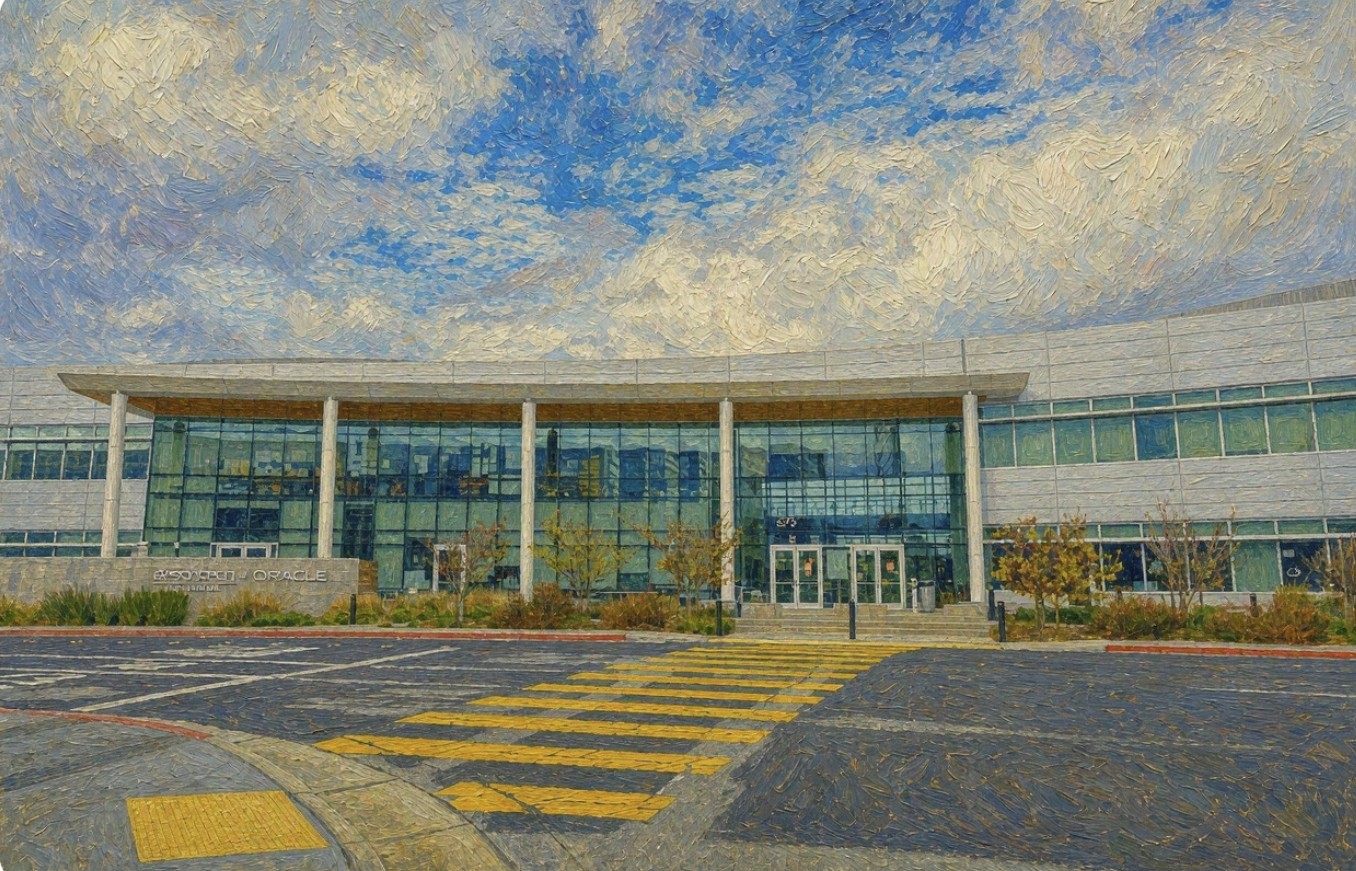
Design Tech High School is a free public charter school located on Oracle’s Redwood Shores headquarters campus. Oracle built the school’s facility, including a fabrication lab called the Design Realization Garage. The curriculum centers on design thinking and project-based learning. Instead of AP courses, d.tech offers honors classes in English, chemistry, biology, physics, environmental science, calculus, and statistics. Juniors and seniors can also take concurrent community college courses. Three times a year, regular classes pause for two-week intersessions. During these sessions, students take exploration courses or, as upperclassmen, complete internships with industry partners. Additionally, the school’s FIRST Robotics team, 5940 BREAD, competes at a high level. A dedicated Beyond d.tech counselor works with juniors and seniors on college planning.
From a College Admissions Standpoint
d.tech is best suited to self-directed students who learn by building. Its internships and design projects produce concrete evidence of initiative that selective colleges value. However, the absence of AP courses means students must show rigor in other ways. Honors courses, community college classes, and outside academic work all help. Students should also make sure counselor letters explain the school’s model clearly. Highly selective engineering programs will expect strong math preparation, so families should map the math sequence early.
Sequoia High School (IB World School)
Public · Redwood City, CA (Sequoia Union High School District)
| Metric | Data |
|---|---|
| Enrollment | ~1,905 (2023–24 school profile) |
| IB Students Sitting for Exams (2023) | 421 (1,141 exams) |
| IB Exam Pass Rate (2023) | 74% |
| IB Diploma Candidates (2023) | 45 (71% award rate) |
| Concurrent College Courses on Campus | Linear Algebra, Multivariable Calculus, Differential Equations (Cañada College) |
| Career Academies | Health Career Academy, Digital Arts Academy |
| SAT Mean (Test Takers) | 1198 |
| Counselor Caseload | ~330 students |
Academic Model
Founded in 1895, Sequoia High School is a long-established public IB World School. Sequoia describes itself as an “IB for All” school, with no entry exams, applications, or GPA requirements. As a result, motivated students from any background can pursue the full IB Diploma. Sequoia no longer offers AP courses, so IB is the school’s primary advanced pathway. In 2023, 421 students sat for 1,141 IB exams. Sequoia also hosts Cañada College instructors who teach linear algebra, multivariable calculus, and differential equations on campus. Furthermore, its Health Career Academy and Digital Arts Academy give students structured pathways with industry mentors.
From a College Admissions Standpoint
For full IB Diploma candidates, Sequoia offers one of the most legible forms of rigor available at any Peninsula public school. The Extended Essay, Theory of Knowledge, and CAS requirements translate clearly to selective admissions readers. That said, the school serves a broad population, and its overall metrics trail Palo Alto’s. Students should therefore commit fully to the Diploma and make sure their counselor letter highlights that choice. With counselor caseloads near 330 students, outside guidance can be especially valuable here.

Independent Schools: How They Compare
The Palo Alto area is home to several of California’s most selective independent schools. Notably, Castilleja and Menlo have both replaced traditional AP curricula with school-designed advanced courses.
| School | Grades | Upper School Enrollment | Student-Teacher Ratio | Advanced Curriculum | NAIS Member |
|---|---|---|---|---|---|
| Castilleja School | 6–12 (all-girls) | 241 | ~7:1 | Advanced Topics (AT) courses | Yes |
| Menlo School | 6–12 | 602 | 8:1 | Honors and Advanced Topics (AP discontinued 2024) | Yes |
| Sacred Heart Preparatory | 9–12 (within PK–12 school) | ~630 | — | 28 AP subjects | Yes |
Castilleja School
Independent (All-Girls, Grades 6–12) · Palo Alto, CA
| Metric | Data |
|---|---|
| Upper School Enrollment (9–12) | 241 |
| Average Class Size | 14 |
| Student-Teacher Ratio | ~7:1 |
| Advanced Curriculum | Advanced Topics (AT) courses replace AP |
| Median Unweighted GPA (6 semesters) | 3.94 |
| Faculty with Advanced Degrees | 81% |
| 4-Year College Enrollment | 97% |
| NAIS Member | Yes |
Academic Model
Founded in 1907 with encouragement from Stanford’s first president, Castilleja is one of the country’s leading girls’ schools. Its Advanced Topics courses, first taught in 2012–13, replace a traditional AP curriculum. Castilleja faculty design these courses around what college professors expect entering students to know. Course offerings include linear algebra, multivariable calculus, organic chemistry, and AI and machine learning. Even without an AP curriculum, Castilleja students perform strongly when they sit for aligned AP exams. Moreover, the school’s small size means average classes of 14 and close faculty relationships.
Signature Programs and College Placement
Castilleja’s ACE Center organizes leadership, local engagement, and global learning. The endowed Global Investigator Program sends students abroad to collaborate with partner organizations. Additionally, the school’s FIRST Robotics teams, Gatorbotics and Chomp Bots, operate out of a dedicated makerspace. Recent student-athletes have been recruited by programs at Harvard, MIT, Stanford, Columbia, and the University of Chicago.
From a College Admissions Standpoint
Castilleja is one of the strongest platforms in California for young women targeting highly selective colleges. Admissions offices know the school well and understand that AT courses replace, rather than skip, advanced coursework. Because classes are small, recommenders can speak in depth about each student’s thinking. The main strategic challenge is differentiation within a very accomplished senior class of roughly 50 to 65 students. Students should develop a distinctive intellectual focus and pursue recognition outside of campus. The school’s robotics, research, and global programs offer natural starting points.
Menlo School
Independent (Coeducational, Grades 6–12) · Atherton, CA
| Metric | Data |
|---|---|
| Upper School Enrollment (9–12) | 602 |
| Student-Teacher Ratio | 8:1 |
| Advanced Classes Offered | 79 (AP curriculum discontinued August 2024) |
| College Counseling Staff | Director plus three associate directors |
| HYPSM Matriculants (Classes of 2023–2025) | 47 (including 30 at Stanford) |
| Varsity Sports | 22 |
| NAIS Member | Yes (also CAIS) |
Academic Model
Established in 1915, Menlo School sits about three miles north of downtown Palo Alto in Atherton. Menlo discontinued its AP curriculum in August 2024. In its place, the school offers 79 advanced classes, including Honors and Advanced Topics courses. These range from quantum mechanics and multivariable calculus to probabilistic modeling and data structures. Menlo’s capstone research courses are especially notable. In Applied Science Research, students design experiments, often intern at a local university or company, and write a publishable paper. BioTech Research, similarly, teaches professional lab techniques before students conduct independent projects. The Menlo Interdisciplinary and Personalized Scholars Program lets students pursue original work on a societal problem of their choosing.
Experiential Learning and College Placement
Each spring, Menlo suspends regular classes for MTerm, two weeks of immersive experiential courses. Menlo Abroad and the domestic Borderlands program extend that learning beyond campus. Meanwhile, a four-person college counseling office serves a senior class of about 140 students. Matriculation results are exceptional. Across the classes of 2023 through 2025, 30 Menlo graduates enrolled at Stanford and 20 at UC Berkeley. Harvard, Princeton, Yale, and MIT drew another 17 graduates combined.
From a College Admissions Standpoint
Menlo combines the resources of a large independent school with research opportunities few high schools can match. Its capstone courses, in particular, give students a credible way to demonstrate original academic work. Selective colleges know Menlo well and understand its post-AP curriculum. Nevertheless, a small graduating class of ambitious students creates real internal competition for the same top colleges. Students should commit to a capstone or IP project early and connect it to their intended major. Doing so turns Menlo’s resources into a clear, differentiated academic profile.
Sacred Heart Preparatory
Catholic Independent (Coeducational, Grades 9–12) · Atherton, CA
| Metric | Data |
|---|---|
| Preparatory (9–12) Enrollment (2025–26) | ~630 |
| Total Sacred Heart Schools Enrollment (PK–12) | ~1,185 |
| AP Subjects Offered | 28 |
| AP Exams Administered Annually | 1,100+ (more than 80% passing) |
| Affiliations | NAIS, WCEA, WASC; Network of Sacred Heart Schools |
Academic Model
Sacred Heart Preparatory is the high school division of Sacred Heart Schools, Atherton, founded by the Society of the Sacred Heart in 1898. SHP offers 28 AP subjects, and students enrolled in AP courses must take the corresponding exam. More than 1,100 AP exams are administered each May, and over 80% earn passing scores. Classes are small and seminar-style, and students complete seven semesters of religious studies taught from an inclusive Christian framework. In contrast to Castilleja and Menlo, SHP has kept a traditional AP structure. For students who want a familiar, highly legible rigor signal, that consistency is valuable.
Athletics and College Placement
SHP’s athletic program is unusually strong for an academic independent school. For 20 consecutive years, the school has sent 15 or more student-athletes to compete in college. Graduates enrolled at 74 institutions, with 88 students heading out of state.
From a College Admissions Standpoint
Sacred Heart Prep is the strongest Catholic college-preparatory option in the Palo Alto area. Its AP depth and mandatory exam policy give colleges a clear, standardized view of each student’s rigor. The school’s service-learning culture, meanwhile, can produce authentic material for essays and interviews. Recruited athletes benefit from a well-established pipeline to college programs. For non-athletes targeting the most selective colleges, however, academic distinction must come from depth in a specific field. Students should pair top AP results with sustained work in one or two areas of genuine interest.
Other Notable Options
Several additional schools serve specific student needs in the Palo Alto area.
Pinewood School, a K–12 independent school with its Upper Campus in Los Altos Hills, enrolls roughly 300 students in grades 7 through 12. It offers Honors, AP, and Advanced Topics courses, and its schoolwide average class size is 11. Pinewood suits families who want a smaller independent environment than Menlo or Sacred Heart.
Kehillah Jewish High School in Palo Alto is a small Jewish day high school. Beginning in 2025–26, it replaced traditional AP courses with Kehillah Advanced Topics courses, though eligible students may still sit for AP exams.
Eastside College Preparatory School in East Palo Alto serves students who will be the first in their families to attend college. Since its founding in 1996, essentially all of its graduates have been admitted to four-year colleges. The school also supports alumni after they enroll.
Stanford Online High School is an independent online school for grades 7 through 12. It offers university-level coursework and live seminars, making it a strong option for advanced students who need flexibility.

How College Transitions Helps Palo Alto-Area Families
College Transitions works with students from Gunn, Paly, Castilleja, Menlo, Sacred Heart Prep, and other schools across the Palo Alto area. We help families:
- Understand how selective colleges read applicants from Gunn, Paly, and Los Altos within some of the most closely watched applicant pools in the country
- Identify a distinctive academic direction that avoids the crowded local computer science and engineering profile
- Translate non-AP curricula at Castilleja, Menlo, and d.tech into a clear rigor story for admissions readers
- Build balanced college lists that account for UC test-free admissions, Eligibility in the Local Context, and merit aid at private colleges
- Turn Stanford-area research, internships, and design projects into specific, credible evidence of initiative
Final Thoughts
Gunn and Paly anchor the Palo Alto market with two of California’s strongest public high schools. Of the two, Gunn offers exceptional AP depth and the area’s best public UC outcomes. Paly, for its part, pairs similar results with a broader range of serious pursuits, especially journalism and the arts. Nearby, Los Altos and Mountain View High offer comparable rigor within the MVLA district.
Beyond the traditional public schools, d.tech and Sequoia give families two distinctive public alternatives in Redwood City. d.tech rewards self-directed students who learn through design, while Sequoia’s open-entry IB Diploma offers internationally recognized rigor. Each requires clear framing in applications.
Among independent schools, Castilleja and Menlo lead with school-designed advanced curricula and outstanding college placement. Sacred Heart Prep, meanwhile, combines a traditional AP program with one of the region’s strongest athletic pipelines. Wherever your student attends, College Transitions helps families in the Palo Alto area turn strong academic options into clear, differentiated admissions plans.

